Bullies Beat a Girl Unconscious — They Had No Idea Her Father Was a Hell’s Angel With 47 Brothers Behind Him. But What He Did Next Brought Down Chicago’s Most Powerful Lawyer.
Sophia Carter’s backpack hit the pavement before she did.
The sixteen-year-old was standing outside her North Side high school in Chicago when Gavin Brandt and four of his friends surrounded her. Gavin was the son of Richard Brandt, one of Chicago’s most influential criminal defense attorneys, a man whose expensive suits and powerful connections had earned him a reputation for making serious problems disappear.
“You really thought you could report me and get away with it?” Gavin shouted.
Sophia backed away, clutching the strap of her backpack. She had reported a cheating operation involving stolen exam papers, and Gavin had warned her to keep quiet. Now, with other students watching, he wanted to make an example of her.
“My father can destroy anyone who gets in our way,” he sneered. “You think your family can do anything about it?”
A shove sent Sophia to the ground. Another followed. Her books scattered across the parking lot as the boys kicked her backpack away and surrounded her. Several students recorded the attack, but nobody stepped forward until a teacher came running from the building.
By the time Sophia reached the hospital, she was unconscious, badly bruised, and being examined for a serious head injury.
The school called her father.
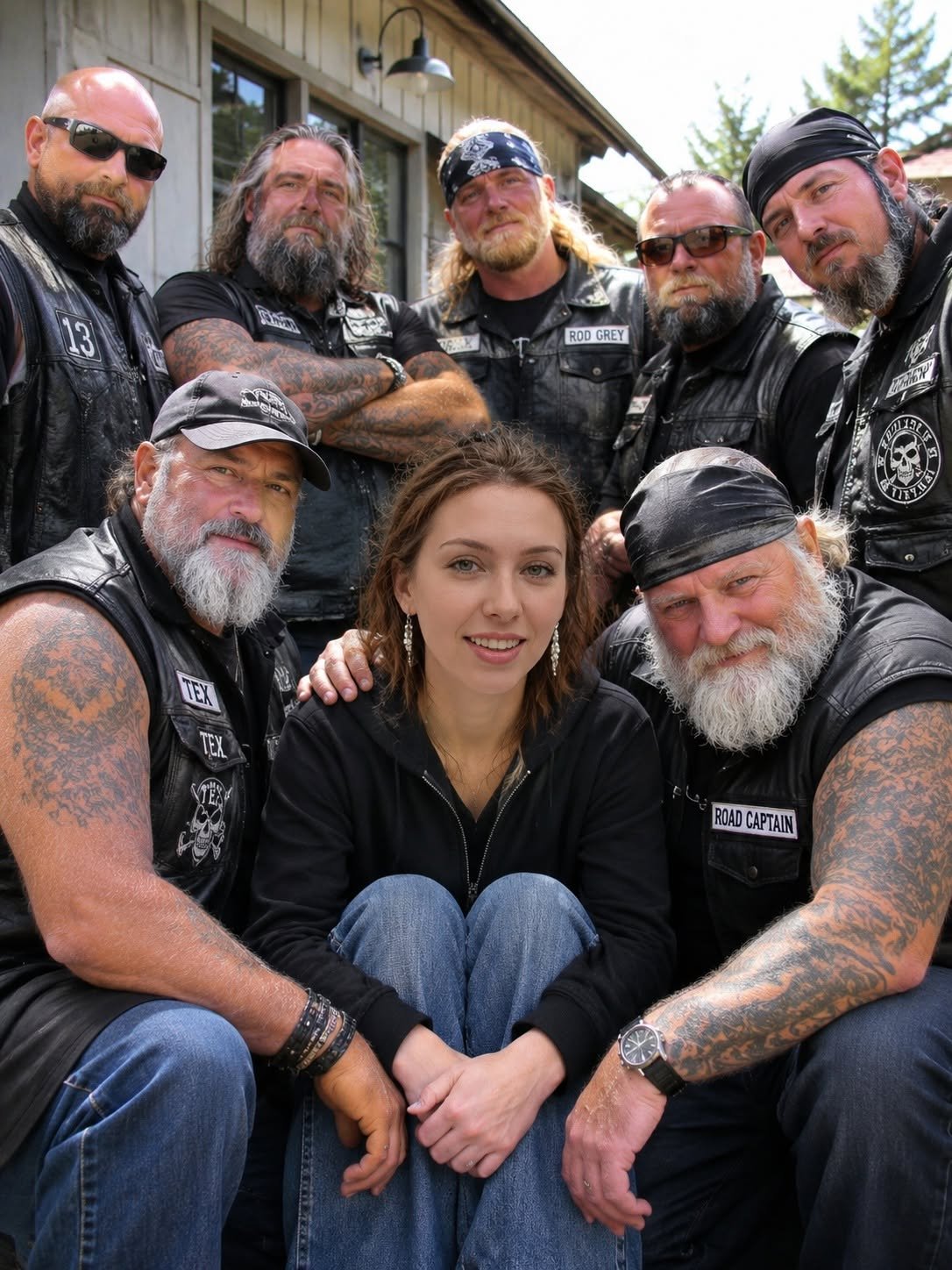
Marcus “Iron” Carter was sitting inside the clubhouse of the Devil’s Disciples Motorcycle Club when his phone rang. He was a broad-shouldered man in his late forties, with a gray beard, tattooed arms, and a reputation that made strangers think twice before approaching him. Around him were 47 patched members, most of whom had known Sophia since she was a little girl.
“Mr. Carter,” the teacher said, struggling to keep her voice steady. “Your daughter has been attacked. You need to come to the hospital immediately.”
Marcus stood so abruptly that his chair fell backward.
“Is she alive?”
“She’s alive. But she needs you.”
He didn’t shout. He didn’t threaten anyone. He simply looked around the room and said, “My little girl is in the hospital. I’m going to her.”
Within minutes, 47 motorcycles were starting outside the clubhouse.
At the hospital, Marcus held Sophia’s hand while she slowly regained consciousness. When she finally opened her eyes, her first words broke him.
“Dad, they said nobody could touch them because Gavin’s father gets people out of trouble.”
A nurse later showed him the video circulating online. Gavin had posted it himself, laughing about the attack and calling Sophia a snitch.
But there was something else Marcus needed to understand…
Gavin’s father, Richard Brandt, wasn’t just a wealthy lawyer. He had represented several powerful businessmen, politicians, and public figures. Rumors had followed him for years about witnesses who suddenly changed their stories, complaints that disappeared, and families who couldn’t afford to challenge his influence.
That evening, Marcus and three club members went to Brandt’s downtown law office. They didn’t break anything. They didn’t threaten anyone. Marcus simply asked for one thing: that Richard make sure his son faced the consequences of what he had done.
Richard laughed.
“Your daughter got involved in something that wasn’t her business,” he said. “My son has a future. I suggest you keep your motorcycle friends away from my family.”
Marcus stared at him for a moment.
“I’m not asking you to protect my daughter,” he replied. “I’m asking you to stop protecting your son from the truth.”
Richard smiled as if the conversation were already over.
He had no idea that the school had preserved the original security footage, that several students had saved the videos, or that one frightened witness was finally ready to speak.
And he certainly didn’t know that one of the 47 bikers had spent twenty years working as a court reporter and recognized a name in the documents Sophia had been trying to expose.
By the following morning, Marcus had made a decision that would change everything.
He wasn’t going to send his brothers after Richard Brandt.
He was going to make sure the evidence reached people Richard couldn’t silence.
The next morning, Marcus Carter made a decision that would change everything.
He wasn’t going to send his brothers after Richard Brandt.
He was going to make sure the evidence reached people Richard couldn’t silence.
But first, he needed to know exactly what had happened to his daughter.
Marcus sat beside Sophia’s hospital bed, watching the steady rise and fall of her breathing. The doctors had told him that she had suffered a concussion, several deep bruises, and a small fracture in her wrist. She was fortunate that the injuries to her head had not been worse. They wanted to keep her under observation for another day.
Her mother, Denise, sat on the other side of the bed, holding Sophia’s hand. She and Marcus had been divorced for six years, but when the hospital called, neither of them had hesitated. Whatever differences existed between them, they had always agreed on one thing: their daughter came first.
Sophia was sixteen. She loved old movies, hated speaking in front of crowds, and had a habit of leaving half-finished cups of tea around the house. She was also stubborn in a way that reminded Marcus of his own mother.
That stubbornness was what had brought her into trouble.
A few months earlier, Sophia had discovered that students were receiving copies of upcoming examination papers before tests. At first, she thought it was ordinary cheating. Then she noticed that some students were paying large amounts of money for access to the answers, and that Gavin Brandt was involved.
She had reported what she knew to a teacher.
The school had promised to investigate, but the situation had become more complicated when Gavin learned who had spoken up.
Marcus leaned forward and gently touched his daughter’s fingers.
“You’re going to be all right, sweetheart.”
Sophia opened her eyes slightly.
“Are you angry?”
He swallowed.
“Yes.”
“At me?”
The question hurt more than anything the doctors had told him.
“No, baby. Never at you.”
She looked toward her mother, then back at him.
“I shouldn’t have reported him.”
Marcus shook his head.
“Listen to me. You did not cause this. The people who hurt you made that choice. Don’t let them convince you that telling the truth was wrong.”
Sophia’s eyes filled with tears.
“He said his dad could make the video disappear.”
Marcus looked at Denise. She had heard the same words before, but neither parent had known how much fear their daughter had been carrying.
“Did you save anything?” Marcus asked.
Sophia nodded weakly.
“My phone. I think it’s in my backpack.”
Denise reached for her bag.
“We brought everything from the school.”
The backpack had been returned with Sophia’s belongings. Her phone was cracked, but it still worked. Marcus didn’t touch it immediately. He asked Sophia whether she wanted him to look through it, and she nodded.
There were messages from Gavin, some sent weeks before the attack.
One read: *You have no idea who you’re messing with.*
Another said: *My dad knows people. Nobody is going to believe you.*
The last message had arrived the night before the assault.
*Tomorrow you’re going to learn when to keep your mouth shut.*
Marcus read it twice.
He felt the anger rising again, but this time he forced himself to put the phone down. Anger could make a man feel powerful. It could also make him careless.
He had spent most of his adult life riding with men who had been judged by their appearance before anyone bothered to learn their names. He knew what it meant to have people assume the worst about you. He also knew that if he lost control now, Richard Brandt would use it against him.
Marcus had no intention of giving the man that opportunity.
“Denise, I want copies of everything. Messages, photographs, videos, all of it. We don’t alter anything.”
Denise nodded.
“And the school?”
“I’m going there after I speak with the detective.”
“You’re not going alone.”
Marcus looked at her.
“No. I’m not.”
***
At the clubhouse, forty-seven men were waiting.
They had gathered after Marcus left for the hospital the previous evening. Some had ridden with him for decades. Others were younger members who had grown up hearing stories about Iron Carter and his daughter.
Nobody was laughing that morning.
The clubhouse was quiet except for the occasional scrape of a chair or the sound of coffee being poured.
Marcus walked in wearing the same black shirt he had worn to the hospital. His eyes were tired, and his face looked older than it had the day before.
The club’s vice president, Ray Dawson, stood near the table.
“How is Sophia?”
“She’s awake. She’s going to recover, but she’s got a long road ahead.”
Ray lowered his head.
“Thank God.”
Marcus looked around the room.
“I know what some of you are thinking. I know what you’d like to do. But nobody is going to that lawyer’s house. Nobody is going to that school to scare anybody. Nobody is touching those boys.”
A younger biker named Cole shifted in his chair.
“They put a girl in the hospital, brother.”
“I know.”
“And their father laughed at you.”
“I know that too.”
“Then what are we supposed to do?”
Marcus placed Sophia’s cracked phone on the table.
“We make sure they can’t lie about what happened.”
He explained what he had learned. The threatening messages, the video, the teacher who had found Sophia, and the possibility that other students had witnessed the assault.
Then he looked at Ray.
“I need people who can help us preserve evidence, find witnesses, and make sure the right authorities receive everything. I don’t need anybody looking for a fight.”
Ray nodded.
“We can do that.”
One of the older members, a quiet man named Walter Briggs, raised his hand.
“There’s something you should know. My nephew works in the school district. He told me there have been complaints about Gavin before. More than one.”
Marcus turned toward him.
“What kind of complaints?”
“Fights. Threats. A student who transferred after being harassed. A teacher who said she was pressured to change a disciplinary report.”
“Does he know anything about this attack?”
“No. But he might know who handled the earlier complaints.”
Marcus looked around the table.
“Then find out who we should speak to. No private investigations that cross a line. No breaking into offices. No threats. We collect what people are willing to give us, and we hand it over.”
Ray gave a small nod.
“Understood.”
Marcus paused before speaking again.
“And if anybody asks why we’re involved, tell them the truth. A sixteen-year-old girl was attacked, and her father wants the people responsible held accountable.”
For a moment, nobody moved.
Then one of the men stood.
“We’re with you, Iron.”
Another rose.
Then another.
Soon all forty-seven men were standing.
Marcus looked at them, but he didn’t smile.
“Then let’s do this the right way.”
***
The first official interview took place that afternoon.
Detective Elena Ruiz had been assigned to the case. She was a Chicago police detective with fifteen years of experience, and she had already watched the school security footage.
She met Marcus and Denise in a small hospital conference room.
“I want to make something clear,” she said. “The department is investigating the assault. We will collect the video, interview the students who were present, and determine whether additional charges are appropriate.”
Marcus nodded.
“Good. We have messages from Gavin threatening my daughter.”
“Have you preserved the original phone?”
“Yes. We haven’t deleted or changed anything.”
Detective Ruiz took notes.
“That’s important. We’ll need to examine the original device and make a forensic copy of the relevant information.”
Denise leaned forward.
“Can you protect the students who witnessed it? Some of them are afraid of Gavin’s father.”
The detective looked at her.
“We can take steps to protect witnesses and document any threats or pressure. But I need them to tell us what happened. We can’t build a case on rumors.”
Marcus understood.
“One of the teachers found Sophia. Her name is Ms. Sanders.”
“We’ve already spoken with her briefly. She’s willing to provide a statement.”
“Then speak with her again. She knows more than I do.”
Detective Ruiz studied him for a moment.
“Mr. Carter, I understand you’re upset. But I need you to stay away from the suspects and their families while this investigation is underway.”
Marcus met her eyes.
“You won’t have to tell me twice.”
She closed her notebook.
“That’s what I wanted to hear.”
Before leaving, she asked one more question.
“Did Richard Brandt contact either of you?”
Marcus hesitated.
“He told me his son had a future and suggested I keep my motorcycle friends away from his family.”
“Where did this conversation happen?”
“His office.”
“Was anybody else present?”
“Three members of my club.”
“Did he threaten you?”
“He didn’t threaten me directly. He made it clear he believed he could make the problem disappear.”
Detective Ruiz wrote something down.
“Tell me exactly what he said. Don’t add anything, and don’t leave anything out.”
Marcus did.
***
Richard Brandt had spent thirty years building his reputation.
He was not an elected official, but in certain circles he was more powerful than many people who held public office. He represented wealthy business owners, corporate executives, and several politicians who needed a lawyer capable of handling difficult cases.
His downtown office occupied two floors of a glass building overlooking the Chicago River. His name appeared on legal conference programs, charitable foundation boards, and fundraising invitations.
He was known for expensive suits, carefully chosen words, and an ability to make opponents feel as though they were already losing.
His son Gavin had grown up surrounded by privilege.
Richard had paid for private tutors, expensive holidays, and a new car when Gavin turned sixteen. When the boy got into trouble, Richard usually called someone. A school administrator. A family acquaintance. Another lawyer.
Gavin had learned that consequences were negotiable.
The morning after the attack, Richard sat in his office reviewing a message from his son’s school.
The school had requested a meeting.
He sighed and called his assistant.
“Tell them I’ll have someone contact them.”
His assistant hesitated.
“They said it’s urgent.”
“Everything is urgent when people don’t know how to handle their own problems.”
He ended the call and dialed Gavin.
His son answered after several rings.
“What’s up?”
“Where are you?”
“At home.”
“Stay there. Don’t post anything else.”
Gavin laughed.
“Why? The video already has thousands of views.”
“Delete it.”
“Why?”
“Because I told you to.”
There was a pause.
“Is that biker actually going to do something?”
Richard looked out over the city.
“He’s a man with a leather vest and a temper. He doesn’t understand how the world works.”
Gavin laughed again.
“That’s what I thought.”
Richard ended the call.
He believed the matter would be settled with a few conversations, a carefully worded statement, and perhaps a disciplinary hearing that could be managed.
He was wrong.
***
The first witness came forward that evening.
Her name was Olivia Bennett, a seventeen-year-old student who had recorded part of the attack on her phone.
She had originally filmed because she thought the confrontation would be another argument between Gavin and Sophia. She hadn’t expected the violence to continue.
When the video began circulating, Olivia felt sick.
She watched Sophia fall. She watched the boys surround her. She heard people laughing.
And she remembered doing nothing.
Her mother, a nurse at a hospital on the North Side, had seen the news spreading through the school community. When she learned that Sophia was in the hospital, she told Olivia that staying silent would only make things worse.
Olivia finally agreed to speak with the school counselor.
The counselor contacted Detective Ruiz.
By the following afternoon, Olivia was sitting in an interview room with her mother beside her.
“I have the video,” Olivia said.
Detective Ruiz placed a small recorder on the table.
“Can you tell me what happened before you started recording?”
Olivia took a breath.
“Gavin was yelling at Sophia. He said she had reported him for cheating. She told him she hadn’t done anything wrong. Then he pushed her.”
“Did you see who else touched her?”
“Yes. Two of his friends kicked her backpack away. One pushed her down again when she tried to stand.”
“Do you know their names?”
Olivia gave them.
The detective asked whether she had seen anyone encourage the attack.
Olivia hesitated.
“Gavin kept saying his father could fix everything. He said nobody was going to believe Sophia because his family knew people.”
Her mother put a hand on her shoulder.
Olivia began to cry.
“I should have helped her.”
Detective Ruiz leaned forward.
“You were a frightened teenager watching something dangerous happen. What matters now is that you’re telling the truth. You can still help.”
Olivia handed over her phone.
The video was longer than the clip Gavin had posted.
It showed the beginning of the confrontation, the first shove, the other boys joining in, and the moment Sophia fell and stopped moving.
It also recorded something Gavin had apparently forgotten.
After the attack, he looked toward the students filming and said, “Make sure you get my good side. My dad will handle the rest.”
That sentence would become important later.
***
The school had its own problems.
Principal Martin Hayes had worked at North Side High for eleven years. He had always tried to keep the school out of public controversy, but the attack had become impossible to ignore.
Parents were calling. Students were sharing videos. Local reporters had begun asking questions.
The school district had instructed him to preserve every available record.
He met with Ms. Sanders in his office.
“Why didn’t you tell me about the earlier complaints?” he asked.
She looked exhausted.
“I did.”
“When?”
“Last semester. And again in January.”
Hayes opened a folder.
“I don’t see a formal report.”
“Because I was told to handle it informally.”
“Who told you that?”
She looked directly at him.
“Your assistant principal.”
Hayes leaned back.
Ms. Sanders continued.
“One student said Gavin had threatened him after a disagreement in class. Another said he had been shoved into a locker. I submitted written notes both times. The second time, I was told that the family had already contacted the district and that I should avoid making the situation bigger.”
Hayes rubbed his forehead.
“Did you keep copies?”
“Yes.”
She placed two printed emails on his desk.
One was dated several months earlier. It described an incident involving Gavin and another student. The second documented a complaint that had been withdrawn after the student’s parents received a call from a lawyer.
The lawyer’s name was not written in the email.
But the phone number in the message belonged to Richard Brandt’s law office.
Hayes stared at the paper.
“Did Richard Brandt contact you?”
“No. But someone from his office did. They said the family was concerned about false accusations and wanted to make sure the school understood that Gavin was being unfairly targeted.”
Hayes closed his eyes.
He knew what the situation looked like.
He also knew that if the school had failed to properly document previous complaints, the district would have to answer for it.
“I need you to give these records to the investigator.”
“I will.”
“And don’t discuss them with students or parents.”
Ms. Sanders stood.
“I wasn’t planning to.”
Before she reached the door, she turned around.
“Principal Hayes, Sophia did exactly what we tell students to do. She reported cheating. She trusted us to handle it. We failed her.”
Hayes didn’t answer.
For once, he had nothing to say.
***
The following morning, Marcus received a phone call from Ray.
“We’ve got something.”
Marcus was sitting in the hospital cafeteria with Denise.
“What is it?”
“One of the brothers knows a woman who used to work at Brandt’s firm. She left last year.”
“What does she know?”
“She says she was asked to organize old client files connected to a few complaints involving his son. She thought it was strange because some of the paperwork had nothing to do with legal cases. She doesn’t have the documents, but she remembers the names of two families.”
Marcus looked at Denise.
“Does she want to speak to the police?”
“She’s nervous.”
“Tell her she doesn’t have to speak to us. Give her Detective Ruiz’s number. Let the detective decide what matters.”
Ray was quiet for a moment.
“There’s something else. She says Richard has a habit of making personal calls to people at the school whenever Gavin gets in trouble.”
Marcus exhaled.
“That’s useful, but we need proof.”
“Understood.”
Marcus ended the call.
Denise looked at him.
“You’re handling this differently than I expected.”
He gave a tired smile.
“What did you expect?”
“I thought you’d be halfway to Richard’s house with forty-seven motorcycles.”
Marcus looked down at his hands.
“I thought about it.”
“Marcus.”
“I know. I know. But I looked at Sophia yesterday, and all I could think about was how scared she must have been. If I go after that man, I might give him exactly what he wants. He’ll turn this into a story about a dangerous biker threatening a respected lawyer.”
Denise reached across the table and took his hand.
“Then don’t give him that story.”
“I won’t.”
***
The video became public before Richard could contain it.
Olivia’s original recording had been submitted to the police, but another student had already saved a copy. That student sent it to a local reporter after hearing that Gavin’s family was calling the incident a mutual fight.
The reporter, a woman named Lauren Mitchell, had covered education and public accountability for nearly a decade.
She watched the video twice.
Then she watched it again with the sound turned up.
The footage did not show a mutual fight.
It showed a group of boys surrounding a girl, pushing her down, and continuing the assault while other students watched. It showed Gavin laughing. It showed Sophia lying motionless as the boys walked away.
Lauren contacted the school district, the police department, and the attorney’s office.
Richard Brandt’s assistant declined to comment.
The school district said it was cooperating with the investigation.
The police confirmed that they were investigating an assault involving a student.
By that evening, the video had been viewed hundreds of thousands of times.
The hashtag #JusticeForSophia began appearing across social media.
People shared photographs of their own daughters. Former students described similar experiences. Parents asked why the school had not acted on earlier complaints.
But the story was no longer only about the attack.
It was about what happened afterward.
Richard Brandt’s office released a short statement claiming that his son had been involved in a “disturbing confrontation” and that the family was cooperating with the school.
It did not mention the threats.
It did not mention the video.
It did not mention Sophia’s injuries.
Lauren Mitchell noticed.
She also noticed that the statement had been released before the police had completed their interviews.
She called Richard’s office again.
This time, he answered personally.
“Mr. Brandt, I’m reporting on the attack involving your son. Can you explain why your statement describes it as a confrontation?”
“Because I have not seen all the evidence.”
“Have you watched the video?”
“I have seen a short clip.”
“Do you believe your son assaulted Sophia Carter?”
“I believe that young people sometimes make mistakes.”
“She was hospitalized.”
“That’s unfortunate.”
Lauren paused.
“Are you suggesting she was responsible for what happened?”
Richard’s voice became colder.
“I’m suggesting you should be careful about publishing allegations you cannot prove.”
“Are you threatening legal action?”
“I’m advising you to understand the consequences of irresponsible reporting.”
Lauren wrote down his words.
“Thank you, Mr. Brandt.”
She ended the call.
Then she called her editor.
***
Sophia watched the news from her hospital bed.
She wasn’t supposed to spend much time on her phone, but Denise had allowed her to read a few messages from friends.
Some were kind.
Some were awkward.
A few were cruel.
One person wrote that she should have minded her own business.
Another said she had embarrassed the school.
Sophia put the phone down.
“Maybe I should have stayed quiet,” she whispered.
Marcus sat beside her.
“Why?”
“Everyone is talking about me.”
“That’s not your fault.”
“People keep saying I ruined Gavin’s life.”
Marcus leaned closer.
“Did you cheat on an exam?”
“No.”
“Did you steal the answers?”
“No.”
“Did you attack anybody?”
“No.”
“Then what did you do?”
“I reported it.”
“Exactly.”
Sophia looked toward the window.
“I don’t want to be famous, Dad.”
“You won’t have to be.”
“I just want to go back to school.”
Marcus nodded.
“Then that’s what we’re going to work toward.”
He didn’t tell her that the story was spreading across the country. He didn’t tell her that people were contacting the club. He didn’t tell her that dozens of reporters wanted interviews.
He wanted her to have one thing that had been taken from her.
A little peace.
***
Richard Brandt was beginning to understand that the situation was not going away.
He called the school superintendent.
He called an old friend who worked in local government.
He called the attorney who represented the district.
Each conversation left him more frustrated.
The superintendent said the district had to complete an independent review.
The attorney said the school had to preserve all records.
His friend warned him that the public attention made it dangerous to interfere.
Richard slammed his office door.
He had spent years telling clients that reputation was everything. Now his own reputation was becoming a problem.
He called Gavin again.
“Have you spoken to the police?”
“No.”
“Have you been contacted by anyone?”
“Some detective called, but I didn’t answer.”
“That was stupid.”
Gavin sounded irritated.
“Why are you acting like I’m the one in trouble? You said you’d handle it.”
“I am handling it.”
“Then make the video disappear.”
Richard closed his eyes.
“I can’t make the internet disappear, Gavin.”
“You’re a lawyer. Do something.”
Richard lowered his voice.
“Listen carefully. You are going to stop talking to your friends about this. You are going to stop posting. If the police contact you, you will speak to your own attorney before answering questions.”
Gavin was quiet.
Then he asked, “Are they going to arrest me?”
Richard did not answer immediately.
“I don’t know.”
For the first time, Gavin sounded afraid.
***
The next development came from a place Richard had not expected.
One of the students who had previously complained about Gavin was named Ethan Brooks. He had transferred to another school after an incident the previous year.
His parents had originally reported that Gavin and two friends had cornered Ethan in a locker room and threatened him. The school had investigated briefly, but the complaint was closed after Ethan’s family withdrew it.
Lauren Mitchell found Ethan through a former classmate.
At first, he refused to speak.
“I don’t want trouble,” he said.
Lauren explained that she was not asking him to make accusations he could not support.
“I just want to know what happened.”
Ethan looked down.
“My parents were scared. They said Gavin’s father was a powerful lawyer. They didn’t want me to get into a bigger problem.”
“Did anyone threaten your family?”
Ethan hesitated.
“My dad got a call from a man who said he represented the Brandt family. He told my dad that making accusations could have consequences. He didn’t say exactly what would happen, but my dad understood.”
“Do you remember the man’s name?”
“No. But I remember the phone number.”
Ethan’s father had kept the call log.
Lauren asked whether he would be willing to speak with Detective Ruiz.
After a long silence, Ethan agreed.
His parents agreed too.
The detective took their statements and requested the original records.
The old complaint had not disappeared completely. It had been stored in a district database, along with a note indicating that the family had withdrawn it.
The investigator wanted to know why.
***
Meanwhile, the club’s quietest member was doing something important.
Walter Briggs had spent twenty years working as a court reporter before retiring. He had left that job long before joining the motorcycle club, but he still understood how legal records were organized and why accurate documentation mattered.
He had been the one who noticed a name in the paperwork Sophia had been trying to expose.
The cheating operation involved more than stolen exam answers. Several students had been paying an older student to obtain examination materials. The older student had connections to a tutoring company that provided test preparation services to wealthy families.
Sophia had discovered that Gavin was selling access to the answers.
She had not known whether Richard was involved.
Walter did not want to make assumptions.
He asked Sophia’s mother for permission to speak with her about what she had seen. Denise agreed, provided that he did not pressure her.
Walter visited the hospital.
He was a tall, thin man with silver hair and a gentle voice. Unlike some of the other bikers, he rarely wore sunglasses or spoke loudly.
“Hello, Sophia.”
She smiled faintly.
“Hi, Walter.”
“I heard you found something at school.”
She looked at her mother.
Denise nodded.
“You can tell him what you’re comfortable telling him.”
Sophia explained that she had seen Gavin exchanging envelopes with an older student. She had also noticed that some of the students who received the answers were connected to a private tutoring business.
She had taken photographs of a printed document that appeared to list payments.
“Do you still have it?” Walter asked.
“I sent it to my school email.”
Walter nodded.
“Good. Don’t try to access anything else. Just let the police know where it is.”
Sophia hesitated.
“I thought the cheating was the worst part.”
Walter looked at her kindly.
“Sometimes the thing that matters most isn’t the first thing you discover. It’s the reason someone wants you to stop looking.”
He left the hospital and called Detective Ruiz.
He did not tell her what the documents proved. He simply explained where they might be found.
The detective requested access through the proper channels.
The records were preserved.
***
Three days after the attack, Sophia was discharged.
She returned to her mother’s house, where Denise had prepared a quiet room with fresh sheets, soft lighting, and a stack of books.
Marcus arrived carrying a small paper bag.
“What did you bring?” Sophia asked.
“Something important.”
He pulled out a stuffed black-and-white dog.
Sophia laughed.
“Where did you find that?”
“Don’t ask. It took three men and a very confused cashier.”
For the first time since the attack, she laughed without immediately stopping.
Marcus sat beside her.
“Your friends want to visit, but only if you’re ready.”
“Maybe tomorrow.”
“Tomorrow it is.”
He looked around the room.
“Your mother says you need to rest.”
“She says a lot of things.”
“She’s usually right.”
Sophia smiled.
Then her expression changed.
“Dad?”
“Yeah?”
“Are you going to hurt Gavin?”
Marcus went still.
“No.”
“Are you sure?”
He took her hand.
“I was angry enough to think about things I shouldn’t have. But no. I’m not going to hurt him. I want him held responsible. That’s different.”
Sophia looked at him carefully.
“What if he doesn’t get in trouble?”
“Then we keep telling the truth and let the process work.”
“What if his dad makes it disappear?”
Marcus leaned forward.
“Then we’ll keep every copy of every piece of evidence. We’ll make sure the people investigating know about the pressure. And we’ll keep going.”
She nodded slowly.
“Okay.”
He kissed her forehead.
“That’s my girl.”
***
Richard’s problems became more serious when the law firm received a formal request for records connected to the school complaints.
He was not being charged with a crime. At that point, the investigation concerned the assault, the earlier complaints, and possible interference with witnesses.
But the request made him nervous.
He called his senior partner, David Klein.
David had worked with Richard for eighteen years. He was cautious, disciplined, and far less interested in public attention than Richard.
“What is this?” David asked, holding the letter.
“An overreaction.”
“It requests records from a specific period.”
“Then we respond appropriately.”
David looked at him.
“Did you contact the school about Gavin’s previous complaints?”
“I spoke with people. That’s not illegal.”
“Did you tell anyone to withdraw a complaint?”
“No.”
“Did anyone from this office contact the families?”
Richard looked away.
David understood the answer.
“Richard, we need to know exactly what happened.”
“I handled a few calls.”
“On whose behalf?”
“My son’s.”
“Using firm resources?”
Richard didn’t respond.
David lowered the letter.
“This is no longer just a school problem. We have to preserve everything. Emails, call records, billing entries, internal messages. Nothing gets deleted.”
Richard’s face hardened.
“You’re making this sound worse than it is.”
“I’m making it sound serious because it is.”
David returned to his office.
That evening, he contacted the firm’s outside ethics counsel.
He also began documenting everything he knew.
***
The school district announced an independent review.
The superintendent issued a statement acknowledging that previous complaints involving Gavin Brandt had been handled inconsistently and that the district would examine whether school staff had followed reporting procedures.
The announcement did not satisfy everyone.
Parents wanted answers.
Students wanted to know why nothing had been done earlier.
Ms. Sanders was asked to speak with the district’s investigator. She provided her emails, notes, and the dates of the conversations she remembered.
She also gave a statement about the day she found Sophia.
“I saw her on the pavement,” she said. “Her backpack was several feet away. She was barely responding. I called for help and stayed with her until the ambulance arrived.”
The investigator asked whether Gavin had been involved in previous incidents.
“Yes.”
“Did you report them?”
“Yes.”
“Did anyone tell you to stop documenting them?”
Ms. Sanders took a breath.
“I was told that the family was sensitive about allegations and that I should be careful.”
“Who told you?”
She gave the name.
The district opened a separate review into the assistant principal’s handling of earlier complaints.
For the first time, the school was being asked to explain not just what happened to Sophia, but why warning signs had been ignored.
***
The fourth day brought an unexpected visitor to the clubhouse.
A middle-aged woman named Patricia Moore arrived carrying a folder.
She had worked as an administrative assistant at Brandt Legal Group for nearly nine years before resigning the previous summer.
She had heard about the attack and recognized Richard’s name.
Walter met her at the door.
“Can I help you?”
“I’m looking for Marcus Carter.”
“I’m Walter.”
She looked around the clubhouse.
“I don’t know if this is the right place to come.”
Walter kept his voice calm.
“You’re welcome to talk. Nobody here is going to pressure you.”
Patricia sat at a table.
She explained that she had handled calls from Richard’s clients and organized correspondence. On several occasions, she had been asked to make calls to schools or families involving Gavin.
She had never been told to threaten anyone.
But she remembered being instructed to use phrases such as “potential legal exposure” and “formal consequences” when speaking with parents.
“Did you keep any records?” Walter asked.
“Some. I have my own old emails and notes. I never deleted them.”
“Have you spoken to a lawyer?”
“No.”
Walter nodded.
“Then the first person you should speak with is an independent attorney. Not us. Not the club. Someone who can advise you about your rights.”
Patricia looked relieved.
“I was afraid you’d ask me to hand everything over.”
“We’re not investigators. We don’t want to mishandle anything.”
Walter gave her Detective Ruiz’s contact information and the name of a local attorney who had no connection to the Brandt firm.
Patricia left the clubhouse with a plan.
The next day, she retained independent counsel and contacted the detective.
She provided copies of emails and call logs that helped investigators establish which employees had contacted the school and when.
The documents did not prove that Richard had committed a crime.
But they raised questions that could no longer be dismissed.
***
Richard Brandt’s world began to close in.
The firm placed him on administrative leave while an internal review was conducted.
His partners wanted to know whether he had used firm resources to pressure families in a matter involving his son.
He insisted that he had acted as a concerned father.
David Klein asked him to explain why his assistant had contacted two families whose children had complained about Gavin.
Richard said the calls were intended to prevent false accusations.
David asked why the school had documented the calls as pressure.
Richard said the school had misunderstood.
David asked whether Richard had told anyone to delete records.
Richard became angry.
“This is ridiculous. I’ve represented this firm for thirty years.”
David remained calm.
“And the firm will not risk its future because you refuse to answer basic questions.”
Richard left the meeting.
He had always believed that his professional reputation would protect him.
Now the people who had once relied on him were protecting themselves.
***
The criminal investigation moved forward.
Detective Ruiz and the prosecutor assigned to review the case examined the original video, witness statements, medical records, and messages from Sophia’s phone.
They interviewed Gavin and the four other students involved.
The students gave conflicting accounts.
One claimed Sophia had started the argument.
Another said he had only tried to separate them.
But the video contradicted those statements.
The prosecutor explained that the case would be evaluated based on the evidence, not on the family’s reputation.
The investigation also examined whether any witness had been threatened after the assault.
Olivia received several messages from an unfamiliar account telling her to stop talking.
She saved them and reported them.
Ethan’s family received a call from someone claiming to be a friend of the Brandts. The caller suggested that the family should avoid becoming involved in a public controversy.
They reported the call too.
Detective Ruiz documented both incidents.
The prosecutor warned the parties that any attempt to intimidate witnesses could become a separate matter.
Richard’s lawyer advised him not to contact any students or families.
For once, Richard listened.
***
A week after the attack, Lauren Mitchell published her investigation.
The headline read:
**”Before Sophia Carter Was Attacked, School Officials Had Received Multiple Complaints About the Same Student.”**
The article did not accuse Richard Brandt of a crime.
Instead, it presented a timeline.
It showed the dates of earlier complaints, the school’s responses, the messages from Gavin, and the public video of the assault. It included comments from parents who said they had felt pressured to withdraw complaints.
The article also included the school’s acknowledgment that its procedures were being reviewed.
Richard declined to answer detailed questions.
His attorney issued a statement saying that Richard denied any improper conduct and believed the investigation would establish the truth.
The story spread beyond Chicago.
National outlets began covering the case.
The hashtag #JusticeForSophia returned to the top of social media trends.
But Marcus was not interested in online popularity.
He was sitting with Sophia at her mother’s kitchen table, helping her with a school assignment.
She had been cleared to do light schoolwork, though her doctors had advised her to avoid returning to a full schedule until her symptoms improved.
She looked at her laptop.
“Everyone keeps calling me brave.”
Marcus glanced over.
“That’s not a bad thing.”
“I don’t feel brave.”
“You’re allowed to be scared.”
“What if I go back and they all stare at me?”
“Some might.”
“What if they whisper?”
“Some might do that too.”
She looked up.
“You’re not making this sound better.”
Marcus smiled gently.
“I’m not going to lie to you. Going back may be uncomfortable. But you don’t have to prove anything to anybody.”
Sophia looked down at her assignment.
“I want to finish school.”
“Then that’s what we’ll work toward.”
***
The most important evidence came from an unexpected source.
A student named Noah Price had been one of Gavin’s closest friends.
He had been present during the assault, but his role had been less obvious in the video. He had stood near the edge of the group and had not appeared to strike Sophia.
The police initially treated him as a witness.
Then they found a message on another student’s phone.
It showed Gavin discussing the attack the night before it happened.
He had written that Sophia needed to be “taught a lesson” and that his friends should be there when he confronted her.
Noah had responded with a laughing emoji.
When Detective Ruiz interviewed him, he initially denied knowing about the plan.
But after the detective showed him the messages, he broke down.
“I didn’t think he would actually do it,” Noah said.
“Did you know he planned to confront her?”
“Yes.”
“Did you know he was angry about the cheating report?”
“Everybody knew.”
“Did you try to stop him?”
Noah looked at the table.
“No.”
“Why?”
“Because Gavin’s family has money. Everyone knows it. I didn’t want to be the next person he went after.”
The detective let the silence sit.
“Did anyone tell you to keep quiet afterward?”
Noah nodded.
“One of Gavin’s friends said his dad would take care of the whole thing. He said if we all told the same story, nobody could prove anything.”
“Who said that?”
Noah gave the name.
He also agreed to provide his phone for examination.
The messages helped establish that the confrontation had been planned rather than being a spontaneous argument.
Noah’s statement did not excuse his failure to help Sophia.
But it gave investigators a clearer picture of what had happened.
***
Gavin’s parents hired a separate criminal defense attorney for him.
Richard did not like the arrangement. He wanted to manage everything himself, but his own legal situation made that impossible.
Gavin was furious.
“You said you could fix this.”
Richard stood in the living room of their Gold Coast home.
“I told you to stay out of trouble.”
“You told me you could handle it!”
“I cannot control what forty students recorded on their phones.”
“Then make them change their stories.”
Richard turned sharply.
“Do you understand what you’re saying?”
Gavin shrugged.
“You’ve done it before.”
The words hung in the room.
Richard stared at his son.
“What did you just say?”
Gavin looked away.
“Nothing.”
Richard sat down.
For the first time, he realized that his son had been watching him for years, learning not only what he said but what he did.
Gavin had learned that a powerful person could make a problem disappear.
He had learned that an apology was unnecessary if someone else could be blamed.
He had learned that money could make people hesitate.
Richard had taught him those lessons without ever intending to.
Now he was watching them come back to him.
***
The first court hearing took place several weeks later.
Gavin and the other students were required to appear as the case moved through the juvenile justice system. Because of their ages, much of the process was handled differently from an adult criminal case, and the court limited what could be made public.
Marcus attended with Denise.
Sophia had not been asked to attend. Her doctors and counselor agreed that she should not be exposed to unnecessary stress.
Before entering the courthouse, Marcus stopped outside and looked at the crowd.
There were reporters, photographers, and several supporters carrying signs.
One sign read:
**”Protect Students, Not Powerful Families.”**
Another said:
**”Sophia Deserves Justice.”**
Marcus did not pose for photographs.
He walked inside with Denise.
In the courtroom, Gavin sat beside his attorney. He looked smaller than he had in the video. His expensive clothes could not hide the nervousness in his face.
Richard sat several rows behind him.
He looked at Marcus once.
Marcus looked back.
Neither man spoke.
The hearing was procedural. The judge reviewed the charges and set further dates. The prosecutor explained that the evidence included video footage, witness statements, medical documentation, and messages showing the events leading up to the assault.
Gavin’s attorney requested additional time to review the material.
The judge granted a reasonable extension.
Outside, reporters approached Marcus.
“Do you want to send a message to the Brandt family?”
Marcus stopped.
“I don’t have a message for them. I have a message for parents. If your child tells you something is wrong, listen. If your child reports bullying, don’t tell them to stay quiet just because the other family has money.”
“Do you believe Gavin should be punished?”
“I believe the court should look at the evidence and make a fair decision. My daughter deserves justice. So does every child who has been hurt.”
Then he walked away.
***
The independent school review uncovered more than the district expected.
It found that previous complaints involving Gavin had not been handled consistently. Some had been documented only in informal notes. Others had been closed without clear explanations.
The review also found that administrators had allowed outside pressure to influence how they responded to complaints.
The assistant principal who had handled two earlier incidents was placed on leave while the district completed its investigation.
The school district issued a public apology to Sophia and her family.
The superintendent acknowledged that the school had not adequately protected students who reported misconduct.
The district promised to improve its reporting system, provide additional staff training, and establish a process for parents to report concerns directly to an independent office.
Marcus read the statement at the kitchen table.
Denise sat across from him.
“Do you believe them?” she asked.
“I believe they know they have a problem.”
“That’s not the same thing.”
“No. It isn’t.”
He folded the paper.
“That’s why they need to follow through.”
***
Richard’s professional troubles continued.
The law firm’s internal review found that his assistant had made calls to families connected to earlier complaints about Gavin. It also found that Richard had used firm resources for personal matters without properly documenting the work.
The firm did not conclude that every call had been improper, but the partners agreed that the conduct created serious ethical concerns.
Richard was removed from several leadership responsibilities.
The firm announced that he would remain on leave while the review continued.
Several clients began moving their business elsewhere.
A corporate board he had advised requested a meeting with another attorney.
A charitable foundation removed him from its advisory committee.
The consequences were not the result of one dramatic revelation. They came from a series of decisions, documented records, and people who had finally decided not to remain silent.
Richard was still wealthy.
He still had a law license.
He still had the right to defend himself.
But he was no longer untouchable.
***
One afternoon, Marcus received a call from Detective Ruiz.
“We have an update.”
He stepped outside.
“Go ahead.”
“The prosecutor has reviewed the evidence. The case against Gavin and the other students is moving forward. The messages and the video are significant.”
Marcus closed his eyes.
“Thank you.”
“There is also a separate inquiry into the communications with the earlier families. That part is not finished.”
“Understood.”
“I want you to know something. Your daughter helped this investigation by preserving those messages and identifying the original material. She did the right thing.”
Marcus looked through the window at Sophia.
She was sitting on the couch, reading.
“She shouldn’t have had to be brave just to be safe.”
“No,” Detective Ruiz said. “She shouldn’t.”
***
The following week, Olivia visited Sophia.
She arrived with a small gift bag and an uncomfortable expression.
Sophia opened the door.
“Hi.”
“Hi.”
They stood awkwardly for a moment.
Olivia held out the bag.
“I brought you something.”
Sophia looked inside. It was a notebook with a dark blue cover.
“Thank you.”
Olivia took a breath.
“I wanted to say I’m sorry.”
Sophia looked at her.
“For what?”
“For recording instead of helping. I thought somebody else would do something. I didn’t know what to do, and I got scared.”
Sophia was quiet.
Olivia continued.
“I gave the video to the police. I told them everything I saw. But I still feel bad.”
Sophia looked down at the notebook.
“I was scared too.”
Olivia nodded.
“I know.”
“I’m not saying what happened was okay. But thank you for telling the truth.”
Olivia’s eyes filled with tears.
They sat together for a while.
It wasn’t a perfect reconciliation. There were things Sophia still needed time to process, and Olivia understood that. But it was a beginning.
***
A month after the attack, Sophia returned to school.
The district had arranged for a counselor to meet her before classes. Her schedule was adjusted so she could avoid unnecessary stress while recovering.
Marcus drove her.
He parked near the entrance and turned off the engine.
“You ready?”
Sophia looked at the school building.
“Not really.”
“That’s okay.”
“What if I see Gavin?”
“Then you keep walking. You don’t owe him a conversation.”
She nodded.
Marcus reached into the back seat and handed her backpack.
It was a new one. The old one had been damaged during the attack.
Sophia ran her fingers over the strap.
“Thanks, Dad.”
“Anytime.”
She opened the door, then paused.
“Dad?”
“Yeah?”
“Don’t bring all the motorcycles today.”
Marcus smiled.
“Wasn’t planning to.”
She gave him a look.
“Promise?”
“I promise.”
Sophia walked toward the entrance.
Marcus watched until she disappeared inside.
Then he sat in the car for a few minutes before driving away.
***
The case reached a turning point several weeks later.
The prosecutor presented the evidence gathered during the investigation. The court reviewed the video, the medical records, the witness statements, and the messages exchanged before and after the assault.
The students involved faced consequences based on their individual actions and the evidence against them.
Gavin was not treated as a harmless boy who had simply made a mistake. The court considered the seriousness of the assault, the planning reflected in the messages, and the harm caused to Sophia.
The other students were also held accountable for their participation.
Because the defendants were minors, the proceedings were not a public spectacle. The judge emphasized rehabilitation, accountability, and the need to protect the victim.
Gavin was ordered to complete a supervised juvenile accountability program, attend counseling, and comply with restrictions designed to keep him away from Sophia. He was also required to participate in a process that addressed the harm he had caused, though Sophia was not required to meet him.
The court imposed additional consequences under the applicable juvenile process.
For Marcus, the most important part was not the length of the order or the headlines afterward.
It was that the court had acknowledged what happened.
Sophia had not imagined it.
She had not caused it.
And the people who hurt her could not simply laugh and walk away.
***
Richard Brandt’s own legal and professional situation took longer to resolve.
The investigation into his conduct found that he had used his position and firm resources in ways that violated internal policies. The state disciplinary authorities reviewed the evidence concerning his communications with families and school personnel.
Richard disputed the conclusions.
His attorneys argued that he had been acting as a father and that no one had been directly threatened.
The review process took months.
Eventually, the professional authorities issued a public disciplinary finding concerning his conduct, and the law firm ended its relationship with him.
He was not arrested simply because his son had committed an assault. His professional consequences came from his own actions and the evidence established about how he had used his position.
That distinction mattered.
Marcus had wanted Richard held accountable, not falsely accused.
The legal system had to prove what Richard himself had done.
And it did.
The powerful lawyer who had once laughed at a biker standing in his office now faced the consequences of his own documented conduct.
His name was removed from the firm’s leadership page.
His clients moved on.
His public reputation changed.
The man who had believed he could control every conversation learned that he could not control the truth once enough people were willing to speak.
***
The club held a small gathering at the clubhouse after the case reached its main resolution.
There were no reporters.
No speeches were planned.
No one had invited the public.
Marcus arrived with Sophia and Denise.
The moment the young woman stepped inside, the room erupted in applause.
Sophia looked embarrassed.
“Please don’t make a big deal out of this.”
Ray laughed.
“Too late, kid.”
He handed her a small box.
Inside was a silver bracelet with a simple engraving:
**”Always protected. Always loved.”**
Sophia looked around the room.
“Thank you.”
One of the older members stepped forward.
“We’re proud of you.”
Sophia smiled.
“I didn’t do anything special.”
Walter shook his head.
“You told the truth when it would’ve been easier to stay quiet. That’s not nothing.”
Marcus watched his daughter surrounded by the men who had known her since childhood.
People outside the club saw leather vests, tattoos, motorcycles, and bearded faces. They often made assumptions before hearing a single word.
But these men had shown up when a little girl needed support.
They had also listened when Marcus told them not to turn their anger into violence.
That mattered to him more than anything.
Ray raised a cup.
“To Sophia.”
The room answered together.
“To Sophia.”
She laughed, and for the first time in weeks, the sound seemed completely natural.
***
Several months passed.
Sophia continued counseling and slowly returned to her normal routine. Some days were difficult. A loud argument in the hallway could still make her tense. She sometimes woke from dreams about the parking lot.
Healing was not a straight line.
But she began spending time with friends again. She returned to her favorite after-school activity and started volunteering with a student group focused on bullying prevention.
She didn’t want to become a symbol.
She wanted to be a teenager.
Denise helped her understand that both things could be true. She could speak about what happened when she wanted to, and she could also choose not to discuss it.
Marcus learned to step back when his daughter needed space.
He still worried.
He still checked the locks at night.
He still looked twice at every car that slowed near the house.
But he no longer treated every difficult day as a battle he had to fight for her.
Sometimes the best thing he could do was sit beside her and listen.
***
One Saturday afternoon, Sophia and Marcus visited the school.
The district had established a new reporting process, including a confidential way for students to raise concerns. The school counselor had invited Sophia to speak with a small group of students about the importance of reporting bullying and preserving evidence.
Sophia had initially refused.
Then she changed her mind.
She stood at the front of the room with a sheet of paper in her hands.
Her voice trembled at first.
“I used to think that if you reported something bad, adults would automatically know what to do. I learned that sometimes they don’t. Sometimes people make mistakes. Sometimes they ignore things because they’re afraid of someone important.”
She paused.
“But that doesn’t mean you should stop telling the truth.”
A student in the back raised his hand.
“What if nobody believes you?”
Sophia looked at him.
“Keep records if it’s safe. Tell more than one trusted adult. Don’t confront someone dangerous alone. And if someone is hurt, get help.”
The counselor nodded.
Sophia continued.
“I don’t want anyone to go through what I went through. But I also don’t want people to think that being scared means they’re weak.”
When she finished, the room was quiet for a moment.
Then the students applauded.
Marcus watched from the back.
He didn’t move toward the front or try to take the attention away from her.
This was her moment.
***
A year after the attack, Marcus received an envelope in the mail.
It was addressed to him, but the handwriting was unfamiliar.
Inside was a short letter from Gavin.
Marcus read it once, then placed it on the kitchen table.
Sophia saw it.
“What is that?”
“A letter from Gavin.”
Her expression changed.
“What does he want?”
“He says he’s sorry.”
She didn’t reach for the paper.
“Do I have to read it?”
“No.”
“Do I have to forgive him?”
Marcus shook his head.
“No. You don’t owe him forgiveness.”
Sophia looked at the envelope.
“Did he say why?”
Marcus nodded.
“He says he understands that what he did was wrong. He says he used his father’s name to make himself feel powerful, and that he didn’t think about what could happen to you.”
Sophia was quiet.
“Do you believe him?”
“I don’t know. People can change, but words aren’t proof.”
She looked toward the window.
“I don’t want to meet him.”
“Then you won’t.”
She nodded.
Marcus placed the letter in a folder with the other case documents.
He would not decide what his daughter should feel.
That was her choice.
***
Richard Brandt eventually left Chicago’s legal scene.
His disciplinary record followed him, and the firm that had once carried his name no longer wanted him associated with its public identity. He continued to dispute the findings, but the professional consequences remained.
He and Gavin also faced a difficult period at home.
Gavin was required to complete counseling and community-based obligations. His relationship with his father became strained.
One evening, he asked Richard why he had always told him that money could solve everything.
Richard had no easy answer.
He could have blamed the school.
He could have blamed the internet.
He could have blamed Marcus Carter and the forty-seven motorcycles that had become part of the story.
But he knew the truth.
His son had watched him use influence to avoid uncomfortable consequences. He had watched his father treat complaints as threats to be managed rather than warnings to be understood.
Gavin had copied what he saw.
Richard had spent years teaching him that being powerful meant never having to admit fault.
Now both of them were learning how expensive that lesson could become.
***
For Marcus, the most important victory came on an ordinary Tuesday.
He was in his garage, cleaning his motorcycle, when Sophia walked in wearing a school sweatshirt.
“Dad?”
He looked up.
“What’s going on?”
“I got accepted.”
“Accepted where?”
“That summer program in journalism. The one I applied for.”
Marcus put down the cloth.
“You did?”
She nodded, smiling.
“They said my application was strong.”
He stood and hugged her.
“That’s incredible.”
She laughed against his shoulder.
“I haven’t even started yet.”
“Doesn’t matter. You earned it.”
She stepped back.
“I think I want to write about how schools handle bullying complaints.”
Marcus looked at her.
“That’s a big subject.”
“I know.”
“You sure?”
She nodded.
“I don’t want what happened to me to be the only thing people remember. I want to understand why it happens and how it can be prevented.”
Marcus smiled.
“Then write it.”
She glanced at the motorcycle.
“Are you coming to the ceremony?”
“Wouldn’t miss it.”
“Even if all your brothers want to come?”
Marcus laughed.
“Especially if they all want to come.”
She shook her head.
“Please don’t bring forty-seven motorcycles.”
“No promises.”
“Dad!”
He laughed again.
“All right. I’ll keep it reasonable.”
***
The following summer, the club organized a community event outside the clubhouse.
There were no threats, no political speeches, and no attempt to turn the gathering into a publicity stunt.
The members collected school supplies, backpacks, notebooks, and gift cards for families who needed help preparing their children for the new school year.
Sophia helped organize the donations.
Olivia volunteered too.
So did Ethan, who had returned to school and was working to rebuild his confidence after everything that had happened.
The three teenagers stood behind a table, sorting supplies.
A little girl approached and asked whether she could choose a pink backpack.
Sophia smiled.
“Of course.”
The girl picked one with a small flower design.
Her mother thanked them.
Marcus watched from a few feet away.
Ray came to stand beside him.
“She’s doing good.”
“Yeah.”
“Better than good.”
Marcus nodded.
Ray looked toward the group of teenagers.
“You know, when this started, I thought we were going to have to stop you from doing something stupid.”
Marcus smiled faintly.
“Me too.”
Ray laughed.
“Instead, we ended up buying three hundred backpacks.”
“Cheaper than bail.”
Both men laughed.
Then Marcus became serious.
“I learned something through all this.”
“What’s that?”
“I used to think protecting my daughter meant standing between her and anything that could hurt her. But I can’t stand in front of every problem. I can’t follow her into every classroom or every conversation.”
Ray listened.
“Sometimes protecting her means making sure she knows she can speak up, that somebody will listen, and that she doesn’t have to face things alone.”
Ray nodded.
“That’s a good lesson.”
Marcus looked at Sophia.
“She’s stronger than I ever realized.”
***
On the anniversary of the attack, Sophia asked her father to take her back to the school parking lot.
Marcus wasn’t sure it was a good idea.
“Are you certain?”
“Yes.”
Denise came with them.
They stood near the place where Sophia had fallen. The school had repainted the parking spaces, and the old marks on the pavement were gone.
Sophia looked around.
“It’s strange.”
“What is?” Denise asked.
“I remember everything, but it looks so ordinary.”
Marcus stood beside her.
“Places don’t always look like what happened in them.”
She nodded.
For a moment, nobody spoke.
Then Sophia took a deep breath.
“I don’t want this place to be the worst day of my life forever.”
Denise put an arm around her.
“It doesn’t have to be.”
Sophia looked at her father.
“Do you remember what you said in the hospital?”
“Probably a lot of things.”
“You said I didn’t cause what happened.”
Marcus nodded.
“I meant it.”
“I know.”
She looked toward the school entrance.
“I think I’m ready to stop being afraid of this place.”
Marcus didn’t tell her to be brave.
He didn’t tell her that everything was over.
He simply took her hand.
And together, they walked toward the entrance.
***
That evening, the three of them had dinner at a small restaurant near the lake.
Sophia talked about her summer program, Denise talked about work, and Marcus complained about the price of coffee.
For a while, the conversation was ordinary.
It was exactly what they needed.
When dinner was over, Marcus walked Sophia to the car.
She turned toward him.
“Thanks, Dad.”
“For what?”
“For not doing something terrible.”
Marcus looked at her.
She smiled slightly.
“I know you wanted to.”
He gave a quiet laugh.
“I did.”
“But you didn’t.”
“No.”
She hugged him.
“I’m proud of you.”
Marcus closed his eyes.
He had spent months worrying about whether he had protected her enough. He had thought about the hospital, the video, the threats, the court hearings, and the nights when she couldn’t sleep.
But hearing those words from his daughter meant more than any headline.
He kissed the top of her head.
“I’m proud of you too, sweetheart.”
***
The story of Sophia Carter became known throughout Chicago, but not for the reason Richard Brandt had feared.
It wasn’t remembered because forty-seven motorcycles had threatened a wealthy lawyer.
They hadn’t.
It wasn’t remembered because a father had taken revenge with his fists.
He hadn’t.
It was remembered because a teenage girl had reported wrongdoing, was attacked for speaking up, and refused to accept that powerful families should be allowed to decide whose voice mattered.
Her father had arrived with forty-seven brothers behind him, but he had chosen not to turn their anger into violence.
Instead, they helped preserve evidence, support witnesses, and make sure the people responsible could not hide behind money or reputation.
The school had to answer for its failures.
The students involved had to face consequences.
Richard Brandt had to answer for his own conduct.
And Sophia got something more valuable than a viral video or a public apology.
She got the chance to return to her life.
One evening, Marcus was sitting outside the clubhouse when Sophia walked over carrying two cups of coffee.
She handed him one.
“You’re getting old, Dad.”
He looked at her.
“That’s a terrible thing to say to a man who still rides faster than you walk.”
She laughed and sat beside him.
For a while, they watched the motorcycles lined up in the fading light.
Then Sophia rested her head against his shoulder.
“Dad?”
“Yeah?”
“Do you think people will always judge you because you’re a biker?”
Marcus considered the question.
“Some people will.”
“Does it bother you?”
“Sometimes. But I can’t spend my life trying to convince everybody I’m a good man.”
He looked at the rows of motorcycles.
“I can only decide what kind of man I am when nobody is watching.”
Sophia smiled.
“That’s actually pretty good.”
“Don’t sound so surprised.”
She laughed.
Marcus put an arm around her.
He had once believed that the greatest thing a father could do was make the world afraid to hurt his child.
Now he understood something different.
A father couldn’t promise that his daughter would never be hurt. He couldn’t control every person she met or every injustice she encountered.
But he could make sure she knew that she would never have to face the truth alone.
And sometimes, that was stronger than fear.
**Because forty-seven motorcycles can make a lot of noise. But it was one frightened girl’s decision to tell the truth—and one father’s decision to answer with justice—that finally made the powerful listen.**