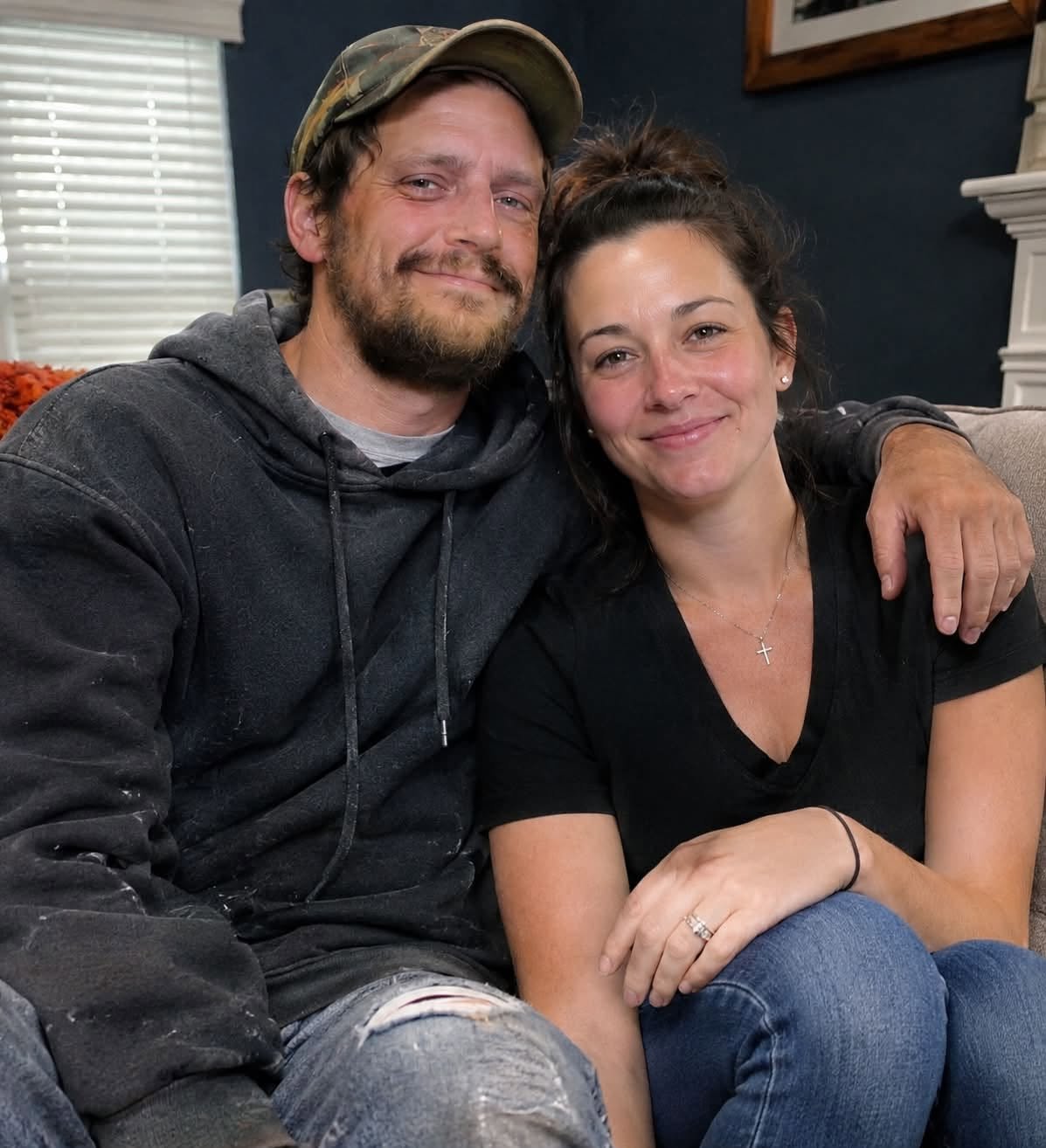
I let a homeless stranger sleep on our couch for one night because my nine-year-old son couldn’t bear to watch him shiver outside a grocery store. I gave him a warm meal, an old set of clothes, and one simple promise: he could stay until morning.
Before leaving for work the next day, I made it clear that I expected him to be gone when I returned.
But when I opened my apartment door that evening, I froze.
Wesley was still inside.
And he wasn’t sitting on the couch waiting for me. He was standing in the kitchen, wearing the old sweatshirt I’d given him, with a small toolbox open on the floor.
The dripping faucet had stopped. The broken cabinet handle had been repaired. The front door, which had required me to throw my shoulder against it every evening, now closed smoothly.
The kitchen table had been cleaned, the dishes were washed, and a fresh loaf of bread sat beneath a clean kitchen towel.
For a moment, I couldn’t speak.
“What happened here?” I finally asked.
Wesley looked up, almost embarrassed.
“I hope you don’t mind. I noticed a few things last night. I had some time this morning, so I thought I’d fix what I could.”
I looked at the toolbox.
“Where did you get those tools?”
“They’re mine. I’ve carried them for years.”
I stepped inside and put my grocery bags down.
“You were supposed to leave this morning.”
“I know.”
“Then why are you still here?”
He looked toward Nolan, who had already rushed past me and was examining the repaired kitchen cabinet.
“I wanted to leave you something before I went.”
He pointed toward the dining table.
There was a folded piece of paper beside the bread.
I picked it up.
The first sentence made my throat tighten.
“Audrey, you gave me a place to sleep last night, but you have no idea how much you reminded me that I’m still worth something.”
I looked at Wesley.
“Would you explain?”
He pulled out a chair but didn’t sit down.
“My name is Wesley Carter. Before the accident, I worked in construction. Mostly residential repairs, kitchens, doors, flooring, that kind of work. I was good at it. I had a small house, a wife, and a daughter.”
He paused and rubbed his injured knee.
“Then I fell from a work platform. I damaged my knee and needed surgery. I thought I’d recover in a few months, but it took much longer. My employer’s insurance didn’t cover everything, and I couldn’t return to the kind of work I’d been doing.”
He looked down at his hands.
“Medical bills started piling up. I fell behind on the mortgage. My wife tried to hold everything together, but after a while, we were fighting about money every day. Eventually, she took our daughter and moved in with her sister.”
“I’m sorry,” I said.
He nodded.
“I don’t blame them. My wife had a child to protect. I kept telling myself I’d get back on my feet, but every time I got close, something else happened.”
He explained that he had stayed with a friend for a while, then in a cheap motel, and eventually lost even that option. He had been sleeping in temporary places and using shelters when a bed was available. His backpack contained a few clothes, some personal documents, and the tools he had managed to keep.
“I called the shelter yesterday,” he continued. “They were full. I was planning to sit outside the grocery store until morning.”
I glanced at his knee brace.
“Why didn’t you tell me all this?”
“Because you didn’t ask me to explain my life. You offered me a couch. I didn’t want to turn your kindness into a long story about my problems.”
I looked at the repaired faucet.
“Did you really fix all of this?”
He smiled slightly.
“I’ve been fixing things since I was seventeen. A loose handle and a bad washer aren’t much of a challenge.”
Then he looked at Nolan.
“Your boy told me about his science project last night. He said the cardboard bridge kept falling apart.”
Nolan immediately looked up.
“It did!”
Wesley chuckled.
“I showed him how to strengthen the supports. We worked on it a little this morning.”
Nolan ran to his bedroom and returned carrying his project. The small cardboard bridge stood straight, with wooden sticks supporting its sides.
“Look, Mom! Wesley helped me!”
I smiled, but something about the situation still bothered me.
“Wesley, you don’t have to earn your place here by fixing things.”
His expression changed.
For a few seconds, he didn’t speak.
Then he said something I wasn’t prepared to hear.
“That’s what I thought too, when you let me in. But I haven’t felt useful to anybody in a long time.”
He sat down slowly.
“People look at the brace, the backpack, and the clothes. They see a homeless man. They don’t see the person I used to be. Sometimes I start seeing myself that way too.”
He looked at the letter in my hand.
“Your son didn’t look at me like that. He asked if my leg hurt. He asked where I would sleep. He didn’t ask why I didn’t have a house.”
I felt my eyes filling.
“He’s a good boy,” Wesley continued. “You should be proud of him.”
“I am.”
Then I noticed another line at the bottom of the letter.
“I know you only offered me one night. I won’t ask for another. But please tell Nolan that he reminded me of my daughter. I hope she still remembers the way I used to read to her before bedtime.”
I folded the paper carefully.
“What’s your daughter’s name?”
“Emily.”
“How old is she?”
“She’s fourteen now.”
He looked toward the window.
“I haven’t seen her in almost two years. I send letters when I can, but I don’t always know whether they reach her.”
The room became quiet.
Nolan walked over and stood beside Wesley.
“Do you think your daughter misses you?”
Wesley looked at him.
“I hope so, buddy.”
“Then you should write to her.”
Wesley smiled sadly.
“I don’t always know what to say.”
Nolan thought for a moment.
“You could tell her you love her. That’s what my mom tells me.”
Wesley turned his face away.
I pretended not to notice him wiping his eyes.
That evening, I made another plate of spaghetti.
Wesley tried to refuse.
“You’ve already done enough for me.”
I placed the plate in front of him.
“Last night, you were the person who needed a meal. Tonight, you’re a guest. There’s a difference.”
He looked at me for a moment, then quietly thanked me.
After dinner, I asked him whether he had somewhere safe to go. He admitted he didn’t have a place arranged, but he knew of another shelter that sometimes had beds available.
I didn’t want to make promises I couldn’t keep. I was a single mother trying to stay ahead of rent and bills. I couldn’t suddenly take responsibility for another adult’s life.
But I could help him make a few calls.
We contacted a local outreach organization, explained his situation, and learned that they could help him with temporary accommodation and employment services. They also had connections to organizations that helped injured workers find jobs they could manage with physical limitations.
Wesley listened carefully and wrote down the information.
The next morning, I drove him to the outreach center before taking Nolan to school.
Before he got out of the car, he turned toward me.
“Audrey, I don’t know how to thank you.”
“You already did.”
He looked confused.
I smiled.
“You reminded my son that helping someone matters. And you reminded me that people are more than the hardest thing that ever happened to them.”
He lowered his head.
“Thank you.”
Then he stepped out, picked up his backpack, and walked toward the entrance.
I watched until the door closed behind him.
Three weeks passed.
Life returned to its usual routine. I worked long shifts, helped Nolan with homework, paid what bills I could, and tried not to think too much about how difficult things must still be for Wesley.
Then one Saturday morning, someone knocked on our door.
I opened it.
Wesley stood outside.
He was wearing clean jeans, a proper jacket, and a pair of shoes that actually fit. His knee brace was still there, but he looked healthier. He was holding a small paper bag.
“Good morning,” he said.
I smiled.
“Wesley! How are you?”
“Better. Much better, actually.”
He told me that the outreach center had helped him get temporary accommodation while he worked with a case manager. They had also connected him with a small property maintenance company that needed someone to handle light repairs and inspections.
It wasn’t a big job, and the pay wasn’t much, but it was work he could do without putting too much strain on his injured knee.
“I started last Monday,” he said. “The owner knows about my injury. He lets me take breaks when I need them.”
“That’s wonderful!”
He handed Nolan the paper bag.
Inside was a small wooden model of a house. It wasn’t perfect, but the roof was carefully fitted, the windows were painted, and a tiny wooden door opened and closed.
“I made it from some leftover wood at the workshop,” Wesley explained. “I thought Nolan might like it.”
Nolan’s eyes widened.
“You made this for me?”
Wesley nodded.
“Because you helped me remember something important.”
“What?”
“That I still have something to give.”
Nolan hugged him before I could say anything.
Wesley froze for a moment, then gently wrapped his arms around my son.
I stood in the doorway, trying not to cry.
Over the next several months, Wesley slowly rebuilt his life.
He found a small room to rent near his workplace. The outreach organization helped him replace some of his missing documents, and he began saving a little money from every paycheck. He also started writing regularly to his daughter.
One afternoon, he called to tell me that Emily had finally answered.
She had written a short letter.
It wasn’t a complete reconciliation. She was cautious, and Wesley understood that he couldn’t expect everything to return to normal overnight. But she had asked him about his job and whether his knee was getting better.
He read that part to me over the phone.
Then he became quiet.
“She asked if I still remembered the bedtime stories I used to tell her,” he said.
“Of course you do.”
“I remember every one.”
His voice cracked.
“I thought I’d lost the chance to be her father.”
I didn’t know what to say, so I let him talk.
A few weeks later, he told me Emily had agreed to meet him at a public park with her aunt. He was nervous, but he was going.
I wished him luck.
That evening, Nolan asked whether Wesley’s daughter had visited him.
“Not yet, sweetheart. They’re taking things slowly.”
“Do you think they’ll be a family again?”
I sat beside him.
“I don’t know. But they’re trying, and sometimes that’s where things have to start.”
Nolan nodded.
Then he said, “I’m glad we helped him.”
I kissed his forehead.
“So am I.”
Nearly a year after that cold night outside the grocery store, Wesley came to our apartment again.
This time, he wasn’t carrying a backpack or looking for somewhere to sleep.
He was carrying a small toolbox and a birthday cake.
It was Nolan’s tenth birthday.
Wesley had been invited to the little celebration we were having at home. Emily came with him. She was a quiet girl with her father’s eyes, and she stayed close to him at first.
Nolan ran to the door.
“Wesley! You came!”
Wesley smiled.
“I wouldn’t miss it, buddy.”
Emily held out a small gift.
“Happy birthday,” she said.
Nolan thanked her and invited her inside.
I watched Wesley standing in my doorway, looking at his daughter as she followed my son into the living room.
His eyes filled.
“You okay?” I whispered.
He nodded.
“Yeah. I just haven’t heard my daughter laughing in a room with other kids for a long time.”
I placed a hand on his shoulder.
“There’s plenty of room for laughter here.”
He looked at me.
“I’ll never forget that night, Audrey. You didn’t know whether I was a good person. You didn’t know what had happened to me. You just saw someone cold and gave him a place to sleep.”
I shook my head.
“And you didn’t have to fix my faucet.”
He laughed.
“No. But I wanted to.”
We both smiled.
That night, after the cake was cut and the children were playing, I found Wesley sitting quietly on the balcony with Emily beside him. She was leaning against his shoulder while he showed her something on his phone.
It was an old photograph of the two of them.
He had kept it all those years.
I returned to the kitchen and watched them through the glass door.
I thought about the man sitting outside the grocery store, shivering beneath a thin coat, convinced he had nothing left to offer the world.
Then I thought about the man sitting on my balcony, with his daughter beside him and a future that finally seemed possible.
I hadn’t rescued Wesley. I hadn’t solved every problem in his life, and I hadn’t magically given him back the years he had lost.
I had simply opened a door for one night.
He had taken the next steps himself.
And perhaps that was the most important lesson of all.
Sometimes kindness doesn’t mean fixing someone’s entire life. Sometimes it means giving them enough warmth, dignity, and encouragement to believe they can begin fixing it themselves.
That night, Nolan fell asleep holding the little wooden house Wesley had made for him.
Before turning off his bedroom light, he looked at me and said:
“Mom, I’m glad we didn’t just walk past him.”
I kissed his forehead.
“So am I, sweetheart.”
And I meant every word.