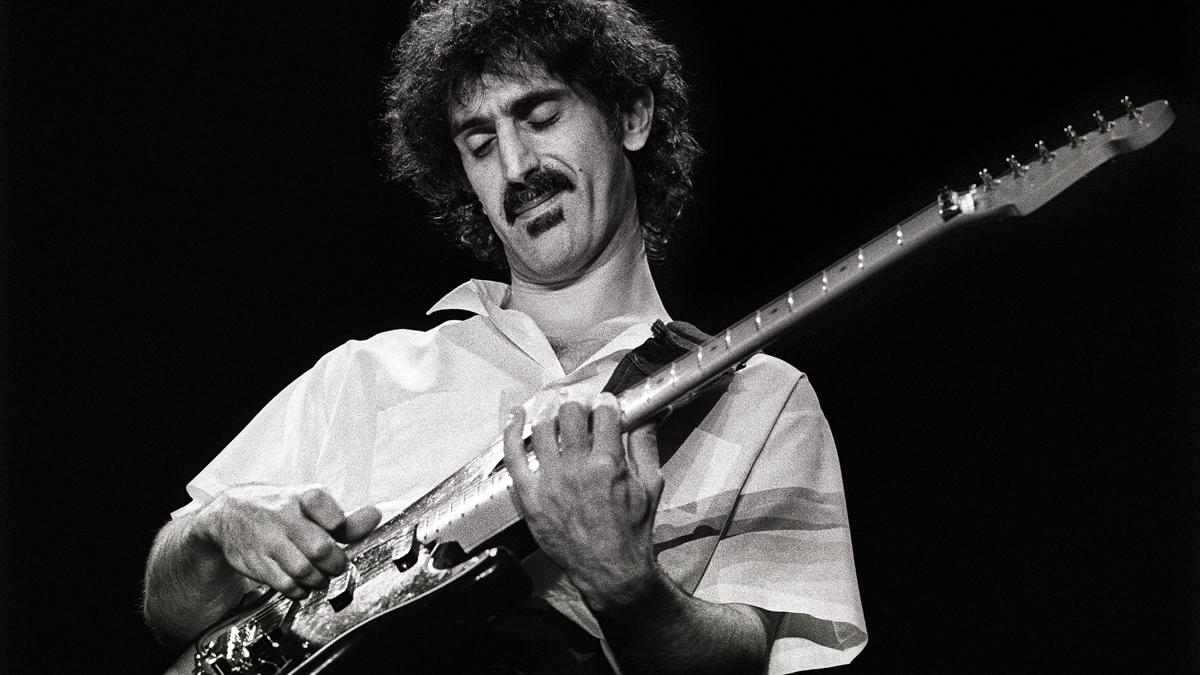
Frank Zappa was one of the most unconventional and fearless musicians in rock history. With a musical catalogue spanning rock, jazz, classical music, and the avant-garde, he constantly challenged expectations through his work with The Mothers of Invention and his solo career. His experimental compositions, sharp satire, and uncompromising artistic vision made him stand out from his contemporaries.
While many musicians of the 1960s and 1970s experimented with traditional blues structures and familiar rock sounds, Zappa pushed boundaries much further. His music demanded attention, challenged conventional thinking, and often forced listeners to reconsider what popular music could be. He was not simply a musician but also a cultural critic who questioned the values, personalities, and commercial machinery of the music industry.
Zappa was an individualist with a particularly sharp tongue. His criticism of other artists was often rooted in his extensive knowledge of musical history and composition. Influenced by composers such as Edgard Varèse and Igor Stravinsky, as well as doo-wop and rhythm and blues, he judged popular music against a broad artistic framework. He had little patience for what he considered musical complacency, manufactured celebrity, or commercial exploitation.
His refusal to follow the crowd frequently placed him at odds with some of the biggest names in rock. Even as a prominent figure in the counterculture, Zappa rejected many of its conventions, remaining suspicious of exaggerated rock-star personas and unquestioned cultural trends. His opinions could be provocative, but they reflected his determination to challenge the status quo.
From criticising the popularity of The Beatles to mocking Led Zeppelin’s larger-than-life reputation, Zappa never hesitated to express his views. Here are five bands that attracted his criticism and the reasons behind his objections.
1. The Velvet Underground
The Velvet Underground are widely recognised as one of the most influential bands to emerge from the 1960s underground music scene. Their experimental sound, dark subject matter, and association with artist Andy Warhol helped establish them as pioneers of alternative rock. However, despite their adventurous approach to music, they reportedly had a difficult relationship with Frank Zappa.
The tension is believed to have begun in 1966, when The Velvet Underground were performing in Los Angeles as part of Warhol’s multimedia production, The Exploding Plastic Inevitable. Zappa reportedly made sarcastic remarks about the band and the circle surrounding Warhol, contributing to an already uncomfortable relationship between the two acts.
Both groups were associated with MGM Records, although they occupied very different musical worlds. Zappa’s satirical and technically ambitious approach contrasted with The Velvet Underground’s raw, minimalist sound.
The disagreement became particularly memorable because of the harsh remarks attributed to Velvet Underground frontman Lou Reed. Reed reportedly dismissed Zappa’s musical abilities, while bandmate Sterling Morrison also made cutting comments about Zappa’s willingness to provoke controversy for commercial attention.
According to Jimmy Carl Black, Zappa’s bandmate in The Mothers of Invention, Zappa genuinely disliked The Velvet Underground. Black suggested that the band’s association with drug use might have contributed to his attitude, as Zappa was famously opposed to recreational drugs.
However, Zappa’s relationship with the band’s music appears to have been more complicated than a simple rejection. He later played recordings by The Velvet Underground during radio appearances, describing them as an authentic band. The episode illustrates how Zappa’s personal opinions and his assessment of music did not always fit neatly together.
2. The Beatles
Few bands transformed popular music as profoundly as The Beatles. Their songwriting, studio experimentation, and cultural influence reshaped the musical landscape of the 1960s. Yet their enormous popularity did little to impress Frank Zappa, who regarded the group’s elevated status with considerable scepticism.
At the height of Beatlemania, much of the world treated John Lennon, Paul McCartney, George Harrison, and Ringo Starr as cultural heroes. Zappa, however, was uncomfortable with the way the band had come to represent an entire generation.
His criticism was particularly evident on The Mothers of Invention’s 1968 album, We’re Only in It for the Money. The record satirised the counterculture, commercial exploitation, and the fashion for presenting oneself as part of a revolutionary movement. Its intended cover design famously parodied The Beatles’ Sgt. Pepper’s Lonely Hearts Club Band, although the parody was ultimately placed inside the album’s gatefold sleeve following objections from the record label.
Zappa’s attitude towards The Beatles was summed up in his blunt remark:
“Everybody else thought they were God!”
He followed this with the view that the group was simply a successful commercial act. For Zappa, the problem was not necessarily that The Beatles lacked talent, but that their immense popularity encouraged audiences to treat them as something beyond ordinary musicians.
Pauline Butcher, who worked as Zappa’s personal assistant between 1967 and 1971, offered another explanation for his distinctive approach. She suggested that Zappa understood he did not fit the conventional image of a rock star. Rather than imitate attractive, commercially successful performers, he deliberately cultivated an unusual public image to attract attention.
His provocative photographs, unconventional clothing, and irreverent stage persona became part of a calculated effort to distinguish himself from the mainstream. Instead of competing with The Beatles on their own terms, Zappa created an entirely different identity.
Interestingly, his preference for The Monkees over The Beatles also demonstrated his tendency to judge artists according to his own unconventional standards. Zappa was never interested in simply agreeing with popular opinion.
3. Jethro Tull
Led by the distinctive Ian Anderson, Jethro Tull developed a sound that blended hard rock, folk, blues, and classical influences. Their progressive arrangements and Anderson’s instantly recognisable flute playing made them one of Britain’s most distinctive rock bands.
Nevertheless, Anderson later revealed that he had heard about Zappa’s dislike of Jethro Tull during the 1970s.
In a BBC Radio 2 interview, Anderson recalled that he had never actually met Zappa, despite being a fan of his music. He believed that Zappa may have resented the commercial success achieved by British bands in the United States, including Jethro Tull, Led Zeppelin, and Deep Purple.
While these groups were attracting large audiences and generating substantial revenue, Zappa was working to maintain his own demanding musical projects. His uncompromising approach often made commercial success more complicated than it was for artists who appealed to broader audiences.
Anderson also remembered that Zappa had been unkind about the band in the press. Although he appreciated Zappa’s musicianship, the criticism left him uncertain about how to respond when an opportunity arose to speak with him.
According to Anderson, he received a message from one of Zappa’s musicians shortly before Zappa died of cancer in 1993. The message indicated that Zappa wanted him to call. Anderson ultimately did not take up the invitation, partly because he struggled with the idea of having a first conversation with someone who was seriously ill and whom he had never met.
The missed encounter remains an intriguing footnote in rock history. Anderson admired Zappa’s musical abilities, yet Zappa’s reputation for delivering cutting remarks made even a potential conversation feel intimidating.
Their story highlights one of the contradictions of Zappa’s personality: his musical intelligence earned widespread respect, but his uncompromising criticism could create distance between him and fellow musicians.
4. Led Zeppelin
Led Zeppelin helped redefine hard rock through their combination of heavy guitar riffs, powerful rhythms, blues influences, and mystical imagery. With Robert Plant, Jimmy Page, John Paul Jones, and John Bonham, the group became one of the most successful and influential rock bands of all time.
For Frank Zappa, however, Led Zeppelin represented another example of the oversized rock-star culture he frequently mocked.
Zappa was particularly fond of satire, and Led Zeppelin’s reputation provided plenty of material. He made references to the band’s infamous alleged “mud shark” incident during performances by The Mothers of Invention, and he also incorporated jokes about Robert Plant into his work.
His most memorable musical jab at the group came during his 1988 tour, when he and his band performed a reggae-inspired version of Led Zeppelin’s classic Stairway to Heaven.
The arrangement transformed one of rock’s most revered songs into an irreverent, rhythmically unusual performance. Rather than treating the original as untouchable, Zappa approached it as material that could be rearranged, questioned, and satirised.
According to guitarist Mike Keneally, there was considerable surprise among Zappa’s musicians when he asked the band to perform the song in its entirety. Zappa had apparently never listened to the whole track from beginning to end, but he knew how famous it was and wanted to explore it.
After becoming familiar with the song, Zappa reportedly criticised the chord progression used during the guitar solo. Nevertheless, he chose to perform it because he knew audiences would be astonished by the arrangement.
The result became one of the memorable moments of his later touring career. His version demonstrated how he could simultaneously recognise a song’s cultural importance and challenge the reverence surrounding it.
Zappa’s treatment of Led Zeppelin was not simply about rejecting their musical achievements. It was also a commentary on the way certain songs and performers became cultural institutions, protected from criticism by their own popularity.
5. The Doors
Frank Zappa’s attitude towards The Doors was more complicated than outright hostility towards the band’s music. His main objection concerned the mythology surrounding frontman Jim Morrison and the commercial machinery that transformed him into an almost supernatural rock-star figure.
Morrison’s image as the “Lizard King” became a central part of The Doors’ identity. His poetry, theatrical performances, and rebellious persona helped establish him as one of the most recognisable figures of the era. Zappa, however, believed that the media and music industry had exaggerated Morrison’s significance beyond what the reality justified.
Zappa was personally familiar with Morrison’s early years in Los Angeles. His wife, Gail Zappa, had known Morrison when they were children, and Zappa was aware of the band’s rise during its early days in the local music scene.
He explained that his objection was directed less at Morrison himself than at the way publications and commercial interests elevated the singer into a larger-than-life cultural icon.
Speaking about the phenomenon, Zappa criticised the way the entertainment industry took something and exaggerated it until the public accepted an inflated version of reality.
His argument reflected a broader concern that ran throughout his career. He believed that American popular culture often favoured exaggerated images and carefully manufactured personalities over honest assessments of artistic achievement.
In a 1982 interview with Guitar World, Zappa clarified that he was not simply attacking Morrison. Instead, he was questioning the system that transformed musicians into mythical figures and encouraged audiences to accept the resulting image without examining it critically.
This distinction is important. Zappa’s criticism was aimed at the machinery of celebrity culture, not necessarily at every aspect of The Doors’ music or Morrison’s artistic abilities.
For Zappa, the problem began when a musician’s public image became more important than the work itself.
Frank Zappa’s Legacy as Rock’s Uncompromising Critic
Frank Zappa’s criticisms of The Velvet Underground, The Beatles, Jethro Tull, Led Zeppelin, and The Doors reveal much about his approach to music and popular culture.
He was not interested in following the prevailing opinion simply because a band was successful or admired by millions. Instead, he evaluated artists according to his own standards, often questioning the relationship between musical creativity, commercial success, and public image.
His opinions were not always fair, and his sharp remarks sometimes alienated musicians whose work he might otherwise have appreciated. Yet his willingness to challenge established reputations was inseparable from the artistic independence that defined his career.
Zappa’s musical world was too broad to fit comfortably within the conventions of mainstream rock. He drew inspiration from classical composers, experimental music, jazz, and popular traditions, creating a body of work that consistently resisted easy categorisation.
His life also reflected his determination to operate outside conventional expectations. Despite his association with the counterculture, he rejected recreational drugs, challenged political and social conformity, and remained suspicious of celebrity worship.
Beyond music, Zappa experienced extraordinary moments that demonstrated his wider cultural influence. During the 1990s, following the fall of communism in Czechoslovakia, he was welcomed by political figures who saw him as a symbol of artistic freedom and resistance to authoritarianism.
His legacy therefore extends far beyond his disagreements with other musicians. Zappa was a composer, performer, satirist, and cultural commentator who believed that art should challenge audiences rather than simply reassure them.
Whether listeners agree with his opinions or not, his refusal to accept popular consensus helped make him one of the most distinctive figures in rock history. Decades after his death in 1993, his music continues to challenge expectations, while his sharp observations about fame, commerce, and conformity remain relevant to popular culture.