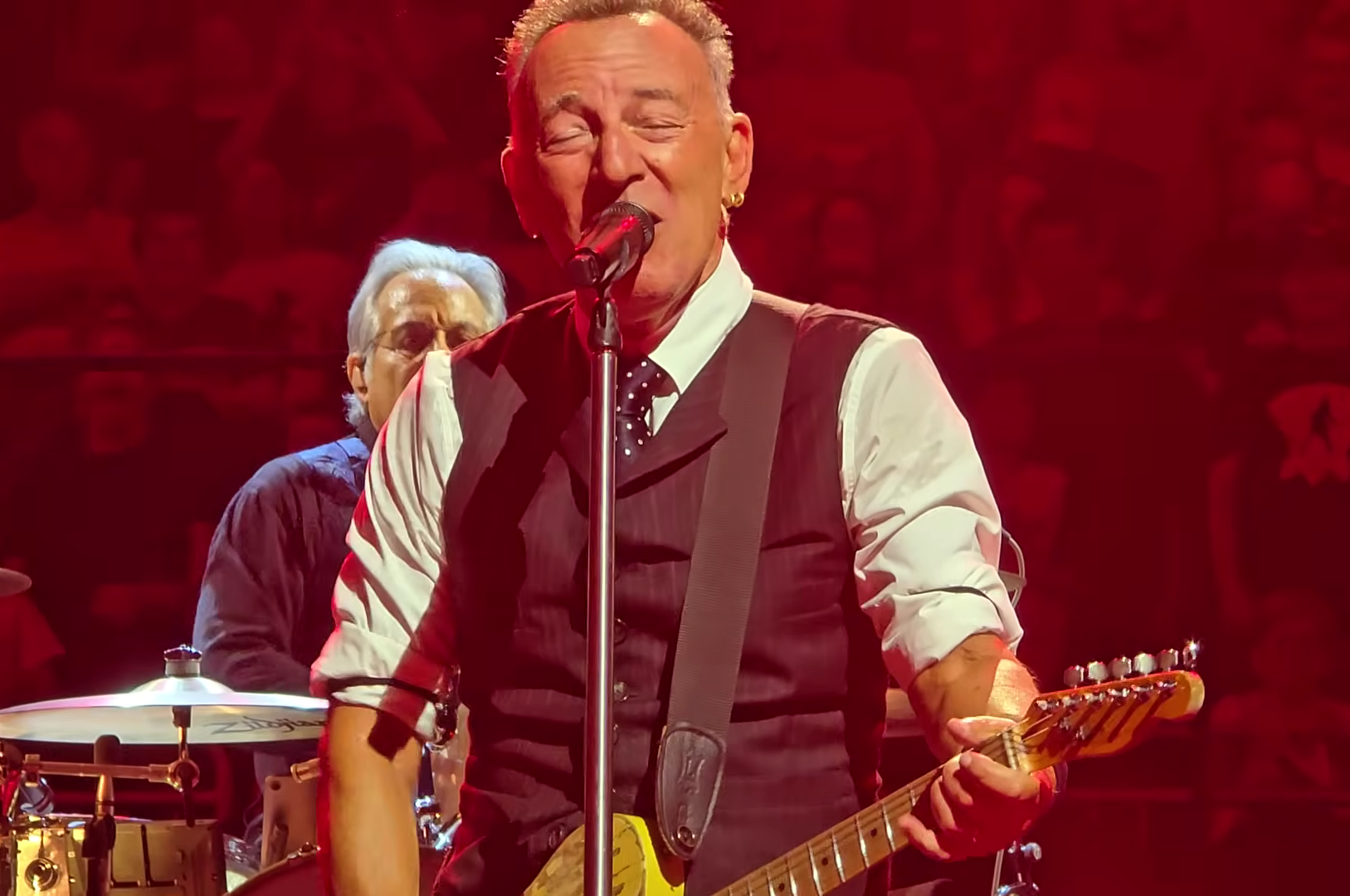
Bruce Springsteen is set to receive one of the most prestigious honours at the Tribeca Festival, as organisers announce him as the 2026 recipient of the Harry Belafonte Voices for Social Justice Award.
The award will be presented on June 13 at the OKX Theater at BMCC TPAC, recognising not only Springsteen’s legendary music career but also his decades-long commitment to activism, social commentary, and political engagement.
According to Tribeca co-founder Jane Rosenthal, the award celebrates individuals who actively use their influence to promote equality, dignity, and human rights.
“There are few figures who embody the spirit of Tribeca’s Harry Belafonte Award more fully than Bruce Springsteen,” Rosenthal said.
A Celebration Filled With Legendary Voices
The ceremony is shaping up to be one of the festival’s marquee events, with Bono set to join Springsteen for an onstage conversation reflecting on music, activism, and public responsibility.
The evening will also feature appearances from Robert De Niro and Patti Smith, further highlighting the cultural weight surrounding the event.
More than just a tribute to Springsteen’s career, the gathering represents a celebration of artists who have consistently used their platforms to engage with political and social issues rather than remaining silent during turbulent moments.
Springsteen’s Activism Remains Front and Centre
The timing of the award arrives during another politically outspoken chapter in Springsteen’s career.
His recent song, Streets of Minneapolis, was released as a protest against ICE-related killings in Minnesota, reinforcing his long-established reputation as an artist willing to directly address contemporary American issues through music.
Springsteen has also intensified his criticism of Donald Trump during his recent Land of Hope and Dreams Tour. During the opening night in Minneapolis, he reportedly referred to Trump as a “snowflake,” reigniting tensions between the two public figures.
Trump quickly fired back, calling Springsteen a “dried up prune” and encouraging supporters to boycott both his music and live performances.
The exchange added another chapter to the increasingly public relationship between politics and popular music, especially among legacy artists whose influence extends far beyond entertainment.
A Call for Unity Amid Political Division
Despite the heated rhetoric, Springsteen struck a notably more measured and unifying tone following the shooting incident connected to the White House Correspondents’ Dinner on April 25.
Speaking to a crowd in Austin the following evening, Springsteen offered prayers for members of the military overseas before addressing the previous night’s violence directly.
“We can disagree. We can be critical of those in power. And we can peacefully fight for our beliefs, but there is no place in any way, shape, or form for political violence of any kind in our beloved United States.”
The statement reflected a balance that has defined much of Springsteen’s public voice throughout his career. He remains unapologetically political, yet consistently frames dissent as part of democratic participation rather than division itself.
That distinction may be exactly why honours like the Harry Belafonte Voices for Social Justice Award carry particular significance in today’s climate.
Why the Recognition Matters
For decades, Bruce Springsteen has occupied a unique place in American culture. He is simultaneously a rock icon, a working-class storyteller, and a political voice willing to confront uncomfortable realities.
Whether through albums like Born in the U.S.A., outspoken public commentary, or activism woven directly into his performances, Springsteen has continually blurred the line between artist and civic participant.
The Tribeca honour recognises more than celebrity activism. It acknowledges a career built around using music as a platform for social reflection, protest, empathy, and dialogue.
At a time when political and cultural divisions continue to deepen, Springsteen’s message remains rooted in something increasingly rare: the belief that disagreement and unity can still coexist within the same democratic conversation.