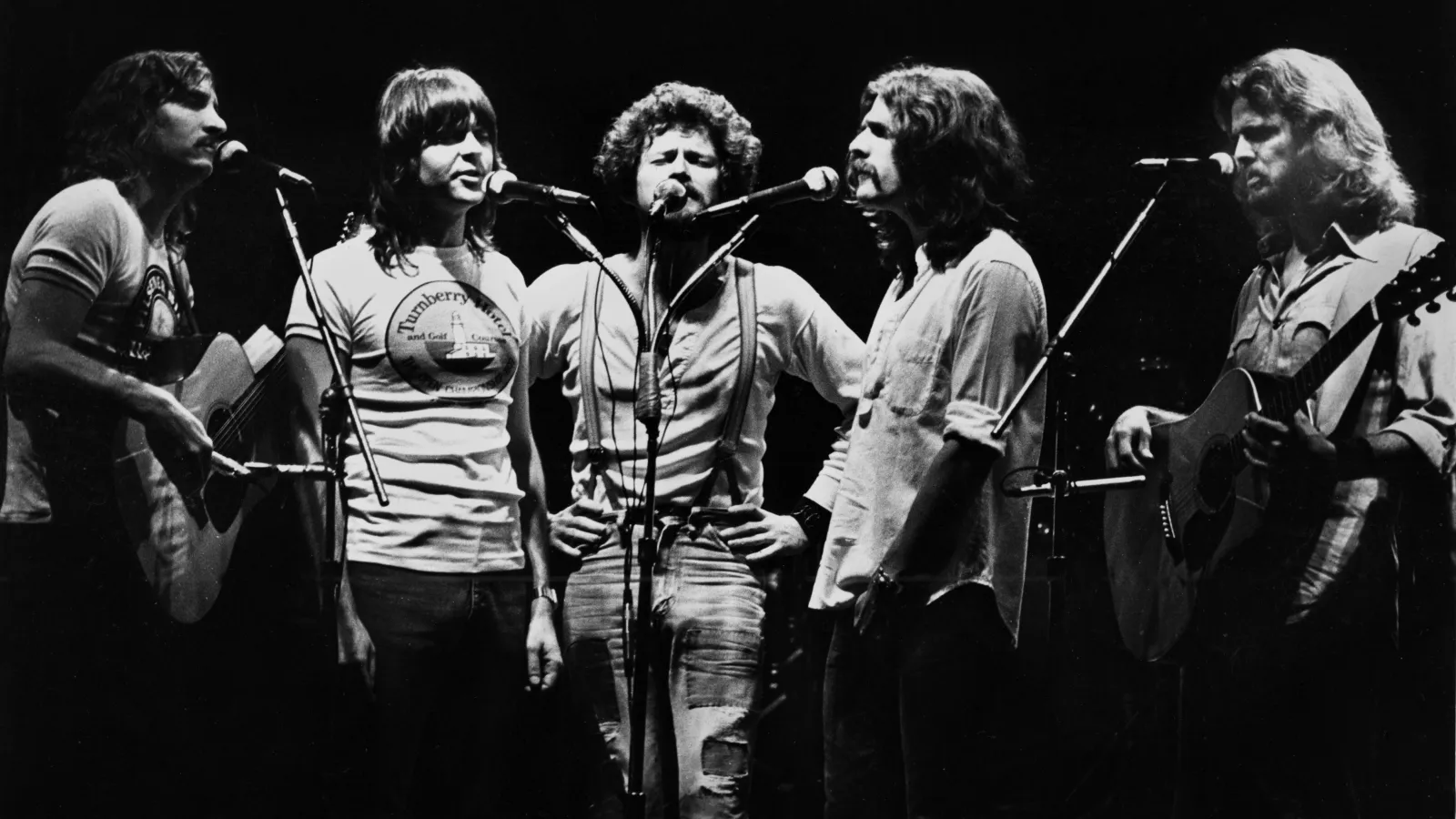
Few songs in rock history have inspired as much debate over their meaning as the Eagles’ “Hotel California.” Released in 1976 as the title track of the band’s fifth studio album, the song became an instant hit and has remained a staple of classic rock radio ever since — largely because its lyrics resist any single, tidy explanation.
Written primarily by Don Felder, Don Henley, and Glenn Frey, “Hotel California” tells the story of a weary traveler who checks into a mysterious hotel, only to discover he can never truly leave. Over the years, fans have proposed interpretations ranging from a commentary on drug addiction and excess to a critique of the music industry’s seductive but trapping nature, to even more elaborate theories involving cults or the occult.
Henley and Frey have periodically pushed back on the wilder interpretations, describing the song more broadly as a reflection on the excesses of American culture in the 1970s, particularly the hedonism and superficiality the band witnessed firsthand living in Southern California during their rapid rise to fame. Rather than referencing a single event or place, the song was intended as a kind of allegory: California itself, and the music industry surrounding it, functioning as a beautiful trap that’s easy to enter and nearly impossible to escape once success and excess take hold.
Musically, the track is just as celebrated as its lyrics. Felder’s intricate guitar work, combined with the extended dueling guitar solo he traded with Joe Walsh at the song’s conclusion, is frequently ranked among the greatest guitar solos in rock history. The arrangement’s blend of Latin-tinged rhythm guitar with a slow, building rock structure gave the song a distinct sonic identity that stood apart from much of the Eagles’ more straightforward country-rock catalog.
“Hotel California” went on to win the Grammy for Record of the Year in 1978 and became the title track of an album that has sold more than 26 million copies in the United States alone, making it one of the best-selling albums of all time. Its cultural footprint has only grown over the decades, with the song remaining a staple of classic rock radio and a frequent subject of documentaries, retrospectives, and internet debate.
Despite the band’s own explanations, the mystery surrounding the song’s meaning has never fully dissipated — and that ambiguity may be exactly why it has endured. Unlike songs tied to a specific, easily explained event, “Hotel California” leaves enough room for listeners to project their own interpretations onto it, ensuring that conversations about what it “really” means continue nearly fifty years after its release.