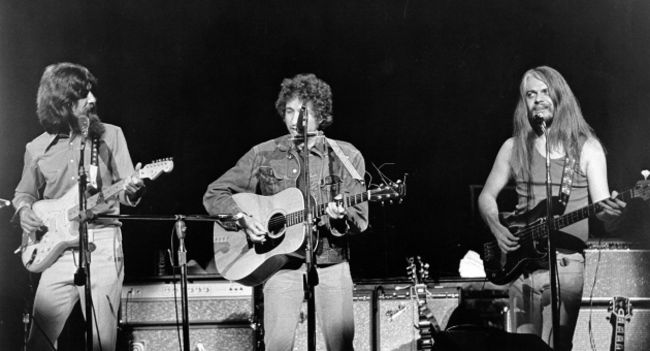
On July 25, 1965, Bob Dylan walked onto the stage at the Newport Folk Festival with an electric guitar, backed by a rock band, and forever changed the trajectory of popular music — while igniting one of the most infamous controversies in festival history.
Up until that point, Dylan had built his reputation as the voice of the American folk revival, delivering acoustic protest songs that made him a hero to the folk purist crowd that packed Newport each summer. That crowd expected more of the same. Instead, Dylan launched into an electrified, blues-rock-influenced set featuring songs like “Maggie’s Farm” and “Like a Rolling Stone,” backed by members of the Paul Butterfield Blues Band.
The reaction was immediate and divided. Some in the audience booed loudly, viewing the electric instrumentation as a betrayal of folk music’s stripped-down, acoustic authenticity. Others have since suggested the sound quality at the outdoor venue was partly to blame, with poor mixing making the performance sound harsher than intended. Regardless of the exact cause, the moment became legendary almost overnight, cementing itself as a symbolic clash between old and new musical values.
Longtime folk figures, including festival organizers associated with the traditionalist wing of the movement, were reportedly uncomfortable with the shift, viewing Dylan’s move toward rock instrumentation as commercially motivated. Dylan, for his part, seemed unbothered by the backlash. He returned later that same set for a brief acoustic encore, performing “Mr. Tambourine Man” and “It’s All Over Now, Baby Blue,” almost as if to acknowledge the controversy without fully capitulating to it.
In the years that followed, Dylan leaned further into the electric sound, releasing “Highway 61 Revisited” and “Blonde on Blonde,” albums now considered among the greatest of all time. The backlash he faced at Newport would follow him on tour throughout 1965 and 1966, with audiences across the UK and US continuing to voice their displeasure at his abandonment of pure folk arrangements.
Looking back now, the Newport controversy reads less like a rejection of Dylan and more like a snapshot of a genre in transition. Folk music’s insistence on acoustic purity gave way to a broader rock landscape that Dylan himself helped define, and many of the same fans who once booed him would go on to embrace the electric sound as it became the dominant force in popular music.
Dylan rarely discussed the Newport controversy directly in interviews for decades afterward, treating it as simply one moment in a career built on continual reinvention. But its cultural weight has never faded — it remains one of the defining flashpoints in the history of American music, a single night that marked the end of one era and the beginning of another.