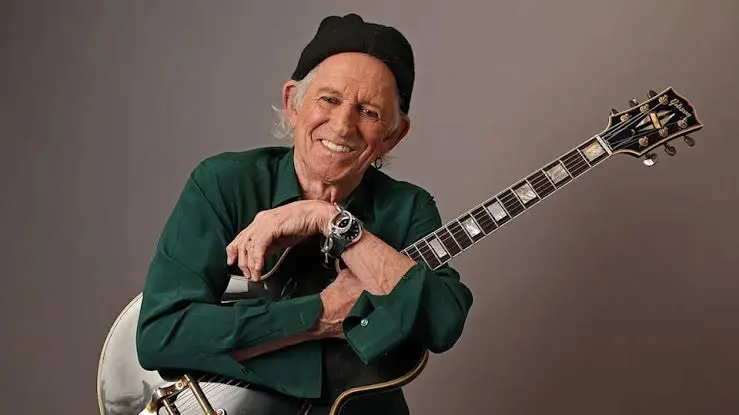
Keith Richards has heard everything. That is not a figure of speech. The man has been alive and paying close attention since the early 1950s, when American blues records began washing up on British shores like messages in bottles. He has shared stages with Chuck Berry, recorded with Gram Parsons, jammed with jazz legends, sat in rooms with musicians that most people would consider gods. He has also, by his own cheerful admission, been significantly impaired for large portions of this time — which somehow only seems to have deepened his musical instincts rather than dulled them.
So when Keith Richards says a band is the greatest he has ever heard, that is not casual praise. That is a verdict from a man with seventy years of evidence.
The band is Muddy Waters and his band. Specifically the electric Chicago blues band that Waters assembled in the late 1940s and early 1950s — Little Walter on harmonica, Jimmy Rogers on guitar, Otis Spann on piano, and a rhythm section that sounded like a slow-moving earthquake. This was not polished music. It was not made for concert halls or record label presentations. It was made for Saturday nights, for small clubs, for people who needed music that understood exactly what their week had felt like.
Richards first heard Muddy Waters as a teenager in England, and the effect was immediate and permanent. “I wanted to be that,” he said. Not play like that. Not sound like that. Be that. The Rolling Stones were not, at their origin, a rock and roll band. They were a blues cover band — specifically a Muddy Waters cover band — who gradually developed their own identity while never fully escaping the gravitational pull of those Chicago recordings.
The song that broke Richards open was Rollin’ Stone (1950) — the same song that gave the Stones their name, and that Bob Dylan later used as the starting point for Like a Rolling Stone, arguably the greatest rock song ever recorded. One song title, three of the most important acts in rock history. That is the reach of Muddy Waters.
What Waters had, according to Richards, was absolute authority. You did not question whether he meant what he was singing. You did not wonder whether the emotion was performed. The music arrived fully formed and completely true, the way weather arrives — not as a choice but as a fact. Little Walter’s harmonica playing alongside Waters was so advanced that harmonica players today, seventy years later, are still trying to understand how he did it. Otis Spann’s piano was so tasteful and so perfectly placed that removing it from any track would be like removing a wall from a building.
Richards has said that everything the Stones ever did was an attempt to be worthy of that music. By most measures, they came closer than anyone else. But Richards has never pretended they got there.
In a music world full of people crediting their obvious contemporaries and commercially safe influences, there is something deeply honest about Keith Richards — one of the most famous rock musicians in history — consistently pointing backward to a Black Chicago bluesman as the greatest he ever encountered. It is the most rock and roll thing about him.