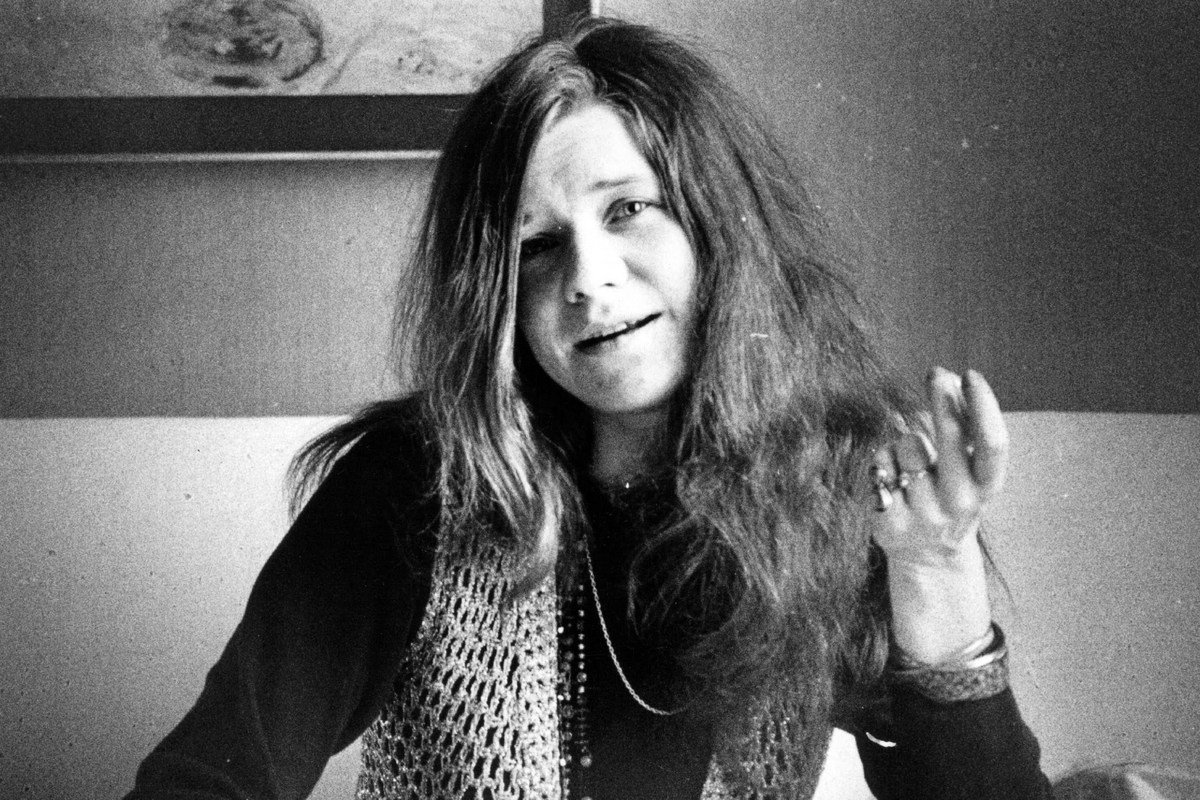
When it comes to iconic women of the 1960s counterculture, few names stand out quite like Grace Slick and Janis Joplin. Both were fearless, outspoken and fiercely independent women who challenged the expectations of their time. In a male-dominated music industry, they proved that women could do more than simply keep up with their male counterparts — they could outshine them.
Although their personalities were very different, Slick and Joplin shared a special bond. They were kindred spirits, united by their rebellious attitudes, love of music and refusal to conform. Their friendship became one of the most memorable connections of the hippie era.
Their story received renewed attention with the release of Janis Joplin: Days & Summers, a scrapbook published by Joplin’s estate. Drawing from her personal archives, the collection offers an intimate glimpse into her life between 1966 and 1968, featuring rare photographs, unpublished letters, personal souvenirs and other previously unseen material.
It was only fitting that Grace Slick, one of Joplin’s closest friends and fellow counterculture icons, was invited to write the introduction.
Reflecting on Joplin’s unforgettable stage presence, Slick recalled just how impossible it was to look away when her friend performed.
“The Janis I knew at the time was a wonderful, wisecracking wild woman who drank like I did – straight out of a pint bottle,” Slick remembered. “Why waste time with glasses? Like Otis Redding, you just couldn’t turn away when she was on. She would stomp her feet, toss her hair and go from a whisper to a full-on scream in a split second… I didn’t want to go on after her.”
It was a description that captured everything that made Joplin such a compelling performer. Her voice could move from vulnerability to explosive power in an instant, while her raw energy made every performance feel unpredictable.
In a 2019 interview with Uncut, Slick also spoke about the lighter, more personal side of their friendship. She felt that many writers had misunderstood Joplin, portraying her without fully capturing the humour and warmth she brought to everyday life.
“People who write books really get Janis wrong. The woman I knew would cackle, she’d laugh so hard, and was fun to be with. Very vocal, very outspoken, very funny. Texas women tend to be like that,” she explained.
Slick famously described their contrasting personalities with a simple phrase: “They called us fire and ice. I was the ice and she was the fire.”
Despite their differences, Slick had enormous admiration for her friend. She believed Joplin had become a much greater symbol of the era, praising her distinctive style and the extraordinary way she pushed the boundaries of what a female singer could do.
Their friendship also existed within a particularly turbulent period of rock history. The late 1960s counterculture celebrated freedom, experimentation and rebellion, but its excesses came with devastating consequences.
Speaking about Joplin’s tragic death, Slick reflected on the drug culture surrounding their circle and the dangers that many young musicians failed to recognise. She recalled how people often underestimated the risks of their experimentation, particularly because they were not careful about what they were taking or how much.
Joplin died in October 1970, aged just 27. Her death became one of the most heartbreaking moments in rock history, leaving behind a remarkable musical legacy and a generation of friends who had lost someone irreplaceable.
The influence of Joplin and Slick, however, extended far beyond their own music. Their friendship even found its way into one of Fleetwood Mac’s most beloved songs, Gypsy.
In a 2009 interview with Entertainment Weekly, Stevie Nicks explained that the song was deeply connected to her memories of San Francisco during the 1960s. In particular, she recalled a small clothing shop called the Velvet Underground, where Joplin and Slick used to find some of their clothes.
Remembering the inspiration behind the lyrics, Nicks explained:
“That’s the words: ‘So I’m back to the velvet underground’ — which is a clothing store in downtown San Francisco, where Janis Joplin got her clothes, and Grace Slick from Jefferson Airplane, it was this little hole in the wall, amazing, beautiful stuff — ‘back to the floor that I love, to a room with some lace and paper flowers, back to the gypsy that I was.’”
For Nicks, the song was a nostalgic return to a time when music, fashion and individuality were intertwined. The memories of women like Joplin and Slick represented the freedom and spirit of a generation that refused to live by conventional rules.
Looking back, the friendship between Grace Slick and Janis Joplin remains one of the most fascinating relationships of the 1960s counterculture. They were two extraordinary women with different personalities but a shared rebellious spirit. Both changed the image of women in rock music and helped create a space for future generations of female performers.
Joplin may have been gone far too soon, but her friendship with Slick remains part of the enduring mythology of the era. And considering how much history the two shared, it is hard not to wonder how many more stories Grace Slick still has to tell about her unforgettable friend.