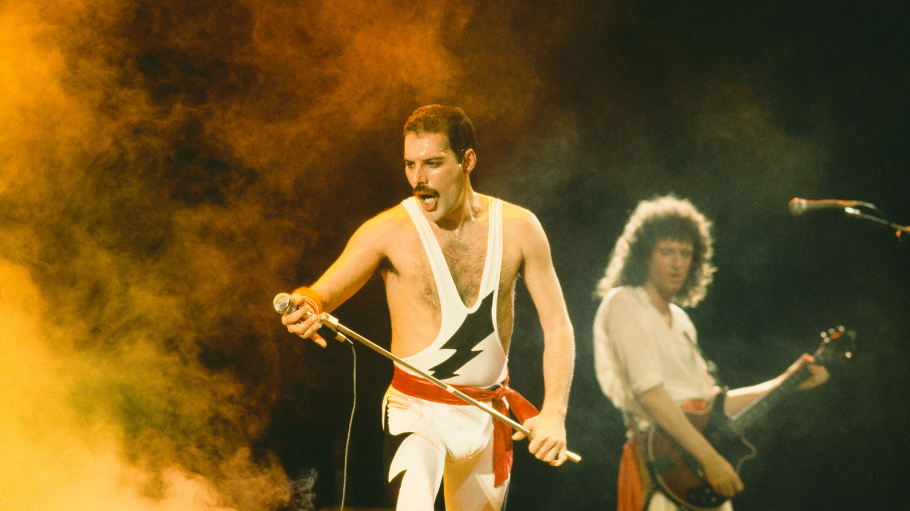
On July 13, 1985, Queen took the stage at Wembley Stadium for a 20-minute set as part of Live Aid, the global benefit concert organized to raise money for famine relief in Ethiopia. What followed has since been studied, replayed, and celebrated as arguably the greatest live performance in rock history.
Queen wasn’t even the headliner that day, and the band had reportedly been uncertain about their song selection given the strict time limit. But from the moment Freddie Mercury walked out and hit the first notes of “Bohemian Rhapsody,” it was clear something extraordinary was happening. Mercury commanded the massive crowd with an ease that few performers before or since have matched, using nothing more than a piano, a microphone stand, and his own magnetic presence to control tens of thousands of people at once.
The now-famous “call and response” moment, where Mercury led the entire stadium through a wordless vocal exchange, has become one of the most replayed clips in music history. It wasn’t planned as a gimmick — it grew naturally out of Mercury’s instinct for audience connection, something he had spent over a decade honing on smaller stages before Queen became one of the biggest bands in the world.
The band packed “Bohemian Rhapsody,” “Radio Ga Ga,” “Hammer to Fall,” “Crazy Little Thing Called Love,” and “We Will Rock You” into their brief set, along with a snippet of “We Are the Champions” to close things out. Every song was chosen for maximum crowd participation, and the strategy worked: surveys and retrospectives conducted in the years since have repeatedly ranked Queen’s Live Aid set above every other performance that day, including sets from Led Zeppelin, David Bowie, and The Who.
Guitarist Brian May and the rest of the band have often reflected on how the pressure of the tight time slot forced them to strip their performance down to its most powerful essentials, with no room for indulgence. That constraint, paired with Mercury’s fearless command of the stage, created a set that needed no elaborate production to leave an impact.
What makes the performance even more remarkable in hindsight is the context: Mercury was already dealing with the vocal strain of a grueling touring schedule, and within a few years his health would begin declining due to complications from AIDS, which he kept private until shortly before his death in 1991. Watching the Live Aid set now, knowing what was ahead, only deepens its emotional weight.
Nearly four decades later, footage of those 20 minutes continues to circulate constantly online, introducing new generations to a performance that somehow still feels immediate, urgent, and utterly alive.