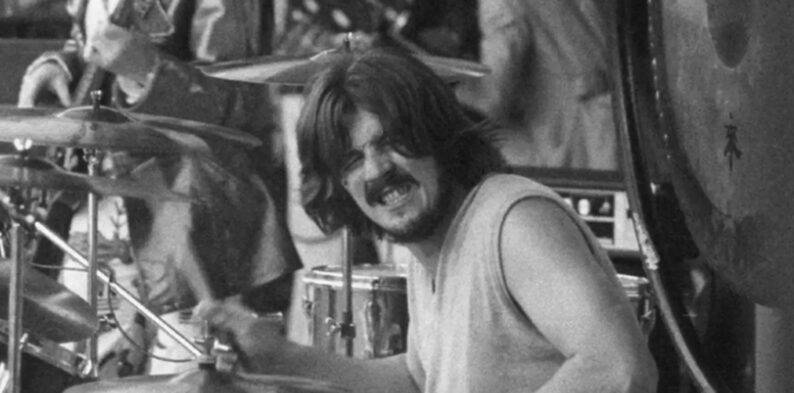
Nearly 46 years after his death, John Bonham’s name still comes up first in almost any conversation about the greatest rock drummers of all time. His playing combined raw power with an almost impossible sense of groove, and these five Led Zeppelin tracks capture exactly why.
“Moby Dick” remains the definitive showcase of Bonham’s technical range. Built around a drum solo that could stretch past 20 minutes in concert, the track let Bonham demonstrate everything from thunderous double-bass work to intricate hand-drumming passages performed without sticks at all.
“When the Levee Breaks” is arguably Bonham’s most sampled and studied performance. Recorded in a stairwell at Headley Grange using a single stereo microphone setup, the drum sound achieved on this track became so influential that entire genres of hip-hop production would later be built around chopping up its swampy, cavernous groove.
“Good Times Bad Times” opens Led Zeppelin’s 1969 debut album and immediately announced Bonham’s arrival as a force in rock music. The song’s rapid single-footed bass drum triplets stunned drummers at the time, many of whom assumed a double bass pedal had to be involved.
“Kashmir” showcases a different side of Bonham’s genius — his restraint and sense of space. Rather than overplaying against the song’s hypnotic, orchestral arrangement, Bonham locked into a steady, almost martial rhythm that gave the track its unmistakable weight and grandeur.
“Achilles Last Stand” closes out this list as a display of raw stamina and drive. Clocking in at over ten minutes, the song demanded relentless energy from Bonham throughout, and his performance holds the entire sprawling arrangement together without ever losing momentum.
What set Bonham apart from his contemporaries wasn’t just technical skill — plenty of drummers in the 1970s could match his speed or power on paper. It was his feel, the way he seemed to lean slightly behind the beat while still driving the band forward, creating a groove that felt both loose and locked-in at once. Producers and fellow musicians have long pointed to his unique combination of a hard-hitting attack with genuine musicality as something almost impossible to replicate.
Bonham’s death in September 1980, at just 32 years old, effectively ended Led Zeppelin — the surviving members felt the band could not continue without him, a decision that speaks volumes about how central his playing was to the band’s identity. Decades later, his influence remains everywhere, from stadium rock to hip-hop, proof that his rhythmic fingerprint never really left popular music.