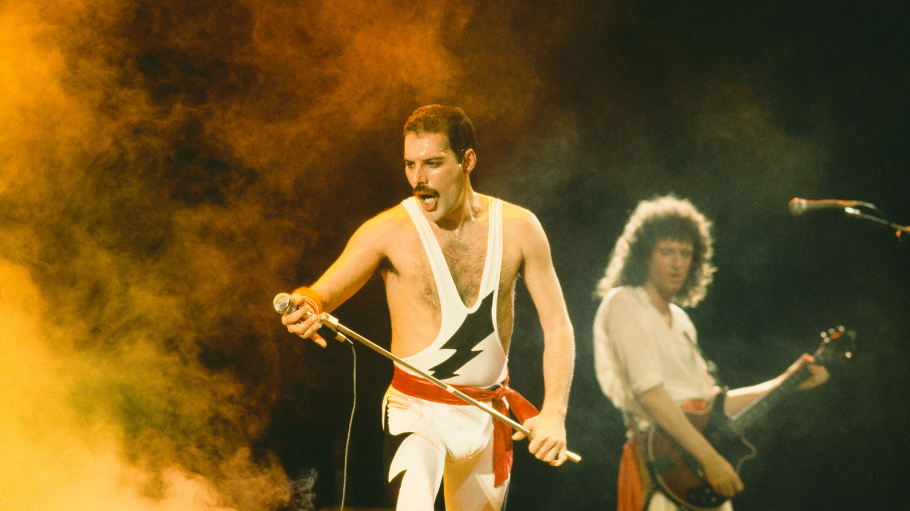
Freddie Mercury spent more than a decade as one of the most fearless performers on the planet. He commanded stadiums, controlled crowds of hundreds of thousands with a single clap, and rarely looked rattled in front of anyone. But according to the people who knew him best, there was exactly one person who could turn the unshakeable Queen frontman into a nervous wreck: Spanish opera legend Montserrat Caballé.
Mercury’s love affair with Caballé’s voice began in 1981, when his personal assistant Peter Freestone took him to London’s Royal Opera House to hear the legendary Luciano Pavarotti perform. The plan backfired almost immediately. The moment Caballé began to sing, Freestone later recalled, Mercury stopped paying attention to Pavarotti entirely.
For years afterward, Mercury was too intimidated to actually meet her. According to those close to him, he worried that getting to know Caballé in person might shatter the image he had built of her in his head — the towering, untouchable diva of his imagination. It wasn’t until 1986, during a Spanish television interview, that Mercury publicly named her as his favorite singer in the world. Word got back to Caballé, and when Barcelona was chosen to host the 1992 Olympics not long after, she had an idea: why not ask the rock star who clearly admired her to write the host city’s theme song?
Their first meeting, in February 1987 at Barcelona’s Ritz hotel, became the stuff of legend among Mercury’s inner circle. Freestone said he had never seen Mercury so nervous in all the years he’d known him, watching him chain-smoke and pace the suite beforehand. Mercury, notorious for arriving fashionably late to everything, showed up five minutes early out of pure anxiety. When Caballé herself ran four minutes behind, Mercury was already convinced she had stood him up entirely.
She hadn’t, and the partnership that followed produced one of the strangest, most beautiful crossover albums in rock history: 1988’s “Barcelona.” Working alongside songwriter Mike Moran, Mercury built the album around Caballé’s voice, deferring constantly to her decades of operatic training even as he brought his own four-and-a-half-octave range to the sessions. By most accounts, the two fell into an almost instant, easy friendship once the nerves wore off, trading jokes and laughing through long studio days in Montreux, Switzerland.
It was during the recording of the title track that Mercury reportedly came closer to tears than anyone around him had ever witnessed. Freestone described the moment Caballé laid down her first vocal take on “Barcelona” as the nearest he ever saw Mercury get to crying, watching him grab his assistant’s hand in sheer disbelief that this voice was singing his music.
By 1990, Mercury’s health was failing from complications of AIDS, a diagnosis he had largely kept private. He confided in Caballé directly that he likely wouldn’t live to perform “Barcelona” at the actual Olympic opening ceremony it was written for. He was right. Mercury died in November 1991, and when the 1992 Games opened in his honor, the song played over footage of the city while his recorded voice stood in for the appearance he never got to make.