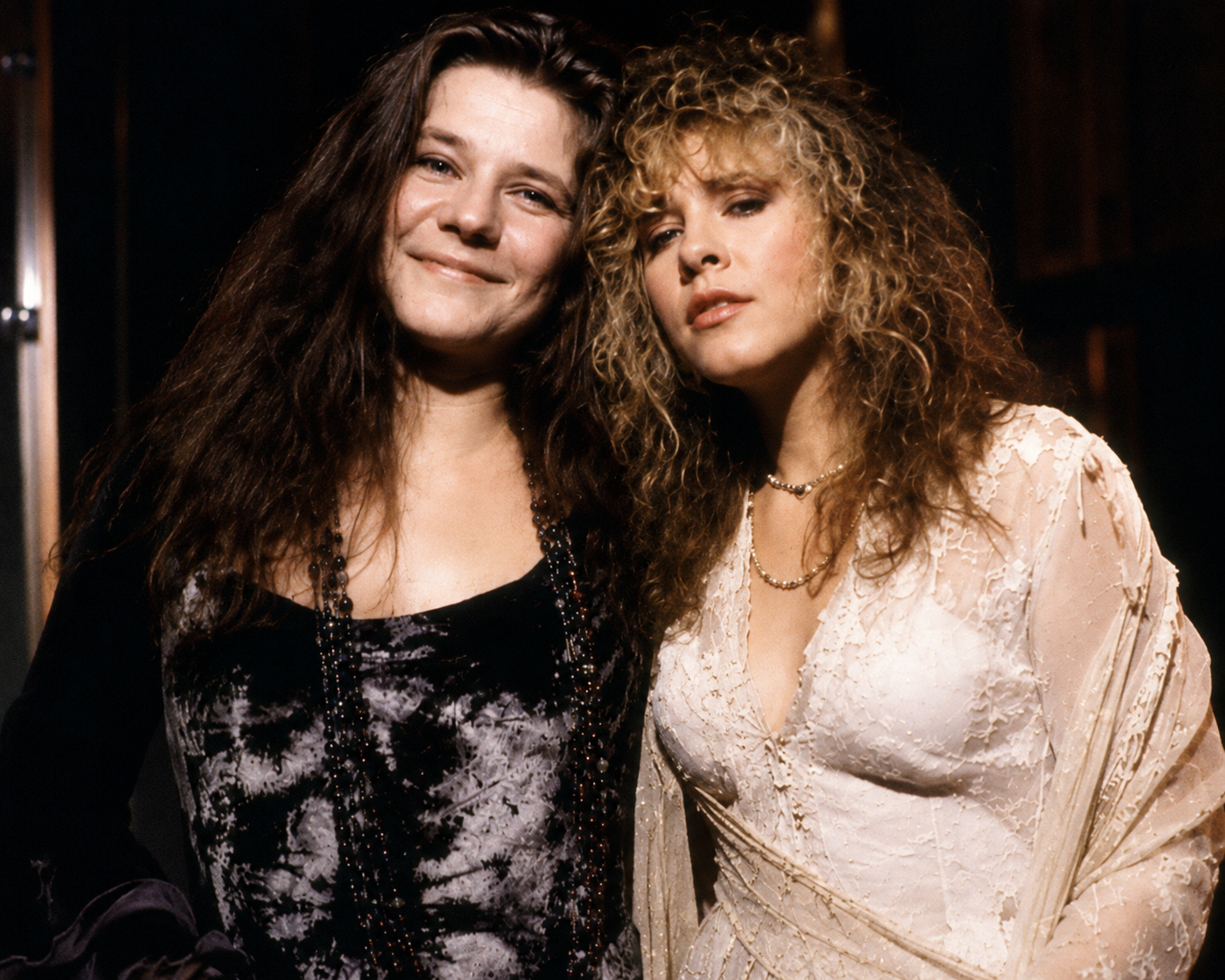
Few voices in rock history have been as powerful, distinctive, and emotionally captivating as those of Janis Joplin and Stevie Nicks. Although they belonged to different generations of classic rock, both women shared an extraordinary ability to connect with audiences through their music.
In the 1960s, Janis Joplin became one of rock music’s most unforgettable voices. Her raw, soulful delivery and fearless stage presence made her a force unlike any other. She sang with an intensity that seemed to come from somewhere beyond the ordinary, pouring her heart into every performance. By the 1970s, Stevie Nicks had emerged as another remarkable female voice, bringing a more ethereal and poetic quality to rock music through her work with Fleetwood Mac.
But long before Nicks became a household name, she had already witnessed the extraordinary influence of Joplin firsthand.
The Lesson Janis Joplin Left Behind
Janis Joplin was more than a gifted singer. She represented independence, authenticity, and the courage to remain true to herself in an industry largely dominated by men. She refused to compromise her artistic identity and helped open doors for generations of female musicians.
In a 2011 interview with The Telegraph, Stevie Nicks reflected on the important lesson she learned from Joplin.
“From Janis, I learned that to make it as a female musician in a man’s world is gonna be tough, and you need to keep your head held high,” Nicks explained.
For Nicks, Joplin represented the strength and determination required for women to establish themselves in rock music.
The Night Stevie Nicks Was Yelled Offstage by Janis Joplin
Interestingly, the two singers actually crossed paths in the late 1960s, before Stevie Nicks achieved international fame.
At the time, Nicks was performing alongside Lindsey Buckingham in their band, Fritz. They were given the opportunity to open for some of the biggest names in rock, including Janis Joplin and Jimi Hendrix.
During an appearance on Ultimate Classic Rock Nights, Nicks recalled one particularly memorable concert in San Francisco.
“It was a big huge show in San Francisco,” she remembered. “There was like 20 bands on; there was you, there were 15 more bands, and then there was Jimi Hendrix.”
However, things did not go quite as planned. When Fritz’s performance ran longer than expected, Joplin reportedly became impatient and yelled at the band, demanding that they leave the stage so her performance could begin.
For most young musicians, being shouted at by an established rock star might have been an embarrassing experience. But Nicks remembered it rather differently.
“Being yelled off the stage by Janis Joplin was one of the greatest honours of my life,” she later recalled.
It was an unforgettable encounter with a woman who understood exactly what it took to command a stage.
The Performance That Changed Her Destiny
What happened next would have an even greater impact on Nicks.
Watching Joplin perform, she witnessed something she had never experienced before: a connection between an artist and an audience that seemed almost spiritual.
“Janis Joplin had a connection with the audience that I had not seen before, and when she left the stage – I knew that a little bit of my destiny had changed,” Nicks explained.
She continued:
“I would search to find that connection that I had seen between Janis and her audience. In a blink of an eye, she changed my life.”
That moment became a defining inspiration for Nicks. She realised that being a great singer was about more than having a beautiful voice or performing technically impressive songs. It was about making people feel something genuine.
Two Different Voices, One Extraordinary Legacy
Janis Joplin and Stevie Nicks ultimately developed very different musical identities.
Joplin’s performances were explosive, passionate, and emotionally unfiltered. Her voice carried a blues-inspired intensity that made every song feel deeply personal.
Nicks, on the other hand, built her identity around poetic storytelling, mysterious imagery, and an unmistakable vocal style. Through songs with Fleetwood Mac and her solo career, she created a musical world that was entirely her own.
Yet both artists shared something fundamental: authenticity.
Joplin showed Nicks that a woman could stand confidently in a male-dominated music industry without sacrificing her identity. More importantly, she demonstrated the extraordinary power of connecting with an audience on an emotional level.
Although Janis Joplin died in 1970, five years before Fleetwood Mac released the self-titled album that helped make Stevie Nicks a star, her influence continued to live through the generations of musicians she inspired.
For Stevie Nicks, that brief encounter was more than a memory from her early musical career. It was a moment that helped shape the artist she would eventually become.
Sometimes, one performance is enough to change someone’s life forever. For Stevie Nicks, that performance belonged to Janis Joplin.