I thought I had already lost my son.
Not because Jake was dead.
That would have been easier to understand.
I had lost him in pieces.
A little more every year.
A little more every time his phone stopped working because he had sold it. A little more every time money disappeared from my purse. A little more every time I found him asleep on the bathroom floor and had to kneel beside him, praying he would open his eyes.
By the time Jake was twenty-three, I had become afraid of my own phone.
Whenever it rang late at night, my heart would stop for a second.
I was always waiting for someone to tell me that my son was in an ambulance.
Or a police station.
Or a hospital.
Or somewhere nobody could find him.
Then, on a Tuesday morning in November, the call finally came from the rehabilitation center.
“Mrs. Carter?”
“Yes?”
“This is Daniel from North Valley Recovery.”
I knew immediately from his voice that something was wrong.
“What’s happened?”
There was a pause.
“Jake left the facility this morning.”
For several seconds, I didn’t understand what he meant.
“Left?”
“He signed himself out.”
My hand tightened around the kitchen counter.
“He can’t do that.”
“He is twenty-three, ma’am. Legally, we can’t force him to remain unless there are specific circumstances that would allow involuntary treatment.”
I closed my eyes.
Jake had been there for nine days.
Nine days.
That was how long the third attempt had lasted.
The first program had lasted seventeen days.
The second had lasted nearly six weeks.
The third had barely made it past the first week.
“Did he take anything?” I asked.
“We don’t know.”
“Where is he?”
“We don’t know.”
That answer broke something inside me.
I sat down at the kitchen table because my legs didn’t feel strong enough to hold me.
For four years, I had watched heroin turn my son into someone I barely recognized.
Jake had once been the kid who fixed broken radios just to see if he could.
He used to take apart old appliances and put them back together, even when nobody had asked him to.
He played baseball in high school.
He loved fishing.
He had a terrible singing voice and didn’t care who heard it.
Then, at nineteen, he started using pills.
At first, he told me he had everything under control.
Then the pills became harder to find.
Then heroin entered the picture.
After that, everything changed.
There were doctors.
Therapists.
Support groups.
Emergency rooms.
Counselors.
Three rehabilitation programs.
Family meetings where I learned words I wished I had never needed to understand.
I learned about withdrawal.
Relapse.
Triggers.
Cravings.
Overdose.
Harm reduction.
I learned how to recognize the difference between my son’s normal sleep and the terrifying stillness that came after he used.
I learned how to keep naloxone in my purse.
I learned that addiction did not respond to love alone.
And that was perhaps the hardest lesson of all.
Because I loved him enough to move mountains.
But I couldn’t make him climb them.
That afternoon, I sat in my living room staring at Jake’s childhood photographs.
There was one of him at eight years old, standing beside a fishing lake with a fish almost as long as his arm.
He was grinning so hard that his eyes were nearly closed.
I wondered where that boy had gone.
Then my phone rang.
I almost didn’t answer.
The screen showed a name I hadn’t seen in months.
David.
My younger brother.
Jake’s uncle.
We had not had a real conversation in nearly three years.
David had spent two tours in the Marines and eventually settled in Montana. He rode motorcycles with a local group of veterans and longtime riders.
He was the kind of man who rarely called anyone.
If he called, there was usually a reason.
“Hello?”
“I heard about Jake.”
My throat tightened.
“How?”
“Someone from the recovery community called me. I know people out there.”
I wiped my eyes.
“He left again.”
“I know.”
“I don’t know where he is.”
“Neither do I.”
There was silence between us.
Then David asked, “Do you want me to help find him?”
I almost laughed.
“What can you do?”
“I don’t know yet.”
“David, we’ve tried everything.”
“No. You’ve tried everything you knew how to try.”
His voice became quieter.
“Let me try something different.”
Four hours later, David called again.
“I found him.”
I stood up so quickly that the chair scraped across the floor.
“Where?”
“A motel outside town.”
“Is he okay?”
“He’s alive.”
I closed my eyes.
“Is he high?”
“Yes.”
My stomach turned.
“Is he breathing?”
“Yes. I already called emergency services. They’re checking him.”
I sat back down.
David stayed with Jake until medical professionals arrived. Jake wasn’t hospitalized, but the medical team strongly recommended that he not attempt withdrawal alone.
David waited.
He didn’t threaten Jake.
He didn’t drag him into a truck.
He didn’t pretend that a motorcycle ride could cure addiction.
Instead, he sat beside him.
And apparently, after several hours, Jake finally said something David would later repeat to me.
“I don’t know how to stop.”
David told him, “Then stop trying to do it alone.”
That was the beginning.
Not a miracle.
Not a movie moment.
Just one exhausted young man finally admitting that he couldn’t keep doing what he had been doing.
Jake agreed to go to Montana voluntarily.
Before they left, David helped arrange professional treatment and medical supervision.
When he called me, I expected to hear that Jake was coming home.
Instead, he said, “He’s agreed to come with me.”
“To Montana?”
“Yes.”
“David, he’s my son.”
“I know.”
“You can’t just take him.”
“I’m not taking him, Sarah. He’s choosing to come.”
I didn’t answer.
Then David said something I would remember for the rest of my life.
“I’m not promising you I can save him. Nobody can promise that. I’m promising I’ll stay with him while he learns how to save himself.”
The next morning, Jake left.
I watched him put a small bag into David’s truck.
He wouldn’t look at me.
I wanted to run outside.
I wanted to grab him.
I wanted to tell him that his mother could fix everything if he would only come home.
But somewhere inside me, I knew that sentence wasn’t true anymore.
So I stood at the window and watched them leave.
For the first few weeks, there were no dramatic changes.
There was withdrawal.
There were sleepless nights.
There were arguments.
There were moments when Jake wanted to leave.
David told me later that one night Jake threw a chair against the wall because he was furious.
Another night, he sat on the floor for nearly an hour saying he couldn’t do it.
David didn’t lecture him.
He called the appropriate support.
He stayed nearby.
And when Jake finally said, “I want to use,” David answered honestly.
“I know.”
“That’s it?”
“What do you want me to say?”
“I don’t know.”
“Then let’s get through the next ten minutes.”
They did.
Then another ten.
Then another.
Recovery wasn’t a straight line.
There were counseling appointments.
Recovery meetings.
Long conversations.
Medical checkups.
Medication when professionals determined it was appropriate.
There were mornings when Jake didn’t want to get out of bed.
There were afternoons when he was angry at everyone.
There were nights when he called me and sounded like the old Jake again, only to disappear emotionally the next day.
But slowly, something began changing.
David gave him responsibilities.
Not as punishment.
As structure.
Jake started helping around the property where David lived.
He repaired an old motorcycle.
He chopped wood.
He cleaned the garage.
He started working part-time with a mechanic David knew.
None of those things cured him.
But they gave his days a shape.
And that mattered.
One afternoon, nearly six weeks after Jake left, David sent me a photograph.
Jake was sitting on the porch holding a coffee mug.
His hair was longer.
His face was thinner.
But his eyes were clear.
There was something else in the photograph that I hadn’t seen in years.
Peace.
David’s message said:
“He’s eating breakfast every morning.”
I stared at those six words for almost a minute.
Eating breakfast.
To somebody else, that might sound meaningless.
To me, it was enormous.
A few weeks later, another photograph arrived.
Jake was standing beside an old motorcycle with grease on his hands.
He wasn’t smiling for the camera.
He was laughing at something someone had said outside the frame.
I saved the photograph immediately.
Then I noticed something.
He looked like my son.
Not the person I had been afraid of.
My son.
The one from the fishing photograph.
The one who used to take broken things apart just to see if he could make them work again.
Still, I was terrified.
Recovery doesn’t erase the past.
I knew that.
So did David.
He never told me Jake was cured.
He never used that word.
Instead, his messages said things like:
“Good week.”
“Hard night, but he stayed.”
“He went to his meeting.”
“He’s working.”
“He called his counselor.”
“He had a craving today and talked about it instead of using.”
Those messages meant more to me than any promise.
Because they were real.
Around the fourth month, David called me.
“He’s talking now.”
“About what?”
“Everything.”
I didn’t understand.
“His father. School. The first time he used. Things he’s ashamed of. Things he never told you.”
I started crying.
“Is he angry with me?”
“Sometimes.”
That answer hurt.
Then David added, “And sometimes he’s angry with himself.”
That hurt even more.
“But he’s learning that guilt isn’t the same thing as responsibility.”
I listened quietly.
“He can’t change what happened,” David continued. “But he can decide what he does next.”
A few days later, David sent me a short video.
Jake was sitting around a fire with several men from the motorcycle club.
Someone was playing guitar.
One of the men was telling a ridiculous story.
Jake suddenly laughed.
Not a polite laugh.
Not a forced laugh.
A real one.
I put my hand over my mouth.
I watched the video again.
Then again.
I hadn’t heard my son laugh like that in years.
That night, I cried harder than I had on the day he left.
But this time, they were tears of relief.
About five months after Jake left, David called me early on a Sunday morning.
“He’s ready.”
“For what?”
“To talk to you.”
My hands immediately started shaking.
The phone changed hands.
Then I heard a voice.
“Hi, Mom.”
I couldn’t speak.
“Mom?”
“Hi, baby.”
There was silence.
Then Jake started crying.
So did I.
He apologized for everything.
The money.
The lies.
The stolen jewelry.
The nights he disappeared.
The times he promised he was clean when he wasn’t.
The times I found him unconscious.
The times he made me afraid to answer the phone.
“I’m sorry,” he whispered.
I closed my eyes.
“I know.”
“I hurt you.”
“You did.”
“I don’t know how to make it right.”
“You don’t have to fix four years in one conversation.”
He was quiet.
Then I said the words I had wanted to say for years.
“I’m proud of you.”
“Really?”
“Yes.”
“Even after everything?”
“Especially because I know how hard you’re fighting now.”
He started crying again.
Then he told me something I would never forget.
“When I first got here, I hated it.”
“I know.”
“I wanted to leave.”
“I know.”
“Uncle David told me I could leave if I wanted to. He said he wasn’t going to lock me anywhere.”
I smiled through my tears.
“He said I had to understand something first.”
“What?”
“Leaving doesn’t change what I’m running from.”
Jake took a breath.
“He told me that if I went back to the same people, places, and routines, I couldn’t expect my life to magically become different.”
I listened.
“Nobody here knew the old me,” Jake continued. “They didn’t know the kid who lied to his mother. They didn’t know the addict. They just knew Jake.”
His voice cracked.
“And for the first time in years, I started wondering who Jake actually was.”
I couldn’t answer.
He continued.
“I still don’t know.”
“That’s okay.”
“But I’m finding out.”
Six months after he left, I received a package.
Inside was a letter from David.
There was also a photograph.
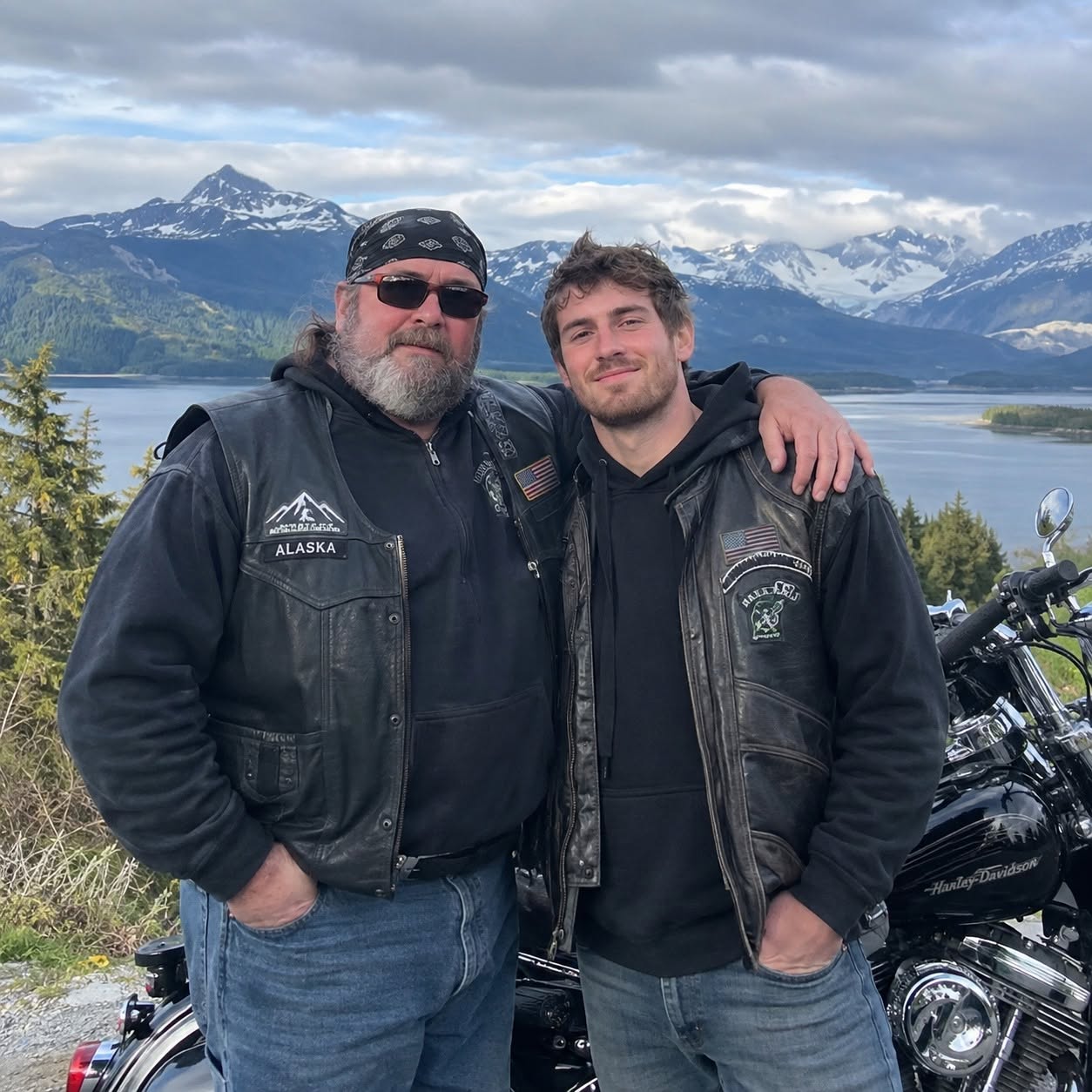
Jake was standing beside a motorcycle in front of the mountains.
He looked older.
Not older in a bad way.
Older in the way people look when life has finally forced them to grow up.
David’s letter said:
“Sarah,
I know you probably still wonder whether sending Jake here was the right thing.
I don’t know the answer.
None of us do.
Recovery doesn’t come with guarantees.
There are still difficult days.
There will probably be difficult days for years.
But he’s learning how to recognize them before they become disasters.
He’s working.
He’s saving money.
He’s attending his appointments.
He’s staying connected to recovery.
He’s making friends who know about his past and don’t define him by it.
Most importantly, he’s beginning to understand that staying clean isn’t something he does for us.
It’s something he has to choose for himself.
He talks about you constantly.
He misses home.
But I don’t want him to come back just because you miss him.
I want him to come back because he’s ready to build a different life there.
You did not fail him.
You loved him through something love alone couldn’t fix.
That’s different.
He’s still fighting.
And today, he’s still here.
David.”
I read the letter three times.
Then I put it beside Jake’s photograph on the refrigerator.
For years, I had believed that being a good mother meant never letting go.
I thought if I watched closely enough, called enough, begged enough, threatened enough, cried enough, or sacrificed enough, I could somehow force my son back into the person he used to be.
But addiction taught me something I never wanted to learn.
You can love somebody with every part of your heart and still be unable to make their choices for them.
Sometimes helping means staying.
Sometimes it means setting boundaries.
Sometimes it means getting professional help.
And sometimes, when someone you love is willing to take a different path, it means giving them enough room to walk it.
David didn’t rescue Jake with a motorcycle.
He didn’t cure him with tough talk.
The men around him didn’t possess some secret solution that doctors and therapists didn’t know.
What they gave him was something different.
Time.
Structure.
Accountability.
Companionship.
And a place where Jake could be known for who he was becoming instead of being constantly reminded of who he had been.
Jake didn’t suddenly become a different person.
He had bad days.
He had cravings.
He had regrets.
He had to face the damage he had caused.
But for the first time, he was facing those things without running straight back to drugs.
That was enough.
A few weeks later, my phone rang.
It was Jake.
“Mom?”
“Yes?”
“I think I’m ready.”
My heart started pounding.
“Ready for what?”
“To come home.”
I covered my mouth.
“When?”
“Soon.”
I started crying.
He laughed.
“You’re crying.”
“Of course I’m crying.”
“I’m scared.”
“So am I.”
“What if I mess up?”
I took a long breath.
“Then we deal with that day when it comes. But you’re not walking back into the same life. You’re coming home to build a new one.”
He was quiet.
Then he said, “I love you, Mom.”
“I love you too.”
When the call ended, I stood in the kitchen for several minutes.
The same kitchen where, six months earlier, I had received the call telling me Jake had walked out of rehab.
The same kitchen where I had sat with my head in my hands, convinced that I was watching my son disappear forever.
Now his photograph was still on the refrigerator.
But I no longer looked at it with fear.
I looked at it with hope.
I don’t know what the future holds for Jake.
Nobody does.
Recovery isn’t a finish line.
There isn’t a morning when someone wakes up and receives a certificate saying they are permanently safe from addiction.
There are choices.
One day at a time.
Sometimes one hour at a time.
But Jake is making those choices now.
He’s working.
He’s rebuilding trust.
He’s talking about his future.
He’s laughing again.
And he’s coming home because he wants to.
I used to think David gave me my son back.
He didn’t.
Nobody could.
The boy I lost four years ago isn’t coming back.
Jake has changed.
So have I.
What David helped my son find wasn’t his old life.
It was a chance to build a new one.
And maybe that’s what hope really looks like.
Not pretending the past never happened.
Not believing everything will suddenly become easy.
Just waking up one more morning and deciding that the story isn’t over yet.
Jake’s story isn’t over.
Neither is mine.
And when he finally walks through that front door, I know exactly what I’m going to do.
I’m not going to ask how much time has passed.
I’m not going to ask why it took so long.
I’m not going to make him promise me that nothing will ever go wrong again.
I’m simply going to open my arms.
Because for four years, I was terrified that one day I’d have to bury my son.
Now, I’m waiting for the day I get to watch him walk home.
And when that day comes, I’ll hold him as tightly as I can.
Not because I think I saved him.
But because he finally found the strength to start saving himself.