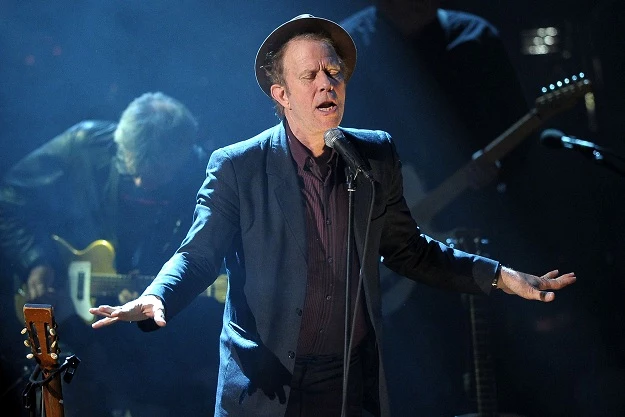
Tom Waits occupies a position in American music that is almost impossible to map onto the conventional coordinates of the industry — not famous in the way that commercially successful musicians are famous, not obscure in the way that cult figures are obscure, but something in between that has no clean name. He has sold a fraction of the records that his contemporaries have sold. He has been cited as a primary influence by more musicians than almost any other American artist of his generation. The gap between his commercial presence and his influence is among the largest in popular music, and the explanation for it is not difficult to find — his music is too strange, too committed to its own internal logic, too unwilling to meet the listener halfway for mass commercial consumption, and too true to be dismissed.
1. Tom Traubert’s Blues (1976)
Written from the perspective of a drunk waking up in a foreign city with nothing — no money, no identification, no clear sense of how he arrived — the song borrows the melody of Waltzing Matilda and uses it as a vessel for a portrait of alcoholic dissolution so precise and so unromantic that it makes the romanticization of drinking that characterizes most barroom ballads feel dishonest by comparison. Waits was in his mid-twenties when he wrote it. He has said he was writing from observation rather than purely from personal experience. People who knew him at the time have suggested the distinction was not entirely clean.
2. Downtown Train (1985)
The song that Rod Stewart took to number one in 1990 — a mainstream commercial success of a kind that the original recording, buried in Waits’s Rain Dogs album, was never going to achieve. Waits has said he is glad the song found that audience. He has also said, with characteristic obliqueness, that what Stewart did with it and what he did with it are different songs that happen to share lyrics and a melody. He is not wrong. The Waits original is a piece of New York nocturne — a song that sounds like it was recorded in the city it describes, at the hour it describes, with the specific loneliness it describes.
3. Jersey Girl (1980)
Before Bruce Springsteen made it his own — performing it so regularly in concert that most people assume he wrote it — Jersey Girl was a Waits composition of such straightforward romantic tenderness that it surprised people who knew his work primarily through his barroom persona. Springsteen has said the song is one of the most perfectly constructed love songs he has encountered — that the simplicity of it conceals a craft of extraordinary delicacy. He asked Waits’s permission to perform it. Waits said yes. Springsteen performed it at nearly every concert for a decade.
4. Soldier’s Things (1983)
A song constructed entirely of images — objects at a yard sale that belonged to a soldier, described without connecting narrative, the story emerging entirely from the accumulation of specific things. A harmonica, a broken banjo, pictures of someone’s wife. Waits does not explain who the soldier was or what happened to him. He trusts the objects. The song is two minutes and forty seconds long and contains more genuine grief than most concept albums about war. Musicians who hear it for the first time frequently ask to hear it again immediately.
5. Time (1985)
The closing track of Rain Dogs — a ballad of such slow, deliberate beauty that it requires a quality of attention that contemporary listening culture does not consistently reward. Waits sings it over a simple piano arrangement with the specific quality of someone delivering information that the listener needs rather than a performance that the listener should admire. It is about time passing and things ending and the specific irreversibility of both, delivered without sentimentality, without the melodramatic gestures that the subject usually invites. Keith Richards has called it one of the greatest songs ever written. He says this without qualification.
Waits is in his seventies and has not released new material in over a decade. His catalog — eighteen studio albums of extraordinary range and consistent quality — sits in the world like a parallel music history, the version of American popular song that followed its own logic instead of the market’s and arrived at a different destination that turns out to be the same place all the great music arrives: true.