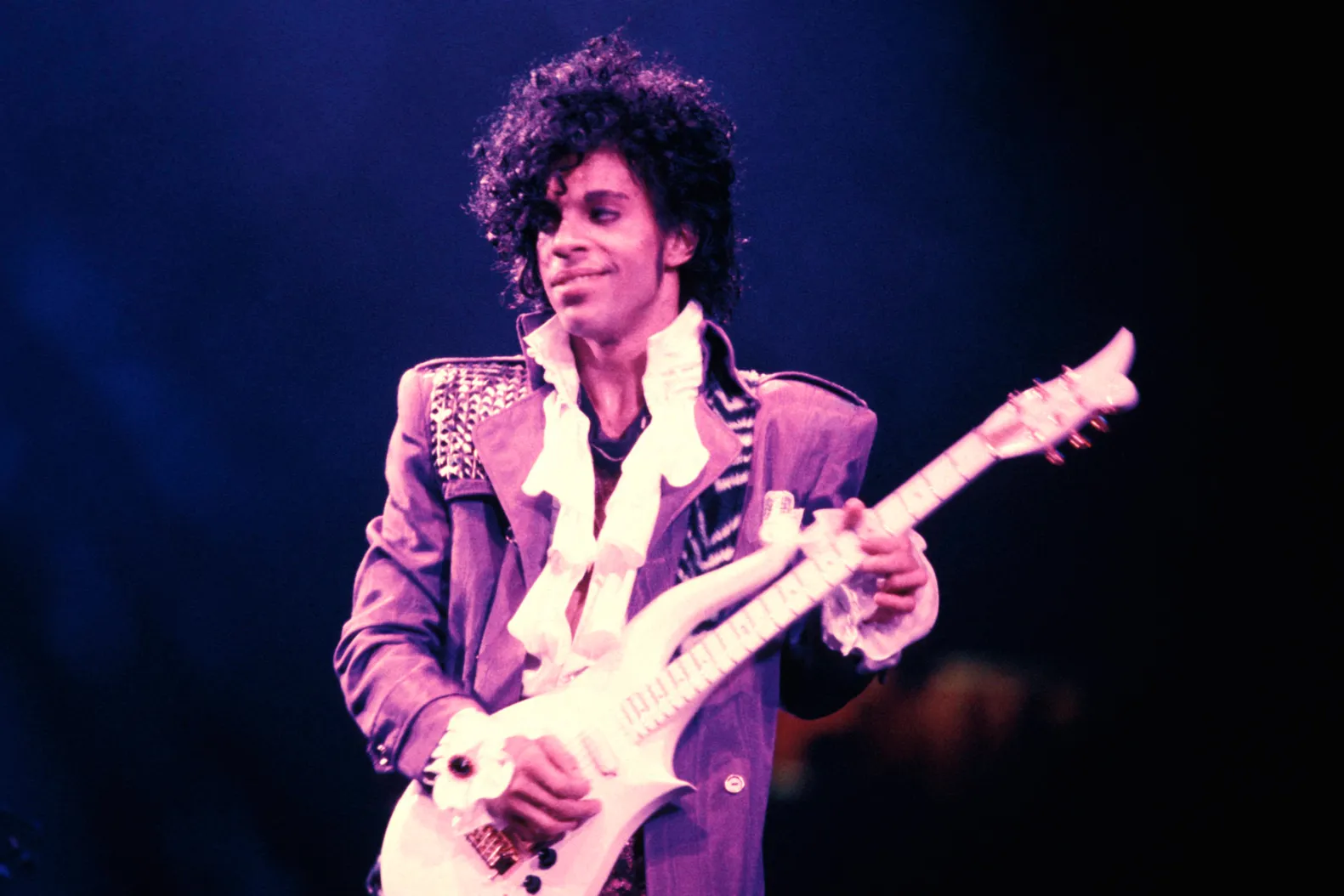
The problem with being a decade ahead of your time is that people experience it as being wrong. The audience is not yet equipped. The critical framework does not yet exist. The technology that would eventually allow other musicians to approximate what you are doing has not yet been invented. And so the work arrives and is received with confusion, or qualified admiration, or the kind of respectful puzzlement that people offer when they sense they are in the presence of something important but cannot yet say why.
Prince lived his entire career slightly ahead of the available understanding. By the time the world caught up to one thing he had done, he was already three things further. It was not a strategy exactly — it was simply the speed at which he moved and the restlessness with which he treated any creative territory he had already mapped.
1. “Sign O’ the Times” (1987) opens with a synthesizer sound and a rhythmic pattern that felt abrasive to many listeners at the time of its release. The production was deliberately stripped, deliberately uncomfortable, deliberately refusing the lushness that had made Purple Rain so accessible. Producers who worked in the 1990s have said consistently that this album was the primary template for what they were trying to do — that it took them years to understand what they were hearing and then more years to begin to approach its techniques.
2. “Around the World in a Day” (1985) was released as the follow-up to Purple Rain — the biggest album of 1984 — and sounded like it had arrived from a different planet. Psychedelic, abstract, layered with instruments and textures that felt closer to 1967 Sgt. Pepper than to 1985 pop radio. Record executives were baffled. Audiences were divided. Musicians who heard it at the time and found it bewildering would spend the next decade slowly recognizing that it had showed them a door they hadn’t known was there.
3. “Alphabet St.” (1988) contains a production technique — the way the bass and drums interact, the specific placement of space in the arrangement — that became a template for R&B production in the 1990s. The producers who defined that decade have cited it specifically. At the time of its release, it was considered eccentric. Ten years later it sounded prophetic.
4. “Gold” (1995) arrived during a period when Prince was in a difficult public dispute with his label and many people had dismissed him as a spent force. The song is ten minutes of escalating orchestral ambition — a gospel-inflected, arena-sized declaration of resilience that the pop landscape of 1995 had no framework to receive properly. Listen to it now and it sounds like it was written for a different, larger moment. It was. The moment just hadn’t arrived yet.
5. “The Greatest Romance Ever Sold” (1999) is a pop song so perfectly constructed — so economical in its arrangement, so precise in its emotional targeting — that it should have been an enormous commercial success and wasn’t, because it arrived in a musical context that couldn’t hear it clearly. Producers in the 2000s who heard it understood immediately what it was. The general public got there eventually.
Prince died in 2016. He left behind an archive of unreleased recordings so vast that the people managing his estate have described it as something that will take decades to fully understand and release. Which means he is still ahead. Still somewhere further down the road than the rest of us. Still arriving in advance of our ability to understand what he is carrying.
That was always how it worked with him. That was always the deal