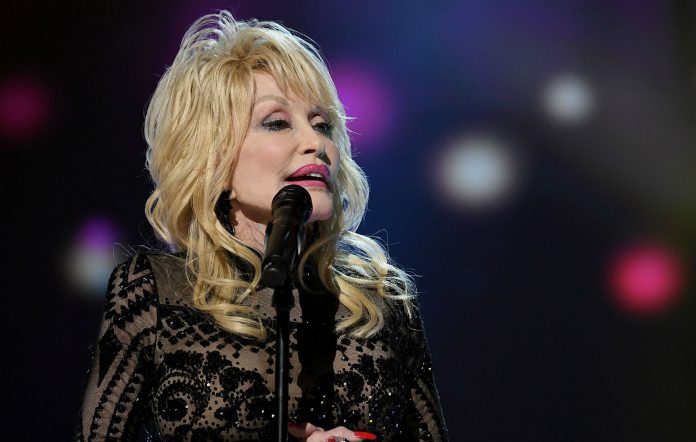
Dolly Parton wrote I Will Always Love You in 1973 as a farewell to Porter Wagoner — the country music star who had given her her first major exposure, who had fought against her decision to pursue a solo career, and with whom she had a professional and personal relationship complicated enough that it required a song rather than a conversation to properly conclude. She went to his office, played it for him on guitar, and watched him cry. He agreed to let her go. She released the song, it went to number one, and she released it again nine years later and it went to number one again.
The story that followed is the one that changed everything, and it begins with a film. Kevin Costner was casting The Bodyguard in 1991 and wanted I Will Always Love You as the film’s centerpiece song. He brought it to Whitney Houston, who was initially uncertain — her musical instincts ran toward more complex material and the song’s country origins were not self-evidently a fit for what she did. Costner’s contribution to music history, which is not a sentence that comes up often, was the suggestion that she strip away the introduction entirely and begin on the word “if” with nothing but her voice, unaccompanied, in complete sonic space.
Houston resisted initially. Her instinct was to begin with context — with arrangement and with the musical signals that prepare an audience for what is coming. Costner’s instinct was to give the audience no warning, no preparation, nothing except the voice.
The recording session that produced the final version is documented in several accounts, all of which converge on the same essential fact: when Houston sang the unaccompanied opening alone in the booth, the people in the control room did not say anything for a moment after she finished the first take. Not because the take needed work. Because the take was so complete and so immediate that the normal professional response — notes, adjustments, another take for safety — felt temporarily beside the point.
Parton heard the finished recording before its release and has said she cried. She has said she understood immediately that Houston had done something to her song that she herself had not done — had found inside it a quality of emotional scale that Parton’s original, however beautiful, had not accessed. She has said this with a generosity that is not false modesty but genuine recognition of the difference between writing something and fully inhabiting it.
The single sold over twenty million copies. It remained the best-selling physical single by a female artist for decades. It reached number one in multiple countries and on multiple chart formats simultaneously. It is the song most people think of when they think of Whitney Houston, which is either a gift or a limitation depending on how you feel about the rest of her catalog, which is extraordinary.
Parton received the publishing royalties. She has said, with the humor she brings to almost everything, that the song bought her a very nice building. Houston received something less quantifiable — a performance so complete that the songwriter herself considered it the definitive version of something she had created. That is either the highest compliment music offers or the most complicated one. Probably both.