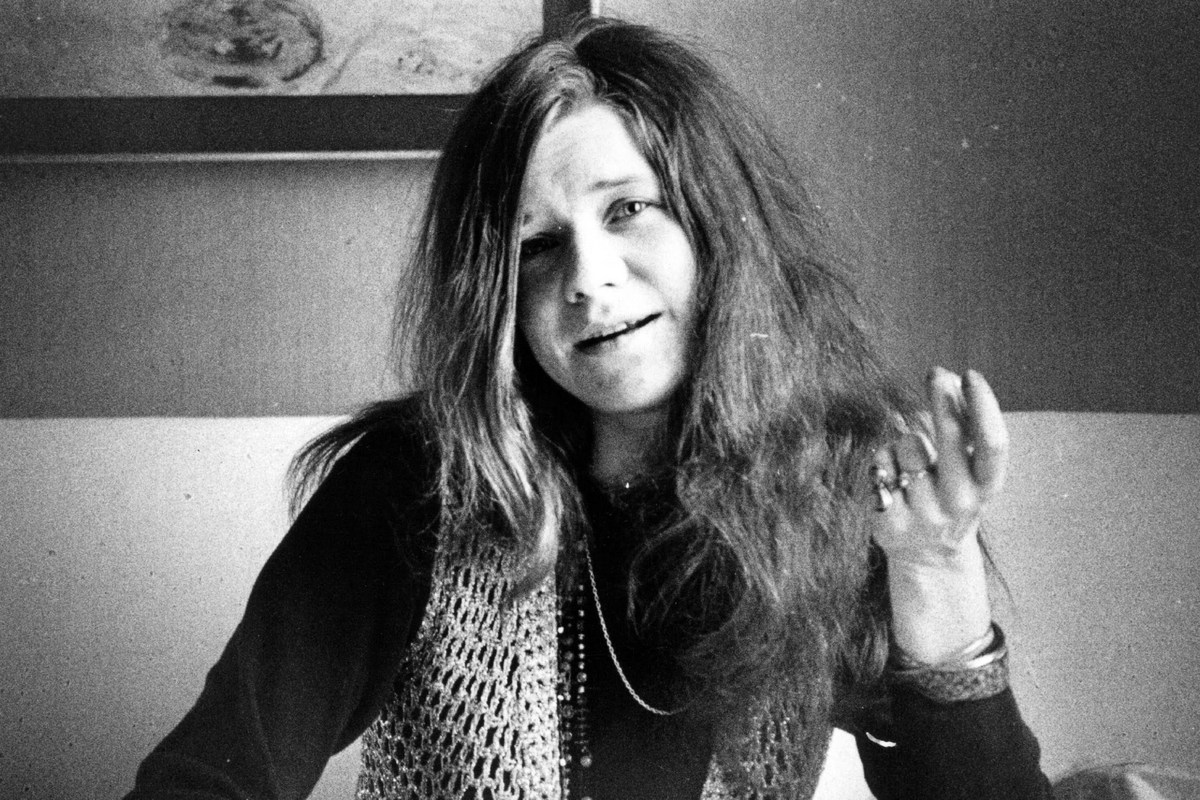
Janis Joplin performed at Woodstock on the night of August 16, 1969, in circumstances that were chaotic even by Woodstock’s considerable standards of chaos. She went on at approximately two in the morning, hours behind schedule, in front of an audience whose size was impossible to accurately assess in the darkness and whose condition ranged from exhausted to altered to somewhere past the point where either category applied. She was not at her vocal peak — accounts from people in her band and management suggest she had been drinking heavily in the hours before the performance, which was not unusual and which had a specific effect on her voice that was sometimes additive and sometimes not, and which on this particular night fell somewhere in between.
The Woodstock performance has been complicated by the fact that it was not included in the original theatrical release of the Woodstock documentary — a decision that has been attributed to various causes including the quality of the footage and the quality of the performance, and that Joplin reportedly found deeply painful. She was the only major act at Woodstock whose performance was initially excluded from the film, and the specific humiliation of that exclusion in the context of an event that was being constructed as a generational monument was something she carried afterward.
What musicians who were there — who watched from the side of the stage or from the audience — describe is something more complicated than the simple narrative of a diminished performance. They describe a performer who was, even in a compromised state, doing something with her voice and her relationship with the audience that exceeded what the clinical assessment of “not at her peak” suggests. Joplin’s performances were never really about technical execution — they were about the specific quality of emotional exposure she brought to a stage, the feeling that she was giving the audience something she could not afford to give and was giving it anyway.
Her band members from that period have spoken about watching her perform with the specific anxiety of people who loved someone and understood that the thing that made her extraordinary was inseparable from the thing that was going to destroy her. The commitment — the all-in quality of her performance, the absence of any self-protective instinct on a stage — was not sustainable at the pace she was sustaining it. The drinking was not the cause of this. It was the response to it — the thing she used to manage the cost of giving that much every night.
She died on October 4, 1970, fourteen months after Woodstock, of an accidental heroin overdose at the Landmark Motor Hotel in Hollywood. She was 27. Pearl — the album she was recording at the time of her death — was completed by her band and released posthumously. Me and Bobby McGee, her biggest commercial hit, was released after she died and reached number one after she died.
The night of Woodstock, performing at two in the morning to half a million people in the dark, she sang Piece of My Heart with the specific urgency of someone who understands, at some level that is not entirely conscious, that the pieces are finite. She sang it like someone who knew. The footage exists now, restored and reissued. Watch her face between songs — the way she looks at the audience, the way she takes a breath before going back in. There is something in it that is not quite peace and not quite terror. It is something in between that she could never fully name in words, so she named it in the music instead.