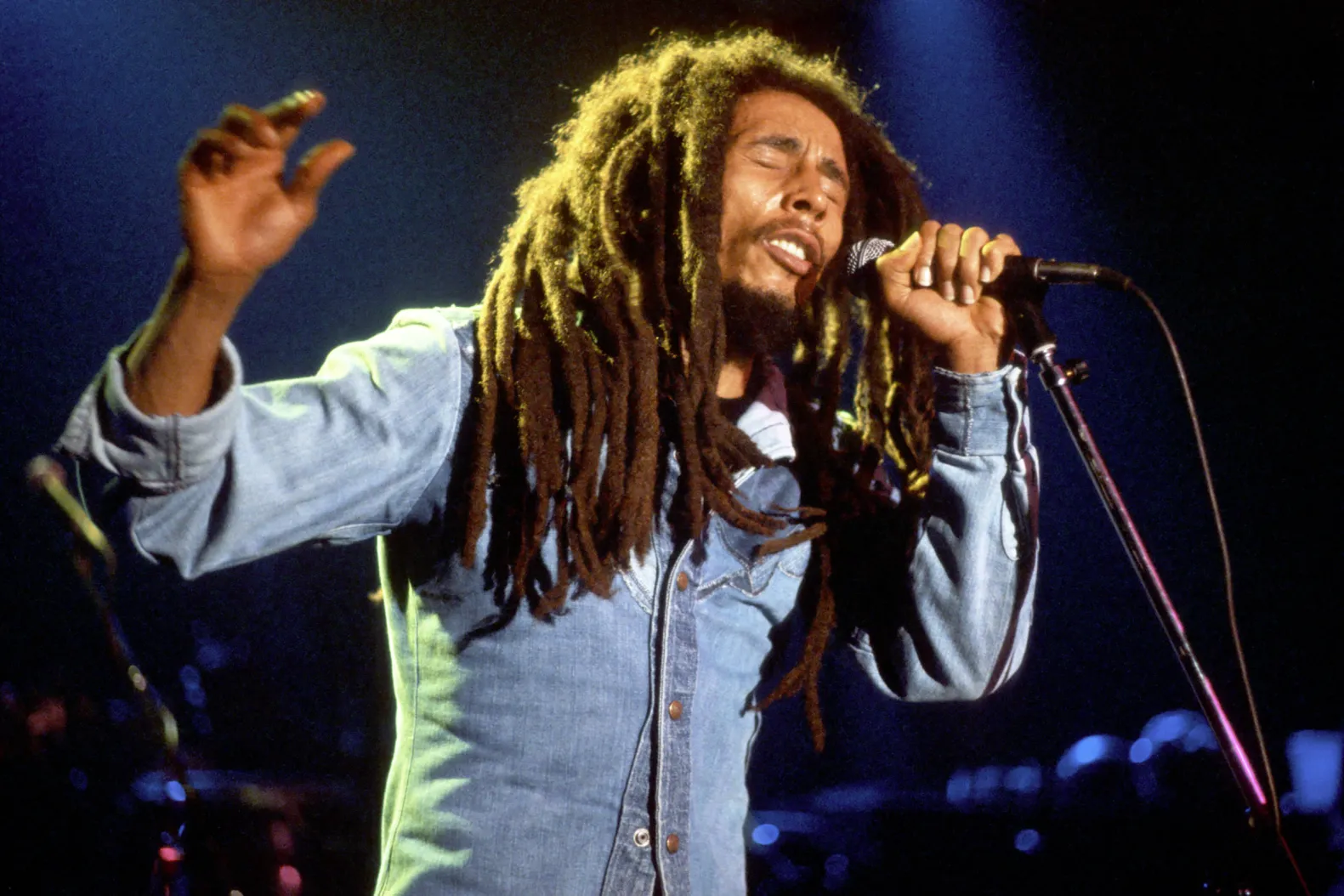
On December 3, 1976, two days before a free concert in Kingston, Jamaica intended to promote peace in a country consumed by political violence, gunmen entered Bob Marley’s home at 56 Hope Road and opened fire. Marley was hit in the chest and arm. His wife Rita was shot. His manager Don Taylor was seriously wounded. The attack was politically motivated — Kingston in 1976 was a city in which the two major parties, the People’s National Party and the Jamaica Labour Party, were conducting a proxy war through affiliated gangs, and Marley’s Smile Jamaica concert had been perceived by one faction as implicit political endorsement of the other.
Marley performed the concert two days later. He showed up, wounded, and played for ninety minutes in front of eighty thousand people in a decision that has since become one of the defining acts of courage in music history. He left Jamaica the following day and did not return for fourteen months.
The song recorded during the period immediately following the shooting — not in Jamaica but in London, during the Exodus sessions of early 1977 — was One Love, which Marley had recorded in earlier versions but which took on a different resonance in the context of what had happened to him. He has described, in interviews from the period, a specific decision he made in the aftermath of the attack: that the appropriate response to violence directed at someone preaching peace was more peace, delivered with more conviction, not less.
What is less documented is the specific gesture Marley made toward the people who had tried to kill him. Accounts from people close to him during the months following the shooting — documented in various biographies and in interviews with band members — describe Marley expressing, in private conversation, something that went beyond the public message of One Love. Not forgiveness in the soft, comfortable sense of the word, but something harder — an understanding that the men who had come to his house with guns were themselves products of the same structural poverty and political exploitation that his music had always addressed. That they were not enemies in the personal sense but casualties of the same system.
He never named those responsible publicly. He never cooperated with investigations in ways that would have led to arrests. This was partly practical — in Kingston in 1976, cooperation with authorities carried its own risks. It was partly philosophical, consistent with a worldview in which the system that produced violence was the proper object of critique rather than the individuals it had shaped.
Exodus, the album that emerged from those London sessions, was named Album of the Century by Time magazine in 1999. It contains One Love, Jamming, Waiting in Vain, and Three Little Birds — songs of such consistent beauty and philosophical clarity that the circumstances of their creation seem almost impossible. Marley was in exile, recovering from gunshot wounds, separated from his home and his community, producing some of the most joyful and most spiritually generous music of his career.
He died in May 1981 of cancer that had spread from a melanoma beneath his toenail — a diagnosis made in 1977 that he declined to treat with amputation on religious grounds, a decision whose consequences proved fatal. He was 36. The music he made in the years between the shooting and the diagnosis is the fullest expression of what he was trying to say — peace delivered not from safety but from the specific courage of someone who had been shown what the alternative looked like and had chosen the harder path anyway.