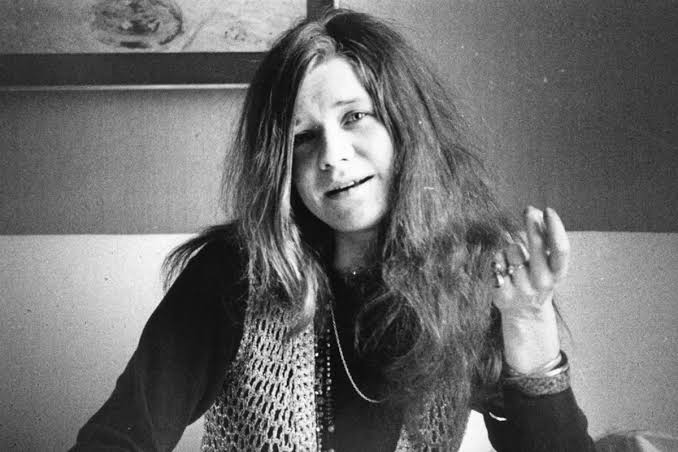
Janis Joplin’s life was tragically short, but her impact on rock music remains as powerful as ever. Growing up feeling like an outsider in the oilfields of Southeast Texas, she went on to become one of the most distinctive and unforgettable voices of the 1960s. More than five decades after her untimely death at just 27, her raw vocals, fearless personality, and emotional performances continue to inspire music lovers around the world.
With legendary renditions of songs like “Piece of My Heart” and “Cry Baby,” Joplin established herself as a defining figure in blues-rock and psychedelic music. Yet one of her most enduring recordings was a song she never lived to see become a number-one hit: “Me and Bobby McGee.”
On September 5, 1970, Janis Joplin entered the recording studio to put her own unmistakable stamp on the song written by Kris Kristofferson. Less than a month later, she was found dead in a Los Angeles hotel room from a heroin overdose. Her version of the song would go on to become one of the most celebrated recordings in rock history.
Janis Joplin and Kris Kristofferson: A Brief but Memorable Connection
Janis Joplin and Kris Kristofferson shared a brief romantic connection in the spring of 1970 after being introduced through their mutual friend, folk singer Bobby Neuwirth.
At Neuwirth’s suggestion, Kristofferson traveled to Los Angeles after performing in New York City. He eventually spent several weeks at Joplin’s home, where the two musicians developed a close connection. Both were originally from Texas, and their shared backgrounds and love of storytelling helped bring them together.
Kristofferson later recalled their time together with affection and a touch of humor.
“I dug her, but I had itchy feet,” he remembered, describing how he would plan to leave but often ended up staying longer than expected.
Their relationship was short-lived, but their connection would forever be associated with one of the most important songs of Joplin’s career. Kristofferson had no idea that she would record his composition and transform it into a defining moment in American popular music.
The Story Behind “Me and Bobby McGee”
The origins of “Me and Bobby McGee” began with a title suggested to Kristofferson by Fred Foster, the founder of Monument Records. Kristofferson developed the idea into a story about two traveling companions, freedom, love, and the bittersweet reality of letting someone go.
The song was also influenced by the 1954 Italian film La Strada, directed by Federico Fellini. Its emotional conclusion helped Kristofferson explore the complicated relationship between freedom and loneliness.
In the film, a character is overwhelmed by grief after losing a woman who had been part of his life. That sense of heartbreak resonated with Kristofferson as he developed the emotional foundation of “Me and Bobby McGee.”
Speaking about the song, he explained that freedom could be both liberating and devastating. That idea became central to one of its most memorable lines:
“Freedom’s just another name for nothing left to lose.”
The lyric captures the song’s deeper meaning. Freedom can bring independence and possibility, but it can also come at the cost of love, companionship, and everything that once made life meaningful.
Through its vivid storytelling and bittersweet message, “Me and Bobby McGee” became much more than a country song. It became a timeless reflection on love, loss, and the price of being free.
How Janis Joplin Made the Song Her Own
Although Kristofferson had written “Me and Bobby McGee,” he did not know that Joplin had recorded it until after her death.
Joplin approached the song with a completely different energy from the original country-inspired interpretations. Her raspy, powerful voice brought a new dimension to the lyrics, blending rock, blues, country, and soul into a performance filled with both tenderness and emotional intensity.
Rather than simply singing the story, Joplin seemed to live inside it. Her voice moved effortlessly between vulnerability and explosive passion, making the song feel deeply personal.
The result was a recording that many listeners would come to associate more closely with Joplin than with its songwriter.
When Kristofferson learned of her death and eventually heard her version, the experience was devastating. He later recalled walking through Los Angeles in tears, explaining how difficult it was to listen to the song without becoming overwhelmed by emotion.
The recording had become inseparable from the memory of the woman who sang it.
Joplin’s interpretation was not the first recording of “Me and Bobby McGee,” but it became the definitive version for generations of listeners. Her performance gave the song a lasting emotional power that continues to resonate today.
A Posthumous Number-One Hit
The success of “Me and Bobby McGee” became one of the most bittersweet stories in rock history.
In March 1971, several months after Joplin’s death, the song reached No. 1 on the U.S. Billboard Hot 100. It became the only number-one single of her career, achieving the milestone when the singer was no longer alive to celebrate it.
The achievement also placed Joplin among a very small group of artists who reached the top of the American singles chart posthumously. Just three years earlier, Otis Redding had accomplished the same feat with his classic “(Sittin’ On) The Dock of the Bay,” released after his death in December 1967.
For Joplin, the success of “Me and Bobby McGee” represented both a remarkable musical achievement and a heartbreaking reminder of the talent the world had lost.
Her voice reached millions of people, and her interpretation transformed Kristofferson’s composition into a lasting part of music history.
A Legacy That Will Never Fade
More than half a century later, “Me and Bobby McGee” remains one of Janis Joplin’s most beloved recordings. Its appeal lies not only in its unforgettable melody but also in the emotion she poured into every line.
The song’s themes of freedom, love, and loss reflect much of what made Joplin such a compelling artist. She sang with an honesty that could be messy, vulnerable, fierce, and beautiful all at once.
Her life ended far too soon, but her music continues to speak to new generations. From the raw intensity of “Piece of My Heart” to the aching beauty of “Me and Bobby McGee,” Joplin left behind a body of work that still feels alive.
She never witnessed her version of “Me and Bobby McGee” reach the top of the charts, nor could she have known how deeply it would become woven into the history of rock music.
But every time that unmistakable voice rises through the opening lines, Janis Joplin reminds the world why she remains one of the greatest and most unforgettable singers of her generation.
Her star burned brightly for only a short time, but her music continues to shine.