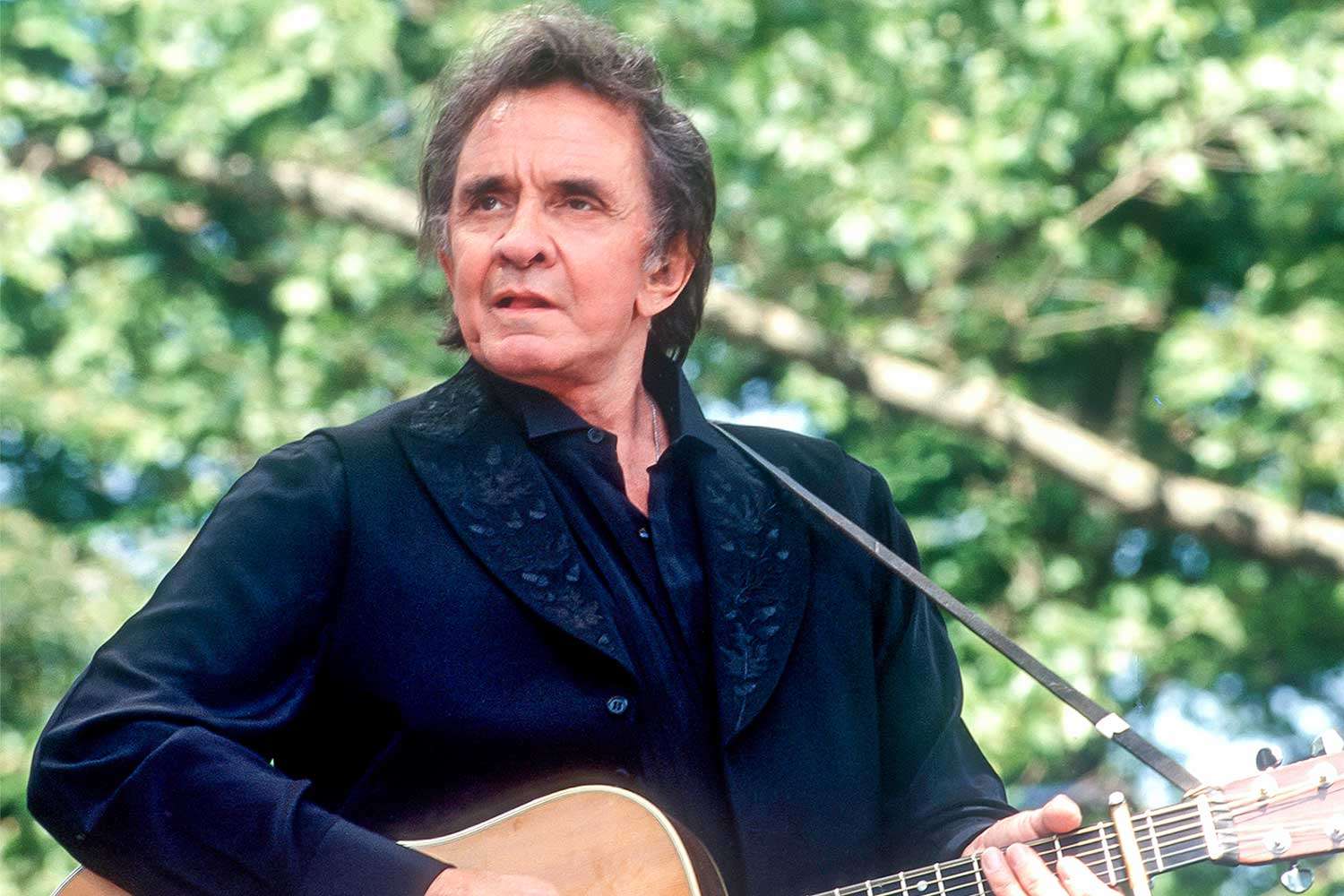
When Johnny Cash recorded his version of Hurt, it didn’t feel like a cover. It felt like a confession.
The song was originally written and performed by Nine Inch Nails frontman Trent Reznor in 1994 — a haunting, raw exploration of pain, addiction, and self-destruction. In its original form, “Hurt” was dark and internal, filled with distortion and emotional isolation. It was the sound of someone unraveling in real time.
Nearly a decade later, Johnny Cash stepped into that same song — and transformed it completely.
By the early 2000s, Cash was in the final chapter of his life. His voice, once booming and defiant, had aged into something fragile but deeply powerful. When he recorded “Hurt” for his album American IV: The Man Comes Around, produced by Rick Rubin, the song took on an entirely new meaning.
Gone was the industrial edge. In its place: a sparse arrangement, built around acoustic guitar, piano, and silence. And in that silence, Cash’s voice carried everything.
Every word sounded lived-in. When he sang about regret, it didn’t feel theoretical — it felt earned. Decades of fame, struggle, loss, and redemption seemed to echo through every line. It was no longer just a song about pain. It was about a lifetime of it.
The accompanying music video elevated the performance even further. Directed by Mark Romanek, it intercut footage of a young Johnny Cash at the height of his career with images of him in old age — frail, reflective, surrounded by memories. His wife, June Carter Cash, appears briefly, watching him with quiet strength. The contrast is devastating: the man he was, and the man he had become.
When Trent Reznor first heard the cover, he admitted he was unsure how to feel. But after seeing the video, his perspective changed completely. He later said, “That song isn’t mine anymore.” It had crossed into something deeper — something universal.
That’s what made the moment so powerful.
Johnny Cash didn’t just reinterpret “Hurt.” He redefined it. He took a song about personal anguish and turned it into a meditation on mortality, legacy, and the passage of time. It became less about one man’s struggle and more about the human condition itself.
When audiences watched him perform it — whether through the video or live interpretations — there was a sense that they weren’t just hearing music. They were witnessing a farewell.
There’s a rare kind of magic when a song finds a second life in someone else’s voice. But this was something more. It was as if the song had been waiting for Johnny Cash all along.