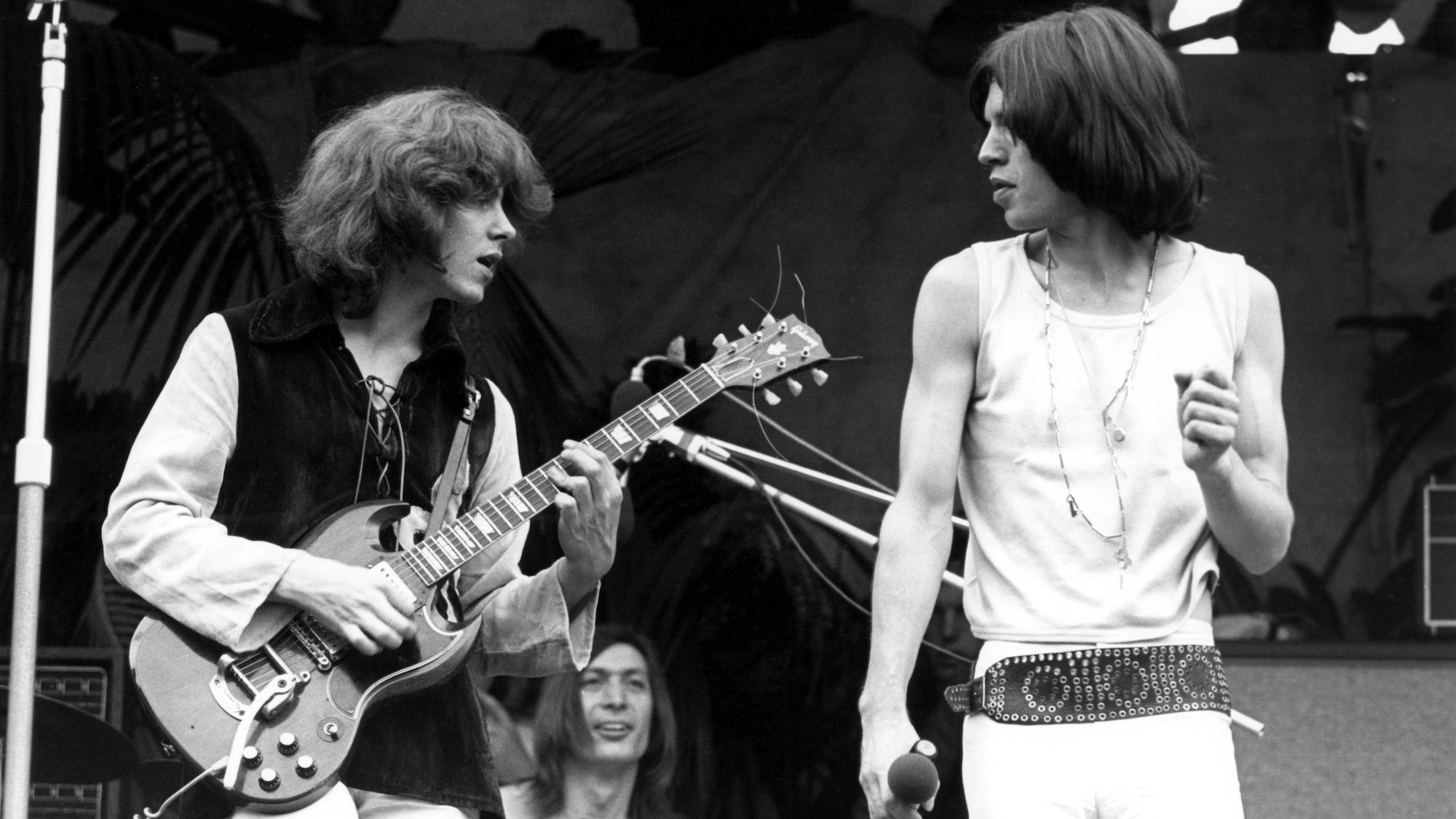
In December 1974, Mick Taylor, the guitarist many critics still consider the most technically gifted player ever to join the Rolling Stones, walked up to Mick Jagger at a party in London and quietly told him he was done. After five years and three of the band’s most celebrated albums, Taylor was leaving the biggest rock band in the world, seemingly out of nowhere.
Taylor had joined the Stones in 1969 at just twenty years old, brought in to replace founding guitarist Brian Jones on the recommendation of blues legend John Mayall. His fluid, melodic playing helped define the sound of “Let It Bleed,” “Sticky Fingers,” and “Exile on Main St.,” records widely regarded as the creative peak of the band’s entire career. Drummer Charlie Watts later said plainly that some of the best music the band ever made came directly out of that era with Taylor on guitar.
But life inside the Rolling Stones during the early 1970s came with a brutal cost. The band’s notoriously hedonistic recording sessions for “Exile on Main St.” at a villa in the south of France had spiraled into genuine chaos, and Taylor, by his own later admission, had developed a serious heroin addiction while living inside that environment. Producer and engineer Glyn Johns has said he watched Taylor transform from a quiet, gentle young man into someone almost unrecognizable, eventually telling Jagger directly during mixing sessions that either Taylor needed to go or he would.
Taylor has also pointed to simmering frustration over songwriting credit as part of what pushed him out the door. He has said he felt he’d contributed meaningfully to several tracks, including “Sway,” “Winter,” and “Time Waits for No One,” without ever receiving formal recognition he believed Jagger had promised him. Combined with ongoing tension with guitarist Keith Richards, whom Jagger later acknowledged Taylor found difficult to get along with, the pressure became too much. Taylor has since said he never felt entirely certain he was meant to stay with the Stones permanently, even from his earliest days in the band.
Jagger reportedly tried to talk him out of leaving on the spot, suggesting Taylor simply take six months away rather than quit outright. Taylor, by his own admission, has never been particularly good at following advice, and he turned the offer down, later acknowledging he sometimes wondered if accepting it might have changed everything.
The band moved on, eventually replacing Taylor with Ronnie Wood rather than attempting to find another guitarist who could replicate his exact style. Taylor spent decades afterward working as a solo artist and session musician, eventually getting clean from drugs, and briefly rejoined the Rolling Stones onstage during their 2012 and 2013 anniversary tours, closing the loop on one of rock’s most quietly devastating departures. Even Jagger, asked years later about Taylor’s contribution to the band, acknowledged that the guitarist had brought something genuinely significant to their sound during his five years in the lineup, a tacit admission that the chaos surrounding his exit never fully erased what the band had gained from having him there in the first place.