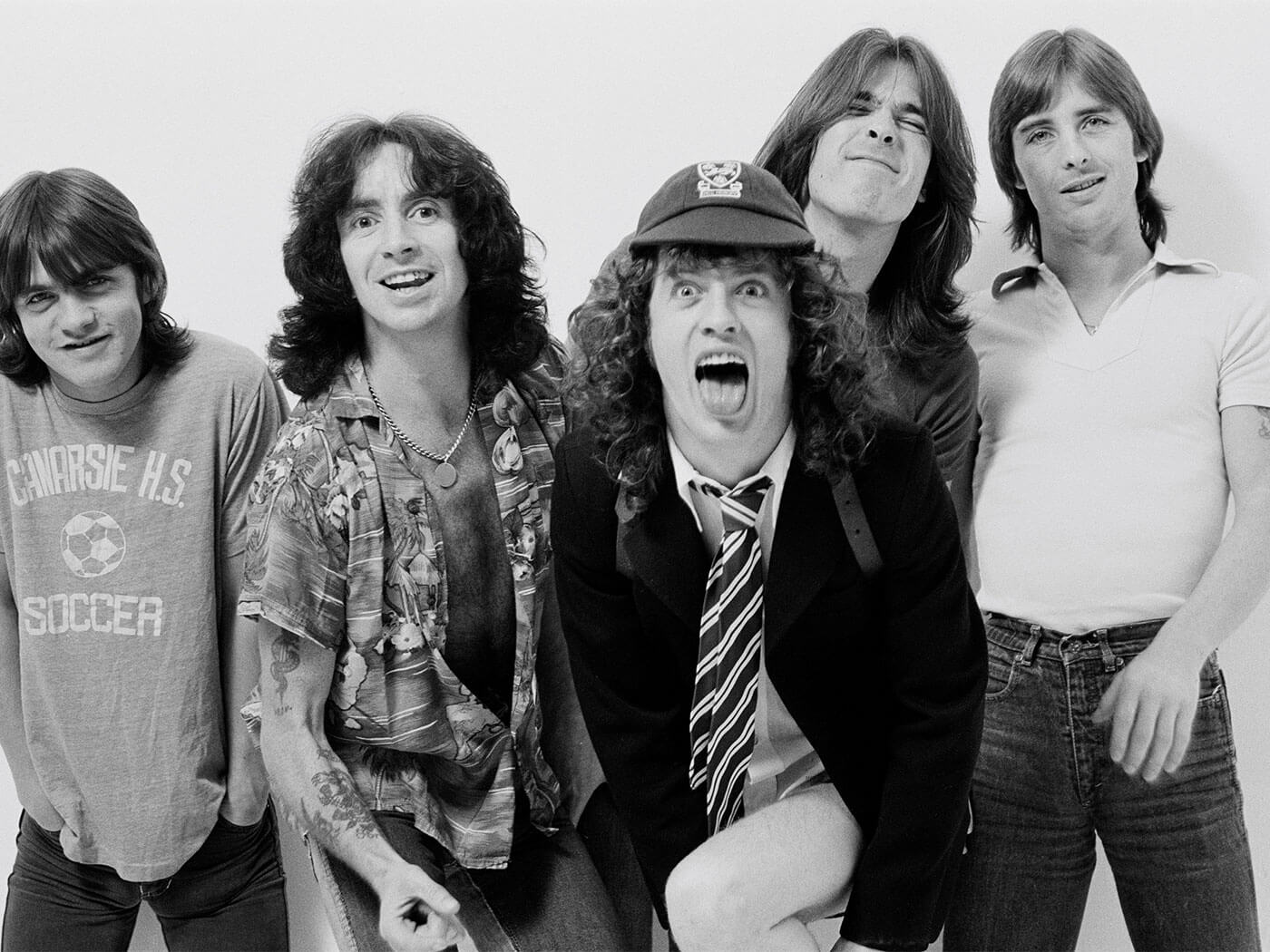
On February 19, 1980, AC/DC lost the man who had turned them from a scrappy Australian club band into one of the most electrifying live acts in rock. Bon Scott, the singer whose raspy, larger-than-life presence powered hits like “Highway to Hell,” was found dead in a friend’s car in London after a night of heavy drinking. He was 33 years old. For guitarist and co-founder Angus Young, his brother Malcolm, bassist Cliff Williams, and drummer Phil Rudd, the question of whether AC/DC could even continue felt almost impossible to answer.
According to Rudd, the band briefly considered simply calling it quits altogether in the days after Scott’s death. What changed their minds, by several accounts, was a conversation at the funeral itself. Scott’s mother, Isa, reportedly urged the surviving members to keep going rather than let her son’s legacy end in silence, telling them in essence that Bon would have wanted the music to continue. Rudd later summed up their decision more bluntly: they figured Bon wouldn’t have wanted them to lie down, so they didn’t.
That left an agonizing question: who could possibly replace a frontman as singular as Bon Scott? The band considered several names, including Slade’s Noddy Holder and former Back Street Crawler singer Terry Slesser. But the answer had, in a strange twist of fate, already been suggested by Scott himself, months before his death. Years earlier, while touring the UK with his old band Fraternity, Scott had watched a support act called Geordie and become fixated on their singer, a wiry Newcastle native named Brian Johnson who threw himself across the stage with reckless physical energy. Scott had reportedly come back from that show raving about Johnson’s performance, even copying one of his stage moves, hoisting his own guitarist onto his shoulders to carry through the crowd, a trick he’d lifted directly from watching Johnson do it with Geordie’s guitarist years before.
When a fan mailed a tape of Johnson singing to AC/DC’s management, the band remembered the name immediately. Johnson, who by 1980 had largely left music behind to run a car repair shop in Newcastle, got an unexpected phone call asking him to fly out and audition. He went in with low expectations, more excited simply to have shared a room with musicians he admired than to actually land the gig, and was reportedly so unbothered by the audition’s outcome that he told the band’s manager he couldn’t stick around afterward because he had three Ford Cortinas and a Datsun waiting to be fixed back home in Newcastle.
He got the job anyway. Within months, Johnson was in the studio with Angus and Malcolm Young recording what would become “Back in Black,” an album written as a direct tribute to Scott and released barely five months after his death. It went on to sell more than 50 million copies worldwide, making it one of the best-selling rock albums in history and transforming what could have been the end of AC/DC into the beginning of its biggest chapter yet. Johnson went on to front the band for 36 years, the longest tenure of any singer in AC/DC’s history, paying tribute, in his own quiet way, to the man whose instincts had pointed the band toward him in the first place.