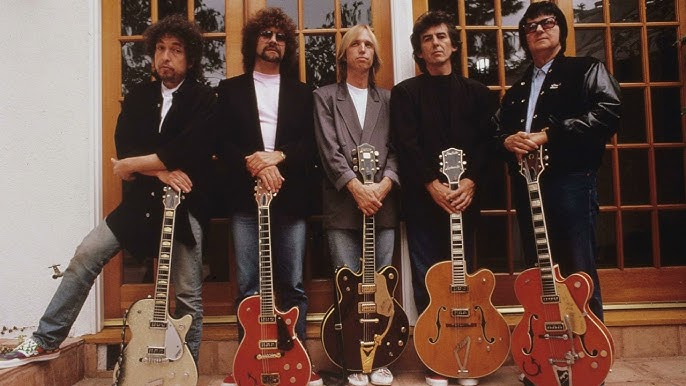
In the music industry, record labels usually hold the power. They decide release dates, control contracts, and often determine an artist’s future. But every so often, a musician refuses to play by the rules. Few did it more boldly than Tom Petty.
In the late 1970s, Petty had already established himself as one of rock’s brightest stars with Tom Petty and the Heartbreakers. Songs like “Breakdown,” “American Girl,” and “Refugee” had built a loyal fan base, and his career was on a steep upward climb. But behind the scenes, a bitter fight with his record label threatened to derail everything.
Rather than accept what he believed was an unfair deal, Petty did something almost unheard of: he took on the music business itself.
A Contract He Never Wanted
The conflict began when Petty’s original label was sold to another company. Suddenly, his recording contract was treated like a corporate asset, transferred from one owner to another without his consent.
Petty wasn’t having it.
He argued that musicians weren’t property to be bought and sold like office furniture. To him, the transfer ignored the relationship between artist and label, reducing his life’s work to a line on a balance sheet.
Instead of quietly accepting the change, Petty filed for bankruptcy—a strategic legal move designed to block the transfer and force both sides back to the negotiating table.
It was an enormous gamble.
Had the plan failed, it could have damaged or even ended his career.
Standing His Ground
Record executives expected Petty to give in. Most artists couldn’t afford a lengthy legal battle, especially against powerful corporations.
But Petty refused to blink.
For months, negotiations dragged on while fans wondered when new music would arrive. The dispute became one of the most closely watched battles between an artist and a major label.
Eventually, the label backed down.
Petty secured a new contract with terms he considered fairer, proving that even one artist could challenge the industry’s biggest players.
It Happened Again
Petty’s fight for artistic independence didn’t end there.
In 1981, when his label planned to price the album Hard Promises at the then-expensive list price of $9.98, Petty publicly rebelled.
He believed fans shouldn’t have to pay extra simply because his albums were popular.
He even threatened to withhold the album or rename it Eight Ninety-Eight to protest the higher price.
Once again, his determination paid off.
The label ultimately lowered the price, making Hard Promises available at the standard rate.
A Legacy Beyond the Music
Most fans remember Tom Petty for timeless classics like “Free Fallin’,” “I Won’t Back Down,” and “Learning to Fly.” But his greatest legacy may extend beyond songwriting.
He repeatedly demonstrated that artists deserved respect—not just applause.
His willingness to risk millions of dollars for creative freedom inspired countless musicians to question unfair contracts and stand up for their work.
In an industry where compromise is often expected, Petty proved that principles could be just as powerful as platinum records.
The Lasting Lesson
Tom Petty’s battles with his record label weren’t just personal victories—they became defining moments in the ongoing fight for artists’ rights.
He showed that success isn’t only measured by chart positions or album sales. Sometimes, it’s measured by the courage to say “no” when everyone expects “yes.”
And in one of rock’s most unforgettable business showdowns, Tom Petty did exactly that.
He told the system to go to hell—and he won.