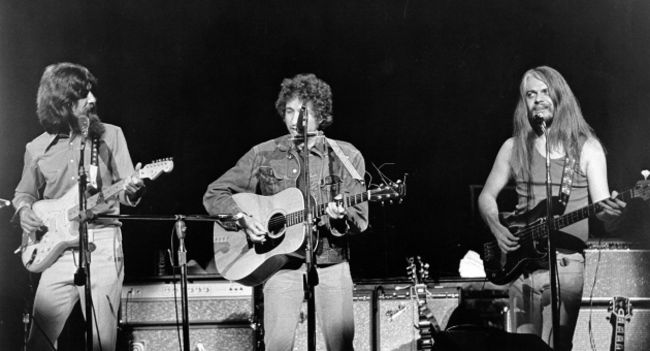
Bob Dylan wrote All Along the Watchtower in 1967, during the reclusive Woodstock period following his motorcycle accident — a period of withdrawal so complete that the public genuinely did not know whether he was alive, permanently damaged, or simply finished. He recorded it on John Wesley Harding in a style consistent with the album’s sparse, almost folk-country austerity. The recording is good. It is Dylan being careful and deliberate and, by his own later assessment, not yet understanding what the song actually was.
Then Jimi Hendrix recorded it.
The Hendrix version was released in September 1968, approximately eight months after Dylan’s original. It begins with a guitar figure so immediately, unmistakably different from anything on Dylan’s recording that the two versions occupy what feels like separate musical universes despite sharing the same chords, the same words, the same structural architecture. Hendrix’s version is electric, urgent, building across four minutes toward a guitar solo that music critics have spent fifty years attempting to adequately describe — a solo that moves through the song’s imagery of jokers and thieves and watchtowers and approaching princes with a ferocity that makes Dylan’s original feel like a sketch.
Dylan heard it and was, by multiple accounts, stunned into a silence that became, over time, something close to public surrender. He has said in interviews that Hendrix’s version is the definitive one. He has said that when he hears Hendrix play it he feels like he is hearing what the song was always trying to be — that his own version was an approximation and Hendrix’s was the arrival. He has performed All Along the Watchtower live, consistently, in Hendrix’s arrangement rather than his own since 1974. He stopped performing his own version of his own song because another musician’s version was better.
This is an admission with almost no parallel in popular music. Dylan is not a man who concedes. He is not a man who performs other people’s visions of his work — he is the most consistent self-reinventor in the history of rock and roll, but the reinventions are always his own. To say, publicly and permanently, that someone else understood your song better than you did, and to prove it by adopting their arrangement every time you perform it for the rest of your career — that is a different category of admission entirely.
What Hendrix heard in the song that Dylan had not yet fully accessed was its urgency. The joker and the thief are not having a philosophical conversation. They are moving. Something is coming. The two riders approaching are not a poetic image — they are an arrival, a reckoning, something that cannot be held off. Dylan’s version sits with the imagery contemplatively. Hendrix’s version is already running.
Dylan was at the Woodstock Festival in August 1969 — a festival held in his adopted hometown, organized partly in the hope of his participation. He did not perform. Hendrix closed the festival, in the rain, to an exhausted remnant audience, playing All Along the Watchtower in an arrangement that made even the mud irrelevant. Dylan watched from somewhere nearby. What he thought is not recorded. The song knows.