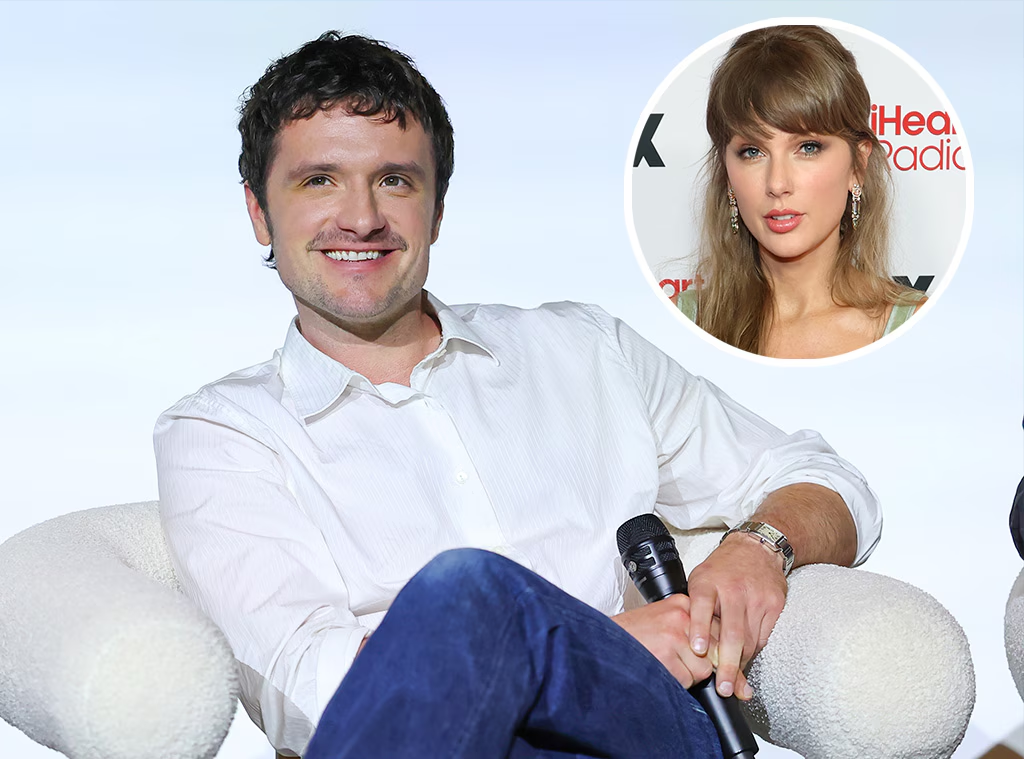
In today’s hyper-connected world, even a simple opinion can spiral into a full-blown controversy. That’s exactly what happened when Josh Hutcherson casually admitted he wasn’t a “Swiftie”—and suddenly found himself at the center of a passionate online storm fueled by fans of Taylor Swift.
A Comment That Sparked a Fire
The moment dates back to a 2025 interview where Hutcherson, best known for The Hunger Games, was asked if he was a fan of Taylor Swift. His response was straightforward: he wasn’t. He emphasized there was “no shade” and that he respected her—but her music simply wasn’t his personal taste.
That might sound harmless, but in the world of devoted fandoms, it didn’t stay quiet for long. Clips of the interview quickly spread online, and many fans questioned how he could attend Swift’s massively popular Eras Tour—reportedly even in a VIP setting—while not actually being a fan.
When Opinions Turn Into Backlash
What followed was a wave of intense reactions on social media. Some responses went beyond criticism, turning into personal attacks—mocking his appearance and even his height. Hutcherson later described the situation as overwhelming, saying the reaction escalated far beyond what he expected.
From his perspective, the issue wasn’t about disliking Swift. In fact, he made it clear he thinks she’s “great.” The real issue was how quickly a neutral opinion turned into hostility.
Choosing to Stay Offline
In response to the backlash, Hutcherson doubled down on a lifestyle he already preferred—staying offline. He explained that he avoids social media not just because of negativity, but because it can interfere with his work as an actor.
His reasoning is surprisingly thoughtful: when audiences know too much about an actor’s personal life or online persona, it becomes harder for them to “disappear” into different roles. Instead of seeing a character, viewers might just see the celebrity behind it.
He also admitted that being thrust back into the spotlight—through press tours and viral moments—can bring anxiety and insecurities, something he continues to manage even as he grows more comfortable with himself.
A Bigger Conversation About Fandom
At its core, this situation isn’t really about music taste. It highlights something bigger: how powerful—and sometimes overwhelming—modern fandom culture has become.
Not liking an artist doesn’t necessarily mean disrespecting them. But in the age of viral clips and instant reactions, nuance often gets lost. What Hutcherson experienced is a reminder of how quickly online spaces can turn personal opinions into public battlegrounds.
No Bad Blood—Just Different Taste
Despite everything, there’s no real feud here. Hutcherson hasn’t criticized Taylor Swift herself, and he’s made that clear. He simply prefers different music—and that’s something most people can relate to.
In the end, the story isn’t about conflict. It’s about how we react to differences. And maybe, just maybe, it’s a reminder that not every opinion needs to become a controversy.Not a Swiftie, Still a Headline: Josh Hutcherson Faces Backlash After Taylor Swift Comment