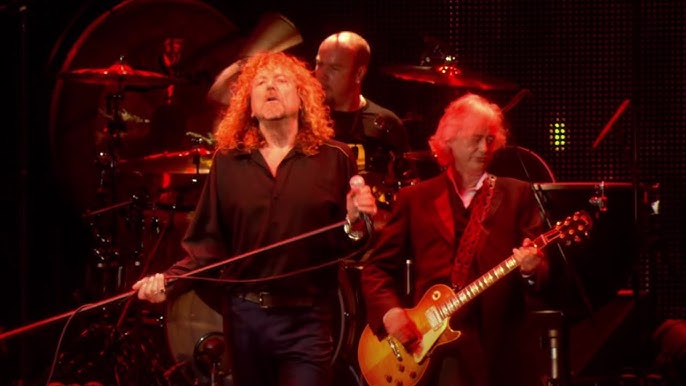
The history of Led Zeppelin’s relationship with other people’s music is the most documented and most vigorously debated plagiarism story in rock history, and it is complicated by a fact that the straightforward plagiarism narrative does not fully accommodate: that what Zeppelin did with the material they took was, in almost every case, something that transformed it so completely and raised it to a level so far above its source that the question of theft becomes genuinely complicated by the question of what the taking produced.
This is not a legal defense. The courts have ruled against the band on several claims, and the moral argument for compensating original creators is not diminished by the quality of what the borrower made. It is an honest assessment of a creative process that sits in uncomfortable territory between theft and transformation — territory that the blues tradition itself occupies, since the blues was built on a shared vocabulary of riffs and forms and lyric structures that no individual owned and that musicians used, transformed, and passed on without the framework of intellectual property that subsequently developed around popular music.
1. Whole Lotta Love (1969)
The lyric draws extensively from Muddy Waters’s You Need Love and Willie Dixon’s compositions. Dixon sued and settled. The settlement acknowledged the debt without fully resolving the question of what the settlement meant for a song that is simultaneously taken from its sources and something entirely new in its combination of those sources with Page’s riff and Bonham’s drumming and Plant’s vocal. Dixon has said he was pleased to receive the settlement. He has not said he was pleased with the process that required it.
2. Bring It On Home (1969)
The opening and closing sections are taken almost directly from Sonny Boy Williamson’s recording of the same name. The middle section is entirely Zeppelin’s — a piece of hard rock that has no relationship to the Williamson original. The song is two different pieces of music joined by a transition, one of which is borrowed and one of which is original, and the combination produced a recording that neither piece alone could have produced. Willie Dixon settled this claim as well.
3. Stairway to Heaven (1971)
The plagiarism lawsuit brought by the estate of Randy California of Spirit — claiming the opening guitar figure was taken from Spirit’s Taurus — went to trial in 2016 and was decided in Led Zeppelin’s favor in 2020. The decision has not settled the aesthetic argument. Taurus and the Stairway introduction share enough similarity that musicians who have heard both cannot listen to either without hearing the other. Page has said the similarity is coincidental. The jury believed him. The question of what Page heard before he wrote what he wrote remains open.
4. The Lemon Song (1969)
Contains lyric and musical passages taken from Howlin’ Wolf’s Killing Floor and Robert Johnson’s Travelling Riverside Blues, among other sources. Zeppelin has been more circumspect about this song’s sources than about some others — the credits on various releases have varied in ways that suggest an awareness of the borrowing without a consistent position on how to characterize it. The performances of the borrowed material are extraordinary. The borrowing is real.
5. Kashmir (1975)
The most original piece on this list — the musical construction is genuinely Zeppelin’s, the drone tuning and the orchestral arrangement and the specific quality of the recording are things that had not previously existed. The lyric, however, draws on imagery and language from sources that Plant has acknowledged without full attribution. The song is the most complete Zeppelin composition and the one where the taking is most clearly in service of something that the sources alone could not have produced.
The musicians who defend Zeppelin despite the documented borrowing do so not from ignorance of the facts but from the specific position of people who understand the blues tradition from the inside — who know that the tradition was built on shared vocabulary and that the question of where borrowing becomes theft is genuinely complicated when the borrowing occurs within a tradition that was always communal. This does not resolve the moral obligation to compensate original creators. It does explain why the creative argument is more complicated than the legal one.