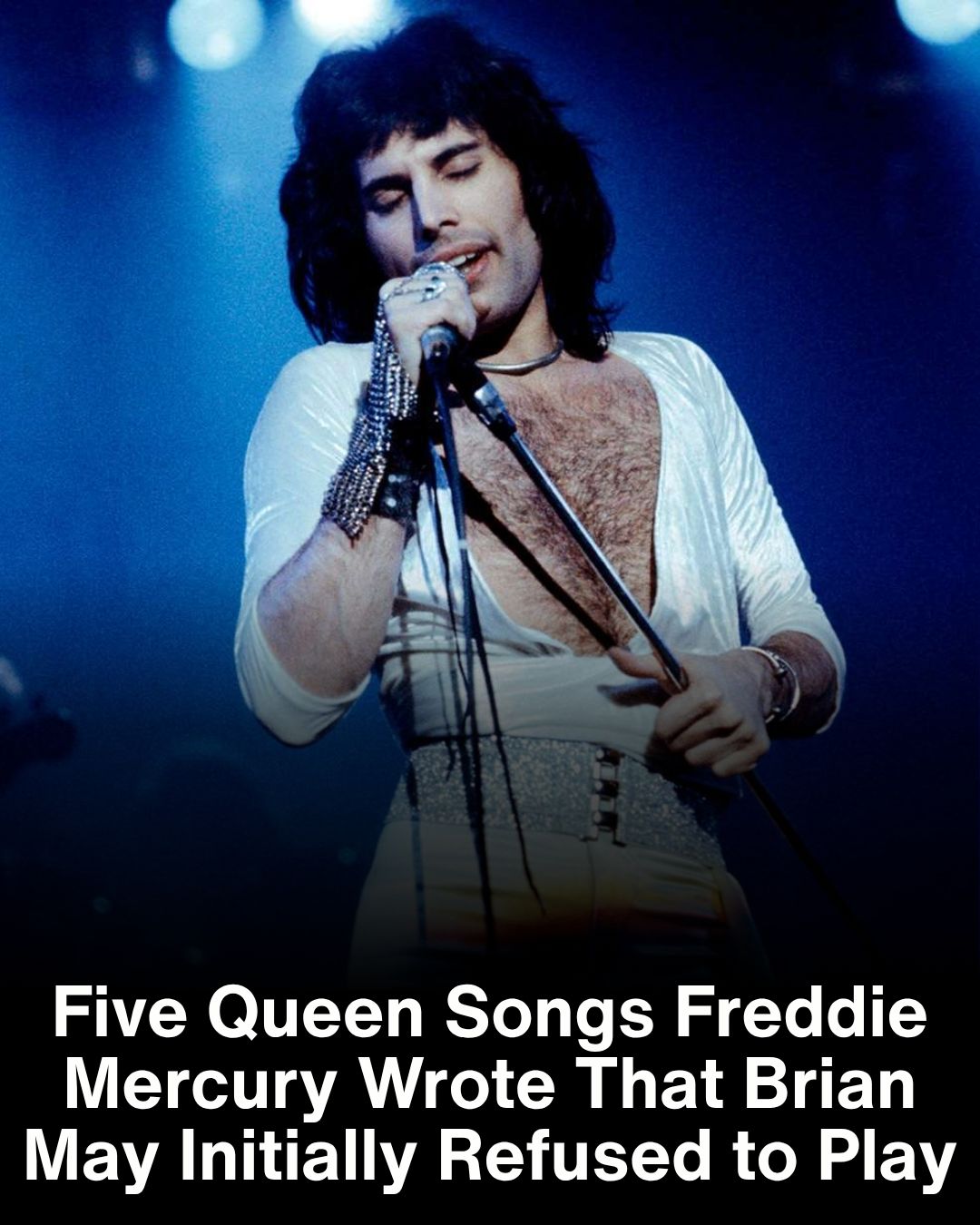
Queen’s reputation as a band of total creative democracy — four songwriters, four distinct voices, songs credited individually rather than as a collective — is largely accurate and is also a slight smoothing-over of a creative process that involved real friction, particularly between Mercury’s increasingly theatrical and genre-defying instincts and Brian May’s more rock-oriented sensibilities. The friction, when it surfaced, produced some of the most interesting arguments in the band’s history.
1. Bohemian Rhapsody (1975)
The most famous example. Mercury arrived with a song that had no chorus, shifted between ballad, opera, and hard rock within six minutes, and made no commercial sense by any conventional standard of 1975 radio programming. May has said he was skeptical of the operatic middle section specifically — not of its quality, which he recognized immediately, but of its viability as something a rock band could credibly perform. The band spent three weeks layering vocal harmonies, recording over 180 separate vocal overdubs. EMI did not want to release it as a single at over five minutes long. Mercury insisted. He was right.
2. Killer Queen (1974)
May has spoken about his initial uncertainty regarding the song’s cabaret-influenced sound — a deliberate departure from the harder rock material the band had built its early reputation on. Mercury wanted sophistication and wit rather than volume. May came around once he heard the finished arrangement, but his early hesitation reflected a genuine difference in artistic instinct between the two men that recurred throughout the band’s history.
3. Bicycle Race (1978)
A song built around a fairly absurd central conceit — bicycles as a metaphor for freedom and rebellion against social convention — that some band members reportedly found difficult to take seriously during early rehearsals. Mercury insisted on the song’s playful irreverence as a deliberate artistic statement rather than a novelty, and the recording process famously involved renting actual racing bicycles for the accompanying music video, leading to complaints from female models involved in the shoot about the bicycle seats, which became its own minor controversy.
4. Don’t Stop Me Now (1978)
May has been notably candid in interviews about his initial coolness toward this song, recorded during a period when his personal life was in genuine crisis — his marriage was ending and his father was seriously ill — making Mercury’s exuberant, party-anthem energy feel discordant with where May was emotionally. He has said he did not enjoy recording it at the time and has only come to fully appreciate the song’s brilliance in retrospect, decades later, once removed from the personal circumstances that made it hard to embrace in 1978.
5. Crazy Little Thing Called Love (1979)
Mercury wrote this rockabilly pastiche in about five minutes in a bathtub, a deliberate homage to Elvis Presley that represented a significant stylistic departure from anything Queen had previously released. May was reportedly uncertain about a song this stylistically retro and simple coming from a band that had built its reputation on complexity and grandeur. It became one of Queen’s biggest American hits, helping break the band commercially in the United States in a way their more elaborate material had not.
Every one of these songs became a defining piece of the Queen catalog. Mercury’s instinct, across every recorded disagreement, was eventually proven correct. May has acknowledged this with the grace of a man who learned, repeatedly, to trust a creative partner whose vision regularly exceeded his own initial assessment.