The most persistent myth about greatness is that it requires enormous effort. That the best things are the hardest won. In rock and roll, this myth collapses regularly and dramatically — because some of the most indelible guitar riffs in history were not labored over, not constructed methodically, not the product of months of revision. They arrived in minutes, or seconds, fully formed, as though the song already existed somewhere and the guitarist simply happened to be in the right room.
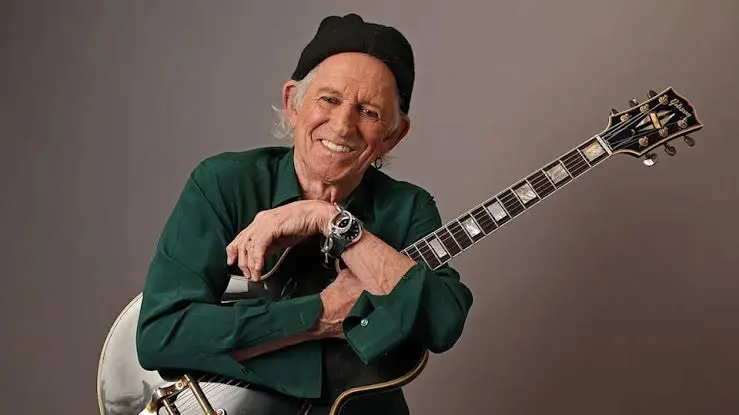
1. Satisfaction — Keith Richards (Written in his sleep, 1965) Richards woke up in a Florida hotel room with a riff on his cassette recorder and what he describes as forty-five minutes of himself snoring on the rest of the tape. He had recorded it in his sleep — literally rolled over, played the riff into the recorder, and gone back to sleep without waking. He showed it to Jagger the next morning almost as a curiosity. Jagger wrote the lyric the same day. It became the most recognized guitar riff in rock history, and Richards has said he is still not entirely sure where it came from, which is the most honest thing a musician can say about a classic.
2. Whole Lotta Love — Jimmy Page (1969) The opening riff of Whole Lotta Love is eight notes. Eight notes that somehow contain an entire philosophy of rock and roll — the forward momentum, the implied danger, the sense that something enormous is about to happen. Page has described it as arriving quickly, naturally, from improvisation in the studio. It took longer to record the theremin section than it took to write the riff that opens the song. The riff has been used as the theme tune for Top of the Pops in the UK for decades. Eight notes, fifty-five years of cultural presence.
3. Smoke on the Water — Ritchie Blackmore (1971) The four-note riff that every beginner guitarist learns first, and that professional guitarists still play with satisfaction. Deep Purple wrote it about a real event — the casino in Montreux burning down during a Frank Zappa concert while they watched from across Lake Geneva. Blackmore played the riff as a description of the smoke rising over the water. It is a piece of musical journalism, written in about ten minutes during a recording session in a mobile studio. It has since been played more times than almost any other riff in rock history.
https://www.youtube.com/watch?v=zUwW3jCr3cM
4. Come As You Are — Kurt Cobain (1991) Cobain reportedly wrote the Come As You Are riff in minutes during a Nevermind session and was initially reluctant to include it because it resembled a Killing Joke song from 1984. His bandmates overruled him. The riff has a hypnotic, underwater quality — slightly detuned, forward-moving, impossible to fully shake once it’s in your head. Cobain’s instinctive discomfort with his own gift is one of the defining characteristics of his career. He kept writing things this good and kept being surprised that they were.
5. Back in Black — Malcolm Young (1980) AC/DC’s Back in Black was recorded as a tribute to their recently deceased vocalist Bon Scott, and Malcolm Young’s opening riff carries that weight without announcing it. It is four chords played with absolute conviction and perfect timing — the kind of simplicity that sounds easy until you try to replicate it and discover that what makes it work is not the notes but the space between them and the commitment with which they land. Malcolm Young, who died in 2017 after years of dementia, rarely spoke about his songwriting. He didn’t need to. The riff speaks for everything.
Five riffs. A combined writing time of perhaps twenty-five minutes. A combined cultural lifespan measured in centuries.