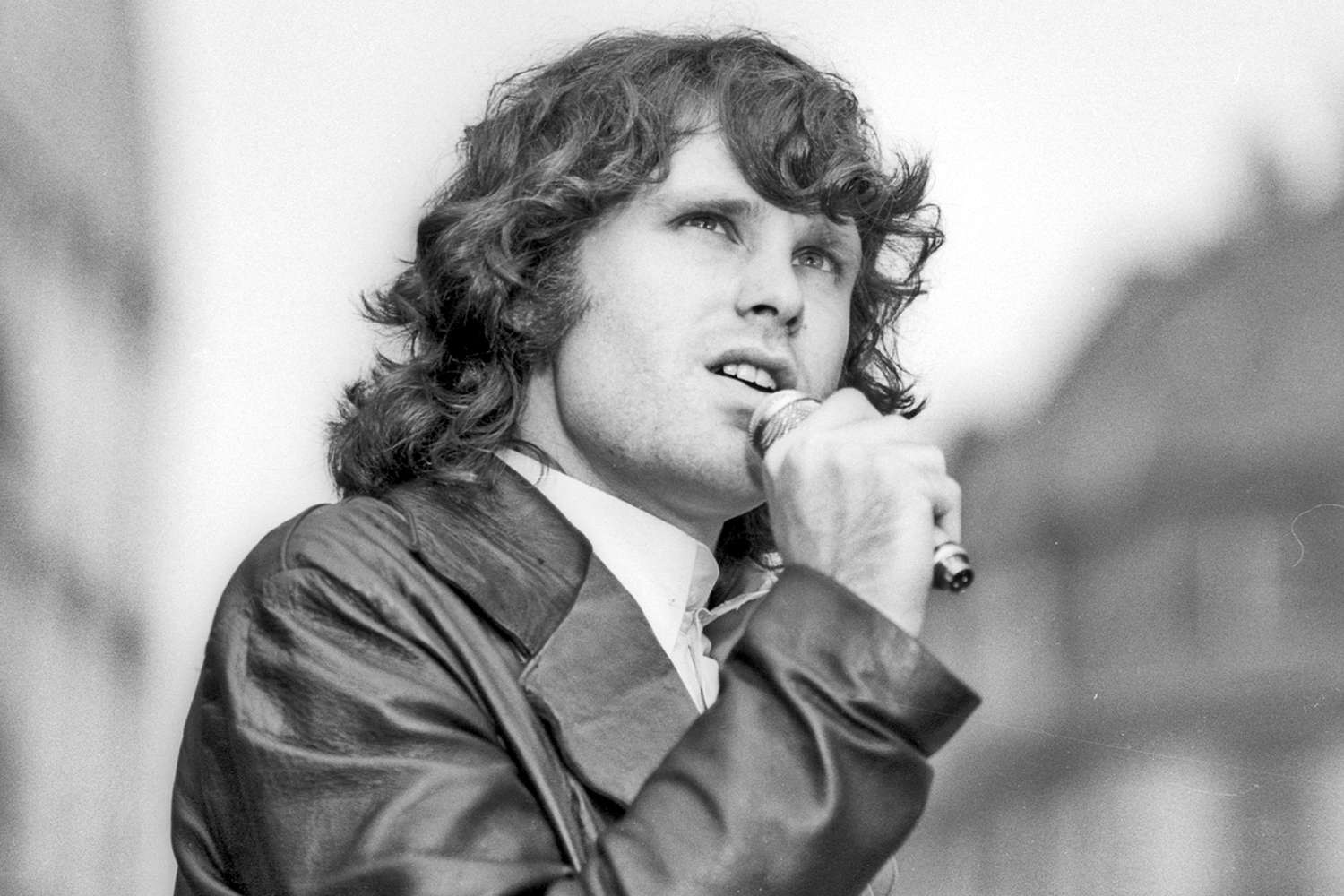
There is a version of Jim Morrison that the mythology has constructed — the leather-pants poet, the Dionysian shaman, the beautiful self-destructive face of a generation’s excess — and it is not entirely false. But it is incomplete in the specific way that mythologies are always incomplete: it sacrifices the complexity of the actual person for the coherence of the legend.
The actual person was a serious poet who happened to front a rock band. Who read Rimbaud and Nietzsche and the French Symbolists and Blake with the attention of someone who was genuinely trying to understand something, not just accumulate references. Who understood — perhaps earlier than most people around him realized — that the life he was living was not sustainable and that the clock was moving faster than it appeared from the outside.
By 1970, something had shifted in Morrison’s recordings that the people paying close attention could hear. A different quality in the voice — not technically different, the instrument was still extraordinary, still capable of dropping into registers that other singers could not reach — but emotionally different. Less performance. More testimony.
1. “Riders on the Storm” — the last song the Doors recorded with Morrison — has the quality of something heard through a window from outside. The rain effects, the piano, the way Morrison’s vocal sits back in the mix rather than commanding it. He sounds like a man observing himself. Like someone who has achieved enough distance from his own life to describe it accurately.
2. “L.A. Woman” is a love letter to a city and an elegy at the same time. Morrison called Los Angeles by name and then called himself a “Roadhouse Blues” man, a drifter, someone passing through. He had lived in LA for years by that point. The decision to position himself as a visitor, as someone already leaving, was not accidental.
3. “The WASP (Texas Radio and the Big Beat)” from L.A. Woman is spoken word over a minimal backing and it sounds like transmission from somewhere the other musicians in the room cannot access. Morrison in this period was spending more time with his poetry than with the band. He was writing toward something he seemed to understand would outlast the performances.
4. “Cars Hiss by My Window” is Morrison at his most stripped. A blues structure, almost no production, a vocal that sounds like it was recorded in real time rather than constructed. The window he is looking out of in this song is the window of someone watching a world continue without him.
5. “Hyacinth House” — perhaps the most transparent of all — contains the line: “I need a brand new friend who doesn’t trouble me.” And later: “Why did you throw the Jack of Hearts away?” Morrison is conducting an inventory. He is looking at the people around him, the choices he has made, the shape of the life he has constructed, and finding it wanting in ways he no longer has the energy to repair.
He left for Paris in March 1971. He was found in a bathtub on July 3rd. He was twenty-seven years old.
The music he left behind in that final year sounds like a man who understood that the ending was approaching and chose — in the way that only poets can choose — to make the approach itself into art.
Listen to those five songs in sequence. Then tell me he didn’t know.