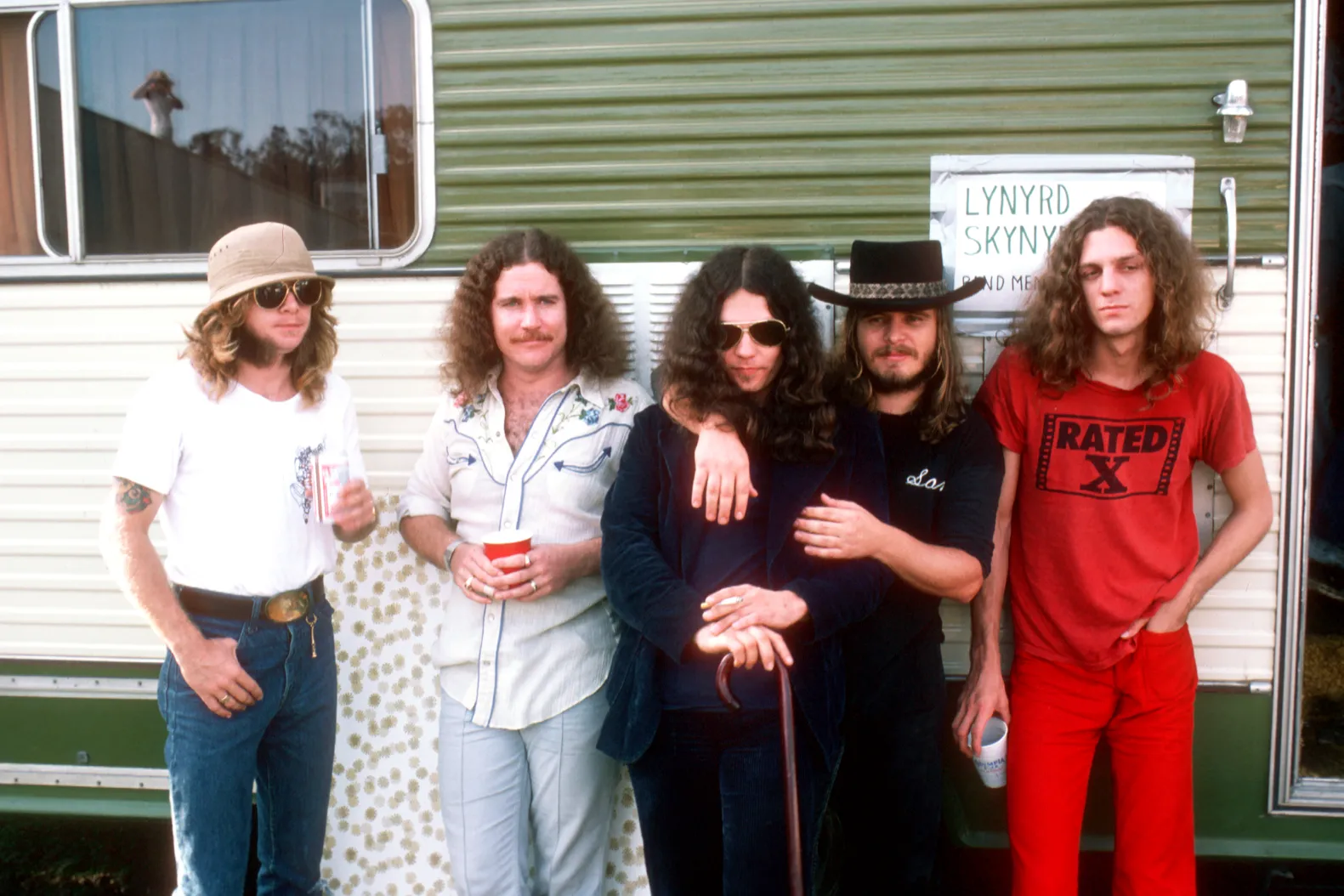
In the summer of 1977, members of Aerosmith were shopping for a plane to charter for an upcoming tour and took a look at an aging Convair CV-240, a twin-engine prop plane already decades old. Something about the flight crew or the condition of the aircraft put them off, and Aerosmith passed, choosing a different plane for their travels. Months later, the same Convair 240 would carry another band, Lynyrd Skynyrd, on the flight that killed three of its members.
By October 1977, Lynyrd Skynyrd was riding high. The band had just released their fifth album, “Street Survivors,” three days earlier, and were in the middle of a tour they had optimistically titled “Tour of the Survivors.” None of that irony was lost on drummer Artimus Pyle, who later recalled the band’s growing unease with their leased aircraft, describing it as looking like something straight out of a backwoods sitcom rather than a plane fit for one of the biggest acts in American rock. Their concerns had only deepened two days earlier, when flames roughly ten feet long had shot out of one of the plane’s engines mid-flight, an incident serious enough that the band had already agreed among themselves to upgrade to a proper jet for their next outing. They never got the chance.
On the afternoon of October 20, 1977, the band’s Convair took off from Greenville, South Carolina, bound for Baton Rouge, Louisiana, for the tour’s next stop. Roughly three hours into the flight, the crew radioed that they were dangerously low on fuel and needed to divert to the nearest airport immediately. Minutes later, they reported being completely out of fuel altogether. The pilots attempted an emergency landing in a heavily wooded area near McComb, Mississippi, but the plane went down hard, killing frontman Ronnie Van Zant, guitarist Steve Gaines, his sister and backing vocalist Cassie Gaines, the band’s assistant road manager, and both pilots. Twenty others on board survived, many with severe injuries, including Pyle, who later said he was shot at by a panicked local farmer while stumbling out of the wreckage to find help, mistaking the injured musician for an intruder in the dark.
A subsequent investigation determined the crew had failed to properly monitor fuel consumption throughout the flight, essentially running the aircraft dry through negligence rather than any mechanical failure beyond their control. Guitarist Gary Rossington later reflected that endless speculation about what might have prevented the crash ultimately changed nothing about what had already happened.
The tragedy effectively ended Lynyrd Skynyrd in its original form, with the surviving members unable to continue under the same name for nearly a decade. It would take Ronnie Van Zant’s younger brother, Johnny, stepping in as frontman in the mid-1980s to revive the band and carry the Skynyrd name forward into a new era. Decades later, the story of Aerosmith’s near-miss with the very same aircraft remains one of rock’s eeriest what-ifs, a single decision about a charter plane that, by pure chance, spared one legendary band from a tragedy it handed instead to another.