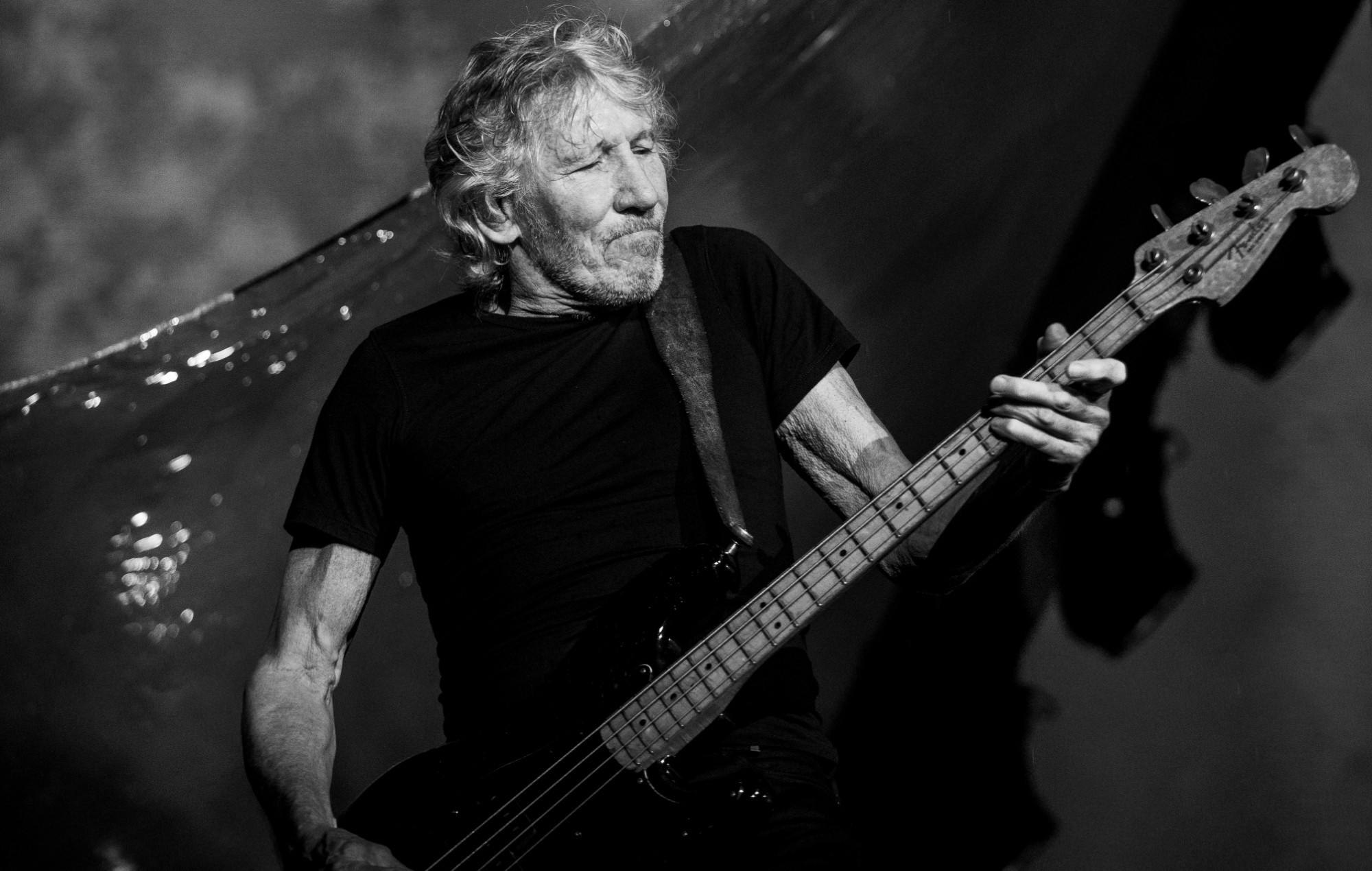
The breakup of Pink Floyd’s central creative partnership is the longest-running unresolved conflict in British rock history, and Roger Waters has spent the years since explaining it in pieces — in interviews scattered across decades, in documentaries, in the occasional unguarded moment when a journalist asked the right question at the right time. What emerges from those scattered pieces, finally assembled, is not the simple story of artistic ego that the press has told for forty years. It is something more specific and considerably sadder.
Waters and Gilmour built Pink Floyd’s most celebrated era together — Dark Side of the Moon, Wish You Were Here, Animals, The Wall — albums that combined Waters’s conceptual ambition and lyrical darkness with Gilmour’s melodic instinct and guitar tone, a combination that neither man has been able to fully replicate alone. By the time of The Wall’s production in 1979, the relationship had curdled into something closer to a hostile takeover than a partnership. Waters has admitted, with the directness that has become more pronounced as he’s aged, that he was controlling during this period to a degree he now finds difficult to defend — that keyboardist Richard Wright was effectively fired during the album’s production and required to complete it as a salaried session musician rather than a band member, a decision Waters drove and has since called one of his greatest regrets.
Waters left the band in 1985, declared Pink Floyd creatively dead, and was stunned when Gilmour and drummer Nick Mason continued under the name without him. The legal battle that followed was bitter and prolonged — Waters attempted to prevent Gilmour from using the band’s name, lost, and watched Gilmour-led Pink Floyd outsell his own solo output for the following decade.
What Waters has finally explained, in interviews given as he entered his eighties, is that the silence between him and Gilmour is not primarily about the legal battle or the commercial outcome. It is about a specific moment of betrayal that Waters has described with more emotional precision than he has ever previously offered: the feeling that Gilmour took something that was conceptually and emotionally Waters’s — the Pink Floyd name, the audience’s understanding of what the band meant — and continued using it without him, transforming a creative partnership into something that felt, to Waters, like theft.
Gilmour’s account differs substantially. He has said that Pink Floyd was always a band of multiple contributors, that Waters’s retrospective claim to sole authorship of the band’s identity is historically inaccurate, and that continuing without Waters was both legally sound and artistically legitimate. The two men reunited briefly for Live 8 in 2005 — a performance that fans hoped would herald reconciliation and that instead became, in retrospect, the last time the four surviving classic-era members shared a stage. Richard Wright died in 2008. The reunion never happened again.
Waters has said, in his most recent and most direct comments on the subject, that he no longer expects reconciliation with Gilmour and has made a kind of peace with that — not happily, but with the resignation of a man who has accepted that some ruptures do not heal simply because enough time has passed. He has said the wall between them is, in some painful irony he is fully aware of, the most permanent structure either of them ever built.