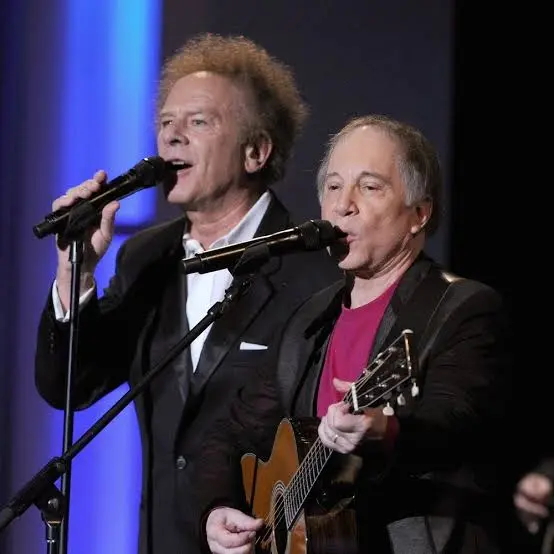
The song that predicted the end of Simon and Garfunkel was recorded at the height of their partnership, in 1966, and was received as one of the most beautiful pieces of music either man had ever made. It was called The Sound of Silence. And buried inside its imagery of people talking without speaking and hearing without listening was the exact description of what would eventually destroy the relationship between the two men performing it — a failure of communication so total and so long-building that when the final rupture came, in 1983, it felt to outside observers like a sudden collapse and to the people inside it like the inevitable conclusion of something that had been ending for twenty years.
Paul Simon and Art Garfunkel met as children in Queens, New York. They were eleven years old. They sang together in school productions, formed a duo in their teens called Tom and Jerry that produced a minor hit, and eventually became Simon and Garfunkel — the most successful folk duo in American music history, the act that produced The Sound of Silence, Mrs. Robinson, The Boxer, and Bridge Over Troubled Water before splitting for the first time in 1970.
The first split was Simon’s decision. He had been working on a solo album — what became Paul Simon in 1972 — and had moved creatively past the format of the duo without fully telling Garfunkel where he was going. Garfunkel discovered the extent of Simon’s creative departure approximately when the public did, which established a pattern that would repeat itself, more damagingly, in 1983.
Between the first and second splits, Garfunkel had pursued an acting career with moderate success — Carnal Knowledge (1971) and Catch-22 (1970) had confirmed him as a capable screen presence — while Simon had made a series of critically admired solo albums and written Graceland’s cultural groundwork. They had reunited for a 1981 concert in Central Park that attracted half a million people and that both men experienced as evidence that what they had built together was too significant to permanently abandon.
The studio album that was supposed to follow the Central Park concert became the site of the final betrayal. Garfunkel spent months recording his vocal contributions to what they had agreed would be a joint Simon and Garfunkel album. Simon, working in the studio on days when Garfunkel was not present, made a decision — gradually and then completely — to replace Garfunkel’s vocals with his own and release the record as a solo project under the title Hearts and Bones.
Garfunkel has said, in the careful language of a man who has decided that direct expression is beneath him, that he experienced this as a profound breach of trust. That the months of work he had contributed were erased without adequate conversation, without the courtesy of a warning that would have allowed him to withdraw before investing himself. That he heard the final version of what became a Paul Simon solo album with the same distance as a stranger.
Simon has acknowledged the decision was made without sufficient communication. He has not expressed regret about the artistic choice — he believed the record worked better as a solo album, believed the material was too personal to share compositional credit for, and the commercial failure of Hearts and Bones did not change that belief. The two men have performed together occasionally since — including a final tour in 2003 — with the specific tension of people who share a history too significant to abandon and a wound too deep to fully close.
The Sound of Silence predicted all of it in 1966. People talking without speaking. People hearing without listening. The neon god they made. The song already knew. The men performing it just weren’t listening carefully enough to each other.