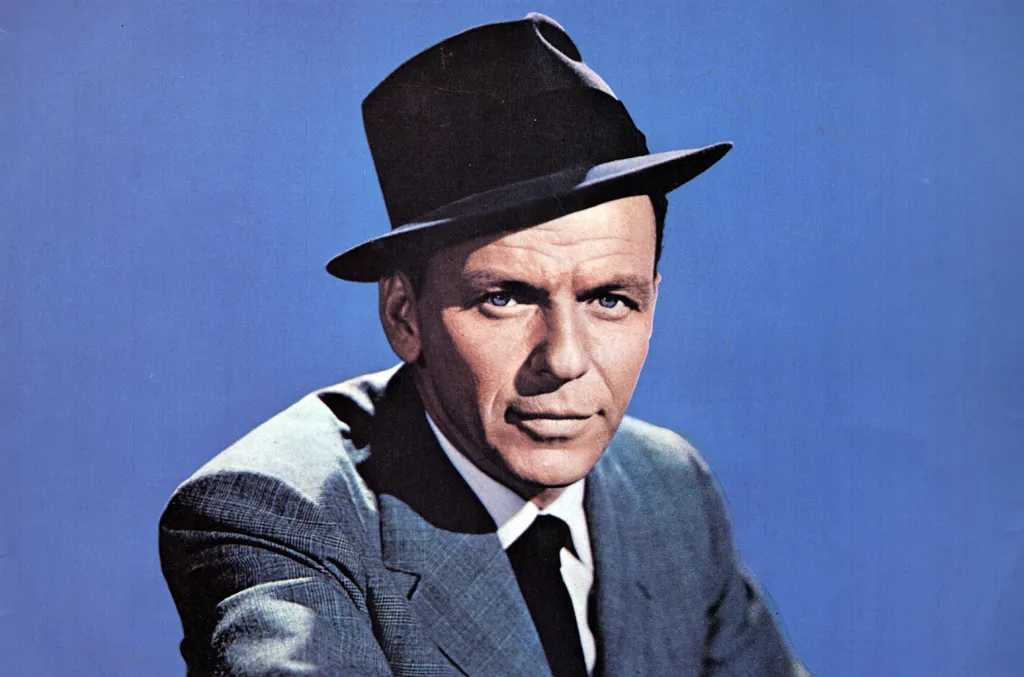
There is a version of Frank Sinatra that the public consumed happily for fifty years — the Rat Pack version, the tuxedo and cigarette version, the Chairman of the Board who owned every room he walked into and knew it and wanted you to know it too. That version was real. It was also a performance, constructed and maintained with the precision of a man who understood that vulnerability was a liability in the world he moved through.
The other version surfaced at night. In recording sessions that were scheduled for the small hours of the morning, when the engineers were half-asleep and the control room felt less like a professional environment and more like a confessional. Sinatra’s greatest recordings — the ones that have lasted not as entertainment but as genuine art — were almost all made in emotional states that he refused to discuss in daylight.
Only the Lonely (1958) is the record most often cited. Recorded in the months following the collapse of his relationship with Ava Gardner — the love of his life, the woman whose departure had left him, by multiple accounts of people who knew him then, genuinely diminished in a way the public never fully saw — it is an album of such naked emotional exposure that Sinatra reportedly refused to discuss it in interviews for years. Not because he was not proud of it. Because the cost of making it was too recent and too real to examine publicly.
The specific session that musicians and engineers from the period speak about in lowered voices is not fully documented — Sinatra was protective of his recording process and the people around him were protective of Sinatra — but the accounts describe a man arriving at the studio in the early hours of the morning, sending almost everyone home, and recording alone with a skeleton crew the tracks that would constitute the emotional heart of the album. One for My Baby (And One More for the Road) in particular. A song about a man at a bar after last call, talking to a bartender who may or may not be listening, trying to work something out that has no resolution.
The arrangement is almost nothing. A piano. A light brush on the snare. Sinatra’s voice in a range that is technically past its peak for a man his age, and which carries that pastness as an asset — the slight roughness, the places where the note doesn’t quite land perfectly, the sense of effort where earlier there would have been ease. These imperfections are the song. A technically perfect performance of One for My Baby would be a technically perfect performance. What Sinatra gave instead was a document.
Nelson Riddle, his arranger and collaborator, said afterward that he had never seen anyone give more of themselves to a microphone than Sinatra gave during those sessions. He said it carefully, with the tone of someone describing something they were not entirely sure they should have witnessed.
Sinatra went home before sunrise. He never explained the recordings to anyone. He simply released them, as Only the Lonely, and let the music speak for whatever it was speaking for.
It remains the most honest thing he ever made.