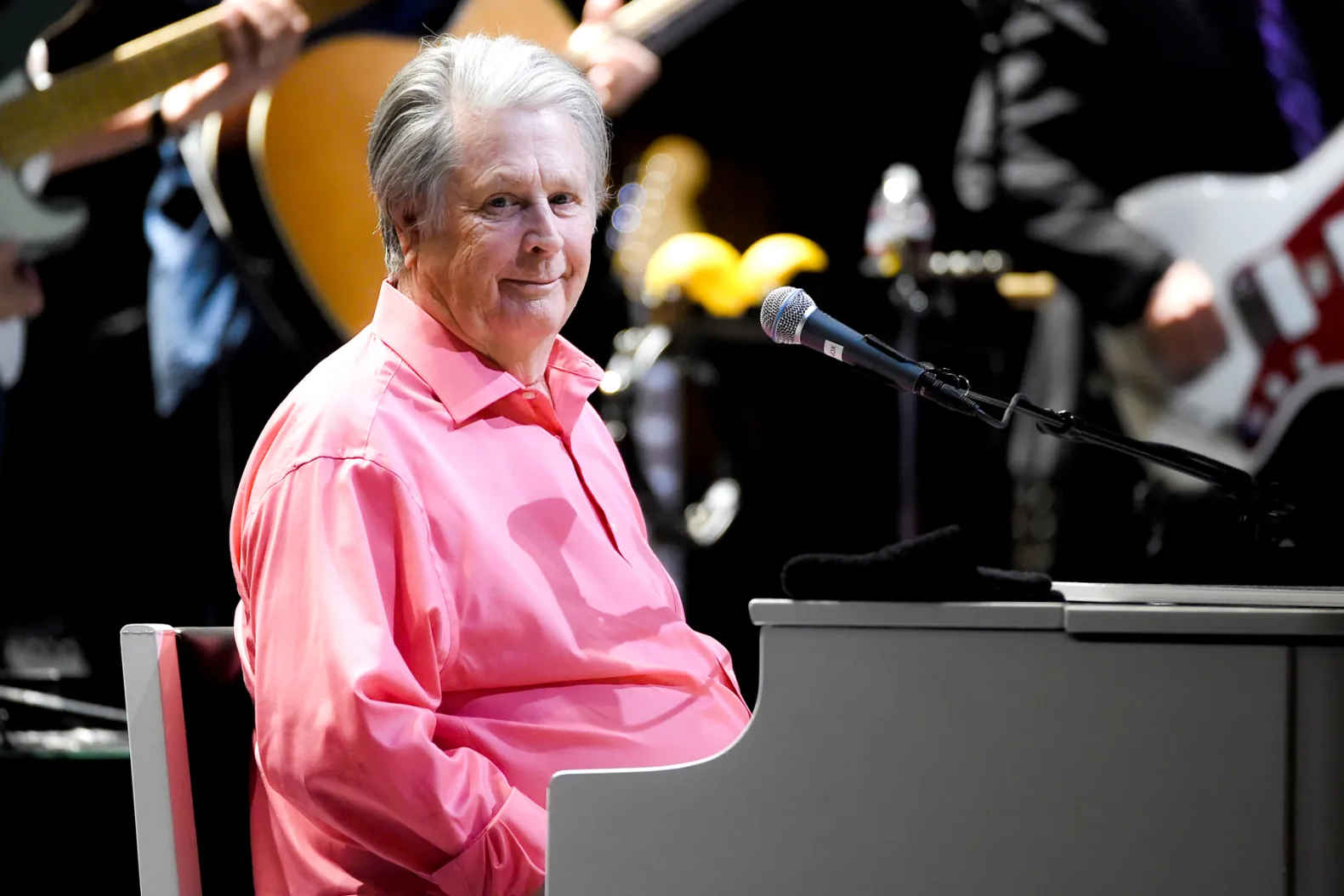
By the mid-1970s, Brian Wilson had become more myth than active musician within The Beach Boys. Once celebrated as the creative mastermind behind some of the most influential pop records ever made, Wilson had spent years drifting in and out of the public eye while struggling with serious personal and mental health issues.
So when the band launched a comeback campaign in 1976 built around the slogan “Brian Is Back,” it instantly captured attention—and created enormous expectations.
For longtime fans, those three words suggested something monumental. They hinted at a return to the visionary brilliance that had produced classics like Pet Sounds. The message implied that Wilson was ready to reclaim his place as the driving force behind the band and perhaps even lead them into another creative golden era.
But the reality behind the comeback was far more complicated.
The Weight of Expectations
Wilson’s return came after years of isolation and inconsistency. While he had never fully disappeared from the band, his involvement had become sporadic, and his once-relentless creative energy had faded under the weight of personal struggles.
Still, the idea of him taking control again generated massive excitement. That excitement only intensified when it was announced that Wilson would serve as the sole producer on the band’s new album, 15 Big Ones—the first time he had held that role alone since Pet Sounds.
The band and their label leaned heavily into the comeback narrative. Everything about the promotion framed the album as a triumphant reawakening of the genius who had once reshaped pop music.
But when the record finally arrived, listeners heard something very different.
An Uneven Return
Instead of sounding like a bold artistic rebirth, 15 Big Ones felt uncertain and inconsistent. The album relied heavily on covers, and its overall direction lacked the cohesion many fans and critics had expected from Wilson’s return.
There were flashes of creativity scattered throughout the record, moments that reminded listeners of Wilson’s instinctive musical brilliance. But those moments were surrounded by performances and production choices that often felt rough, unfinished, or strangely disconnected.
The disconnect between the marketing and the music quickly became impossible to ignore. Critics pointed out that the highly publicized “comeback” didn’t live up to the almost mythical expectations surrounding it.
And yet, reducing the album to a disappointment misses something important about that period.
The Genius Was Still There—Just Different
Within the band itself, Wilson’s presence still carried enormous significance. His bandmates understood that even in a fragile state, he remained capable of unexpected moments of inspiration.
Al Jardine later reflected on that era by describing how Wilson could suddenly surprise everyone in the room with spontaneous musical ideas and instincts that no one else would have imagined. That unpredictability—sometimes brilliant, sometimes chaotic—had always been part of what made him unique.
The problem was that creativity alone couldn’t erase the instability surrounding the sessions.
Chaos in the Studio
The recording process for 15 Big Ones was often tense and disorganized. Sessions were marked by disagreements, changing directions, and uncertainty about what kind of album the band was actually trying to make.
Adding even more strain was the presence of Eugene Landy, whose involvement created an unusual and often uncomfortable atmosphere within the group. The studio became a place where creativity and conflict constantly collided.
At times, Wilson’s return seemed inspiring. At others, it felt painfully fragile.
That tension is deeply embedded in the album itself.
More Human Than Mythical
Looking back today, 15 Big Ones feels less like a triumphant comeback and more like a snapshot of transition—a complicated moment in which a legendary artist tried to reconnect with the role that once defined him.
The “Brian Is Back” campaign promised something clean and dramatic: the return of a lost genius ready to pick up exactly where he left off. But real life rarely works that way.
Wilson wasn’t stepping back into the same world he had left in the 1960s, nor was he the same person. The expectation that he could instantly recreate past greatness ignored the reality of everything he had endured.
And maybe that’s what makes the story so fascinating.
Because the surprises were still there. The creativity was still there. But instead of arriving in the polished, revolutionary form fans expected, it emerged in fragments—messy, unpredictable, emotional, and incomplete.
In the end, Brian Wilson’s 1976 return wasn’t the glorious resurrection many imagined. It was something more human: a reminder that even legendary artists can’t simply rewind time and become who they once were.