In moments when the world feels sharply divided, it often takes a voice from outside politics to remind us of something simple but essential: humanity comes first.
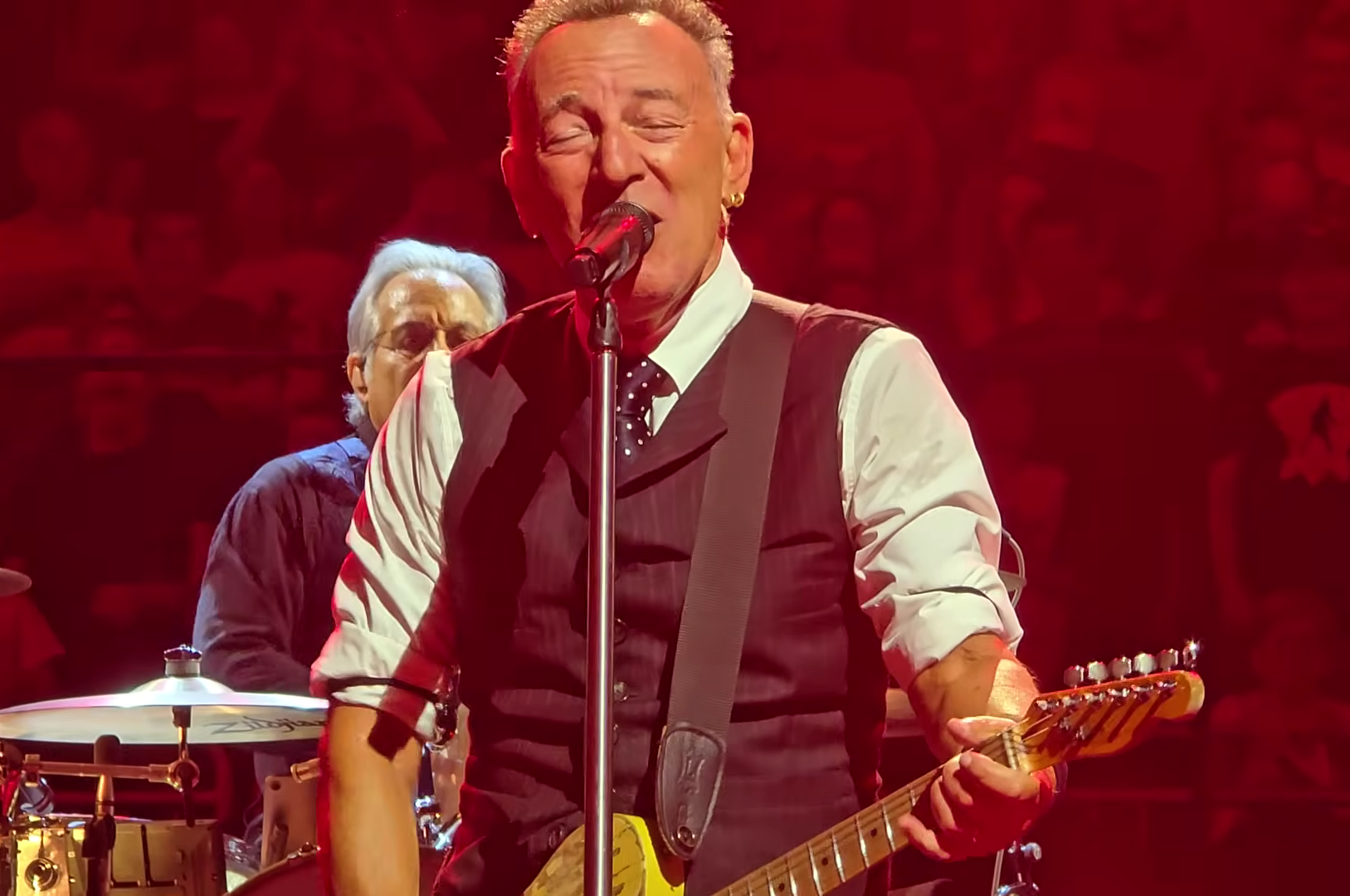
That’s exactly what happened on April 26, 2026, when Bruce Springsteen took the stage in Austin, just one night after a shocking shooting incident disrupted the White House Correspondents’ Dinner in Washington, D.C. The event forced the evacuation of President Donald Trump, First Lady Melania Trump, Vice President JD Vance, and numerous officials. One Secret Service agent was injured, and authorities later confirmed the suspect had been taken into custody, describing the attack as politically motivated.
Springsteen, known for his decades-long willingness to speak candidly about political issues, didn’t ignore the moment. But instead of leaning into division, he chose something more grounded.
He began simply, expressing relief that no lives were lost and that those involved were unharmed. It was a brief pause — a moment of shared humanity before anything else.
Then came the message that resonated far beyond the concert crowd:
“There is no place in any way, shape, or form for political violence of any kind.”
It wasn’t a complicated statement, and that’s exactly why it mattered. In a time when political disagreements often escalate into hostility, Springsteen cut through the noise with clarity. Disagreement, he suggested, is not the problem — it’s part of democracy. Violence, however, is where that system begins to break down.
What made his remarks especially striking is the context. Springsteen has long been a vocal critic of Trump and his administration. Yet in this moment, criticism gave way to something more fundamental: concern for safety and stability.
He expanded on that idea, urging people to step back from hatred and remember what connects us rather than what divides us. It wasn’t about changing political views — it was about recognizing the line that should never be crossed.
Springsteen also turned the lens inward, acknowledging that public figures — whether politicians, artists, or media voices — carry a responsibility. Words matter. Tone matters. And in a charged environment, they can either cool tensions or quietly fuel them.
Meanwhile, President Trump addressed the incident in his own way, describing the situation as part of a “crazy world” and praising the swift response of security personnel. His remarks, like Springsteen’s, reflected relief that the situation hadn’t turned more tragic.
But beyond individual reactions, the incident has sparked a broader conversation — one that goes deeper than a single night or a single event. Questions about security, political rhetoric, and rising tensions are now back at the forefront.
And in the middle of that conversation, Springsteen’s words linger.
Not because they were political.
But because they weren’t.
They served as a reminder that before ideology, before party lines, before disagreements — there is a baseline that must hold: human life, safety, and a shared responsibility to protect both.
In a divided era, that may be the most important message of all.