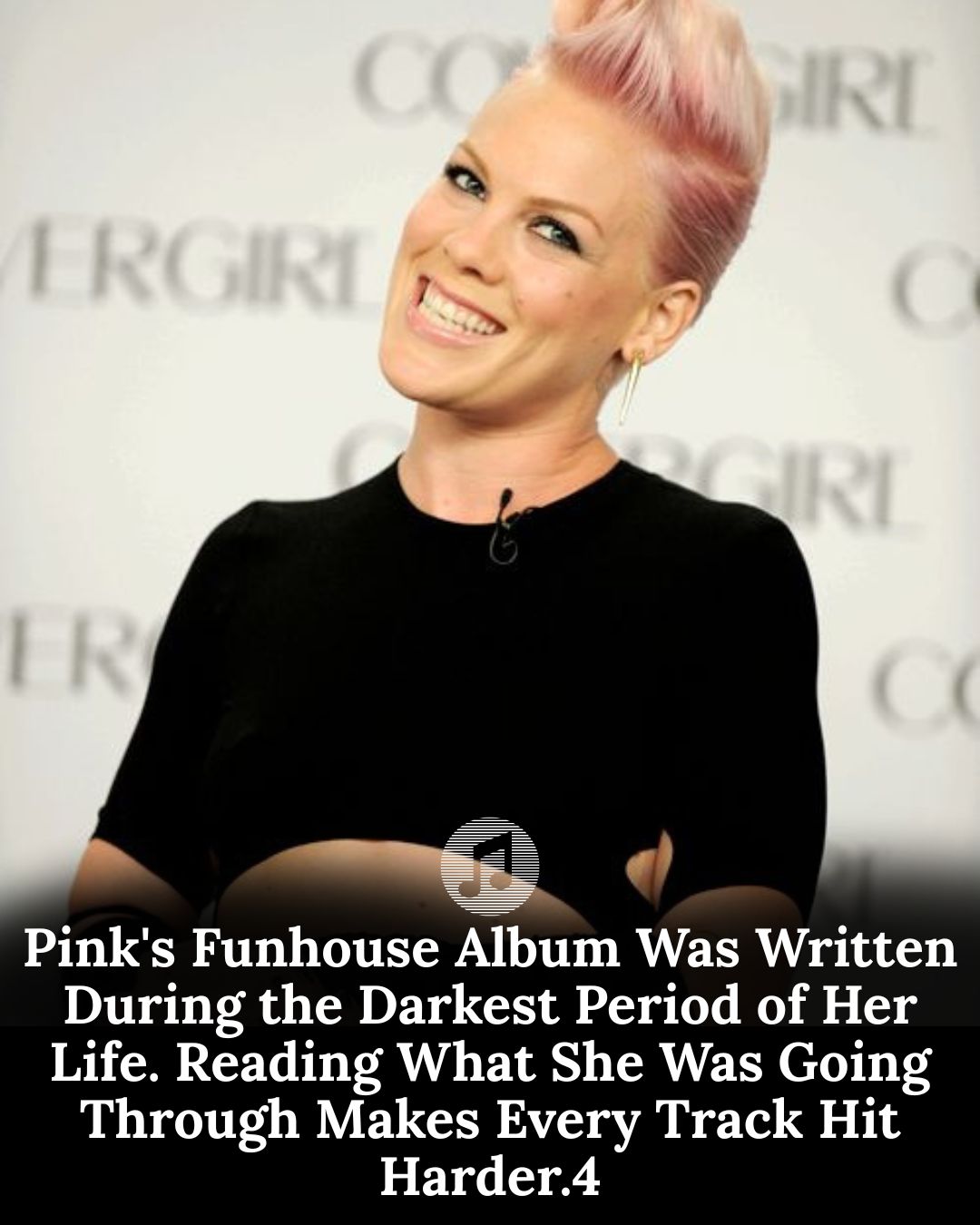
When Pink released Funhouse in 2008, it sounded bold, defiant, and at times even playful. But behind its explosive hooks and sharp lyrics was a much darker reality. The album was written during one of the most painful periods of her life—a time marked by the breakdown of her marriage to motocross racer Carey Hart and a deep sense of emotional upheaval.
Rather than retreat, Pink did what she has always done best—she turned pain into music. Funhouse became her outlet, a place where anger, heartbreak, confusion, and resilience could all exist at once. Songs like “So What” may come across as sarcastic and rebellious on the surface, but they were born from real hurt. It wasn’t just attitude—it was survival.
At the time, Pink has spoken about feeling lost and raw, unsure of where her life was heading. The separation from Hart forced her to confront difficult emotions head-on. Instead of softening those feelings, she leaned into them, allowing the album to reflect both the chaos and the clarity that followed. That’s why Funhouse feels so layered—it’s not just a breakup album; it’s a snapshot of someone trying to rebuild themselves in real time.
Tracks like “Sober” reveal a quieter, more introspective side, touching on loneliness and the search for meaning beyond distractions. Meanwhile, “Please Don’t Leave Me” mixes vulnerability with emotional contradiction, capturing the push-and-pull that often comes with heartbreak. Listening to these songs with the context of what she was going through makes them hit differently—they’re no longer just catchy pop-rock tracks, but deeply personal confessions.
What makes Funhouse stand out even more is what came after. Pink and Carey Hart eventually reconciled, adding another layer of meaning to the album. What once sounded like an ending now feels like part of a longer, more complicated story.
In the end, Funhouse isn’t just one of Pink’s most successful albums—it’s one of her most honest. Knowing the emotional weight behind it transforms the listening experience. Every lyric feels sharper, every chorus more powerful, because you’re not just hearing the music—you’re hearing someone fight their way through one of the hardest moments of their life and come out stronger on the other side.