There’s a certain irony baked into the legacy of the Eagles. Few bands in history have reached the same commercial heights, yet for years, they hovered in a strange middle ground—beloved by fans, but often side-eyed by critics and rock purists.
From the beginning, the Eagles had a clear ambition: take their brand of California rock and roll to the top—and stay there. And they did exactly that. Decades later, their Greatest Hits albums still sell in staggering numbers, a testament to just how deeply their music has embedded itself into popular culture. But massive success didn’t automatically translate into the kind of reverence afforded to some of their peers.
Part of that comes down to perception. In the 1970s, rock credibility often leaned toward the loud, the raw, and the rebellious. Bands like Led Zeppelin were mythologized as sonic outlaws, pushing boundaries with thunderous riffs and larger-than-life personas. Against that backdrop, the Eagles’ smoother, country-tinged sound felt… safer to some ears.
It’s easy to frame it as a mismatch—like comparing Whole Lotta Love to Desperado. But that comparison misses the point. The Eagles weren’t trying to out-muscle hard rock bands; they were telling different kinds of stories altogether.
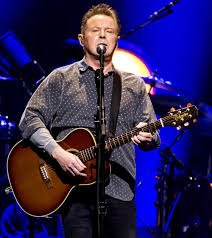
At the heart of that storytelling was Don Henley. Long before “heartland rock” became a defined genre, Henley was writing slice-of-life narratives steeped in American imagery—songs about disillusionment, fading dreams, and the cost of success. In many ways, he was exploring the same emotional terrain that artists like Tom Petty and Bruce Springsteen would come to define.
But timing—and image—matter. As Springsteen exploded into the mainstream with Born to Run, he became “The Boss,” the working-class poet of rock and roll. Critics rallied behind him, drawn to his raw delivery and blue-collar authenticity. Meanwhile, the Eagles, polished and radio-friendly, were often seen as the antithesis of that grit.
Henley didn’t exactly agree with that narrative.
He argued that the Eagles’ songwriting was just as rooted in real life—if not more so. While Springsteen painted vivid portraits of New Jersey streets, Henley believed the Eagles captured a broader, perhaps subtler, slice of American experience. The difference wasn’t depth—it was perception. Critics tended to focus on the Eagles’ hits, overlooking deeper cuts that told more complex stories.
Take The Last Resort, for example. Tucked at the end of Hotel California, it’s one of Henley’s most biting lyrical statements—a meditation on consumerism, environmental destruction, and the illusion of paradise. It’s hardly lightweight material, yet songs like this rarely defined the band’s public image.
Even in his solo work, Henley continued down that path. Tracks like New York Minute leaned into introspection and urban storytelling, territory often associated with Springsteen. The overlap only highlighted how blurred the lines really were between these supposed opposites.
And it wasn’t just Henley pushing back. Glenn Frey had his own opinions about who deserved more recognition. While there was no real feud, Frey openly questioned why artists like Bob Seger—whose music also spoke to everyday American life—didn’t receive the same level of critical buzz as Springsteen.
In the end, the debate isn’t really about who was “better.” It’s about how we define authenticity in rock music. Is it in the rawness of the sound? The image of the artist? Or the stories being told?
The Eagles may never have been the critics’ darlings in the same way as some of their contemporaries, but their impact is undeniable. They didn’t just chase hits—they crafted songs that connected, quietly and consistently, with millions of listeners.