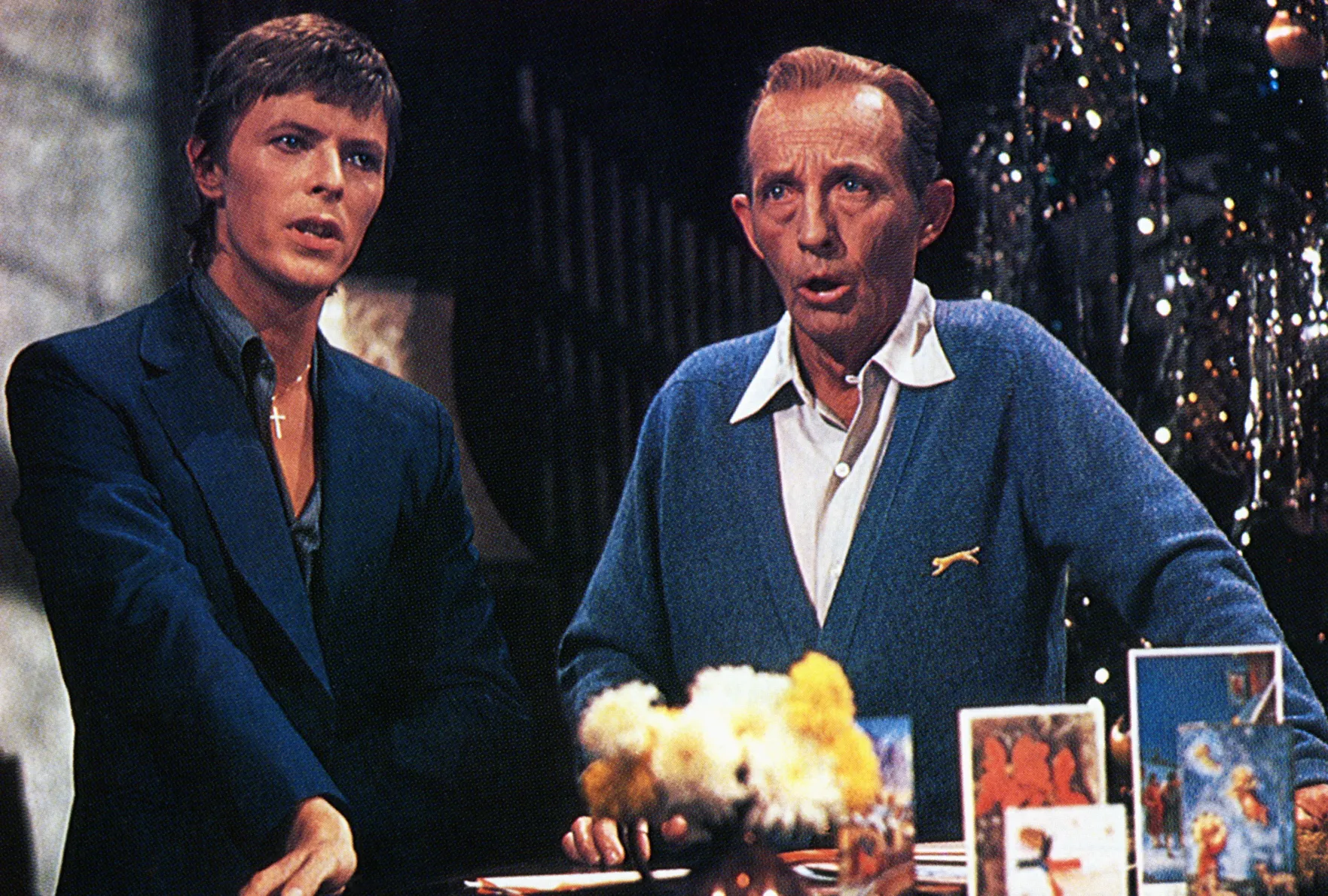
It sounds almost like a fever dream: David Bowie, the shape-shifting rock visionary, sitting beside Bing Crosby, the warm-voiced crooner of a bygone era. A fireplace crackles softly. The mood is calm, almost old-fashioned. And then—they sing.
This surreal pairing happened in 1977 on Crosby’s television special, Merrie Olde Christmas. At first glance, nothing about it made sense. Bowie was the embodiment of reinvention, known for Ziggy Stardust and avant-garde experimentation. Crosby, on the other hand, was synonymous with tradition, nostalgia, and classics like “White Christmas.” Different generations, different audiences, different worlds.
Even Bowie himself reportedly hesitated. He wasn’t thrilled with the idea of singing The Little Drummer Boy—a song he found somewhat limiting. But what followed was a moment of creative compromise that would become legendary.
Backstage, just hours before filming, the production team scrambled. Bowie and the songwriters quickly came up with an alternative: a counter-melody layered over the original carol. That new piece, titled Peace on Earth, gave Bowie something more contemporary and meaningful to work with.
And then it happened.
Seated side by side, dressed in starkly different styles—Crosby in his cozy sweater, Bowie looking effortlessly cool—they began. Crosby carried the familiar melody of “The Little Drummer Boy,” steady and reassuring. Bowie entered with “Peace on Earth,” his voice weaving through Crosby’s like a thread of modern reflection.
It shouldn’t have worked.
But it did—beautifully.
The contrast became the magic. Crosby’s warmth grounded the performance, while Bowie’s ethereal tone lifted it into something unexpected. The fireplace setting, the simplicity, the lack of spectacle—it all made the moment feel intimate, almost accidental, as if viewers had stumbled upon something private and unrepeatable.
Tragically, Crosby passed away just weeks after the recording. The duet aired posthumously, adding an emotional weight no one could have predicted. What began as an unusual TV segment became a quiet tribute, a bridge between eras.
Over the years, the performance has only grown in stature. It’s replayed every holiday season, not just because it’s festive, but because it captures something rare: two artists from completely different worlds meeting in the middle, finding harmony where none seemed possible.
In an industry often defined by boundaries—genres, generations, identities—this duet remains a reminder that music can dissolve all of them.
And sometimes, the most unlikely collaborations become the ones we never forget.