The Man Who Came Every Saturday
For six months I sat in my car with the engine off and watched a stranger mourn my wife.
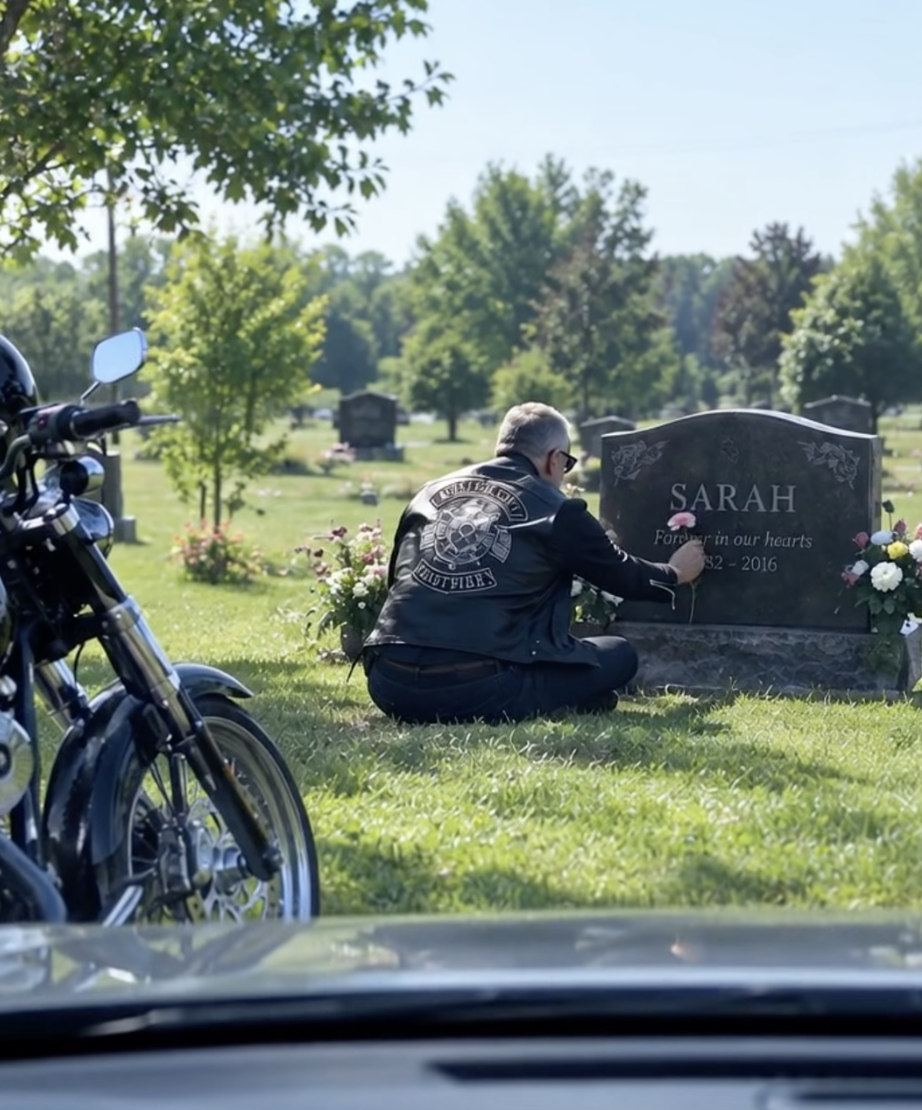
Every Saturday at exactly two o’clock a Harley-Davidson rolled through the cemetery gates. The rider never hurried and never looked lost. He followed the same winding road between the older stones, parked beneath the enormous oak, and walked straight to Sarah’s grave.
He stayed one hour. Not fifty-five minutes. Not sixty-five. One hour.
He never brought flowers. He never left a card. He never took a photograph. He sat cross-legged in the grass, lowered his head, and looked at her name as if the letters themselves still needed him. Sometimes his shoulders shook. Sometimes he wiped his face with the back of a gloved hand. Sometimes, just before he left, he pressed one rough palm against the granite and held it there for several long seconds.
I told myself the first week it was a mistake. The cemetery is large. Names blur. People get lost.
Then he came back the next Saturday. Same time. Same motorcycle. Same grave.
And the Saturday after that.
Week after week a complete stranger sat beside my wife as though he had lost her too.
Sarah died fourteen months earlier. Breast cancer. She was forty-three. We had been married twenty years. We had two children, a quiet house, grocery lists on the refrigerator, and the ordinary arguments that accumulate when two people share a life long enough. I thought I knew the important things about her.
She had been a pediatric nurse. She volunteered at church events. She remembered everyone’s birthday. She drove a silver minivan and packed extra snacks because she believed children were always hungry at the worst possible moment. Her idea of rebellion was ordering dessert before dinner.
Nothing about that woman suggested a secret connection to a man in black leather who arrived on a Harley and cried at her grave.
By the second month my confusion had hardened into something uglier. I started arriving early. I wrote down the weather, the exact minute he parked, how long his hand stayed on the stone. I asked myself the same questions every week.
Was he an old friend?
A former coworker?
Someone from her childhood?
Someone she had helped and never mentioned?
The last possibility was the one I hated most. What if there had been an entire part of Sarah’s life I had never been allowed to see?
By the third month I could not stay in the car any longer.
That Saturday I opened the door and walked across the grass. He heard my footsteps but did not turn. His hand was still resting against her name.
“Excuse me,” I said. My voice came out sharper than I intended. “I’m Sarah’s husband. I think it’s time you told me who you are.”
He lowered his hand slowly, stood, and faced me.
He looked exhausted in a way that had nothing to do with the ride. Forty-seven, maybe. A mechanic’s hands. Eyes that had been carrying something heavy for a very long time.
He glanced at the headstone first, then at me.
“Your wife saved my brother’s life,” he said.
For a moment I could not breathe.
His name was Mike. He worked at a small shop on the edge of town. He had one younger brother, Daniel. Daniel had been diagnosed with leukemia when he was nineteen. Insurance covered part of the treatment. It did not cover all of it. After Mike sold what little he owned, after the club rides and the donation jars and the nights he worked until his fingers went numb, they were still forty thousand dollars short.
Daniel was not a child. He was a skinny kid who still lived in the same rented house they had grown up in, who still called Mike “old man” when he was trying to be brave, who still believed his big brother could fix anything. Mike had raised him after their parents were gone. In every way that mattered, Daniel was the closest thing Mike had to a son.
One afternoon Mike left the hospital room because he did not want Daniel to see him fall apart. He stood in the hallway with his forehead against the wall and broke.
Sarah was not assigned to that floor that day. She was simply passing through. She stopped because a man was coming undone in public and no one else had.
“Are you okay?” she asked.
He was not. He told her everything. The diagnosis. The bills. The house that was already gone. The feeling that he was failing the only family he had left.
Sarah did not lecture him. She did not look at him with pity. She listened the way some people listen when they have decided the words in front of them matter more than the clock.
Then she put her hand on his shoulder and said, “Sometimes miracles still happen. Don’t lose hope yet.”
Two days later the hospital called. An anonymous donor had paid the remaining balance in full. No name. No conditions. No request for a photograph or a public thank-you.
Daniel received the treatment. He survived. Three years later the doctors declared him cancer-free.
Mike spent years trying to learn who had written that check. Every inquiry ended the same way: the donor wished to remain unknown.
He stopped looking. He never stopped wondering.
Years later, going through old papers the hospital finally released, he found a small folded note that had been clipped to an internal file and somehow survived. The handwriting stopped him.
When he handed it to me that afternoon beside the grave, my hands began to shake.
It was Sarah’s.
The same looping letters I had seen on grocery lists, birthday cards, permission slips, and notes left on the refrigerator. Don’t forget Maya’s lunch money. Liam has practice at four.
She had never mentioned Mike.
She had never mentioned Daniel.
She had never mentioned forty thousand dollars.
She had simply done it, then come home, made dinner, asked the children about their day, and gone to bed beside me as if nothing extraordinary had occurred.
I sat in the grass with the note and felt twenty years of marriage rearrange themselves.
Sarah had managed our money quietly and well. There had been a modest inheritance from her grandmother that she rarely discussed. I had assumed it was sitting in a conservative account earning almost nothing. I had never asked for an accounting because I trusted her. That trust, it turned out, had been both complete and incomplete.
She had seen a man coming apart in a hallway and decided another man’s chance at living was worth more than the safety net she had been quietly building for our own family.
She never brought the story home because she did not consider it a story that belonged to us. It belonged to a young man she would never see again and a brother whose last name she probably forgot by the following week.
Mike came every Saturday because he had made himself a promise. As long as he was able, he would remember the woman who had given his brother a future and asked for nothing in return. Not gratitude. Not friendship. Not even the dignity of being known.
He was not visiting a secret lover.
He was not hiding a second life.
He was keeping a debt.
I looked at Sarah’s name carved in stone and understood something I had missed while she was alive. There was a part of her heart that operated in rooms I would never enter. It belonged to people whose names never made it onto our calendar. People she helped in the small, unrecorded spaces between shifts. People who would never know her last name.
She did not need to be called a hero.
She only needed to see the need.
Before Mike left that day I stopped him.
“Come back next Saturday,” I said. “Don’t sit over there anymore. Sit with me.”
He nodded once.
The following week, at exactly two o’clock, I was already under the oak when the Harley appeared. He parked, walked over, and lowered himself onto the grass beside me instead of across from me.
We did not talk much that first shared hour. We did not need to. Two men who had loved the same woman in completely different ways sat in the shade of a tree older than both of us and let the quiet do the work.
Later I told the children.
Our son, sixteen and already practicing the art of looking unimpressed, went very still. Our daughter cried the way she used to cry when she was small and something felt too large for her chest. A month after that, Mike brought Daniel.
Daniel was twenty-four then. Still thin. Hair grown back. He placed a single white rose against the stone and said, very quietly, “Thank you for my life.”
Sarah would have hated the ceremony of it. She would have waved it off, changed the subject, asked whether anyone wanted more pasta. That was her way. The work mattered. The credit did not.
I still go every Saturday.
Mike still comes.
Sometimes we talk about engines or baseball or the ridiculous price of groceries. Sometimes we sit without speaking. The hour is no longer an investigation. It is simply the place where the part of Sarah I never fully saw continues to exist.
I used to believe the deepest knowledge of a person was reserved for the one who shared their bed and their bills and their ordinary days. I was wrong in the most important way.
Some of the truest things a person ever does happen in rooms the people who love them will never enter.
Sarah walked into one of those rooms, saw a man who believed he was failing his brother, and quietly made sure he was not.
Then she came home and asked me whether we had any milk.
That was the secret.
Not a lover.
Not a second life.
Just a heart large enough to spend itself on strangers and modest enough never to mention it.
I sit beneath the oak now and I am no longer watching from the car.
I am sitting where she would have wanted me to sit: beside the man whose brother is alive because my wife decided, one ordinary afternoon, that hope was still allowed.
The Man Who Came Every Saturday
For six months I sat in my car with the engine off and watched a stranger mourn my wife.
Every Saturday at exactly two o’clock a Harley-Davidson rolled through the cemetery gates. The rider never hurried and never looked lost. He followed the same winding road between the older stones, parked beneath the enormous oak, and walked straight to Sarah’s grave.
He stayed one hour. Not fifty-five minutes. Not sixty-five. One hour.
He never brought flowers. He never left a card. He never took a photograph. He sat cross-legged in the grass, lowered his head, and looked at her name as if the letters themselves still needed him. Sometimes his shoulders shook. Sometimes he wiped his face with the back of a gloved hand. Sometimes, just before he left, he pressed one rough palm against the granite and held it there for several long seconds.
I told myself the first week it was a mistake. The cemetery is large. Names blur. People get lost.
Then he came back the next Saturday. Same time. Same motorcycle. Same grave.
And the Saturday after that.
Week after week a complete stranger sat beside my wife as though he had lost her too.
Sarah died fourteen months earlier. Breast cancer. She was forty-three. We had been married twenty years. We had two children, a quiet house, grocery lists on the refrigerator, and the ordinary arguments that accumulate when two people share a life long enough. I thought I knew the important things about her.
She had been a pediatric nurse. She volunteered at church events. She remembered everyone’s birthday. She drove a silver minivan and packed extra snacks because she believed children were always hungry at the worst possible moment. Her idea of rebellion was ordering dessert before dinner.
Nothing about that woman suggested a secret connection to a man in black leather who arrived on a Harley and cried at her grave.
By the second month my confusion had hardened into something uglier. I started arriving early. I wrote down the weather, the exact minute he parked, how long his hand stayed on the stone. I asked myself the same questions every week.
Was he an old friend?
A former coworker?
Someone from her childhood?
Someone she had helped and never mentioned?
The last possibility was the one I hated most. What if there had been an entire part of Sarah’s life I had never been allowed to see?
By the third month I could not stay in the car any longer.
That Saturday I opened the door and walked across the grass. He heard my footsteps but did not turn. His hand was still resting against her name.
“Excuse me,” I said. My voice came out sharper than I intended. “I’m Sarah’s husband. I think it’s time you told me who you are.”
He lowered his hand slowly, stood, and faced me.
He looked exhausted in a way that had nothing to do with the ride. Forty-seven, maybe. A mechanic’s hands. Eyes that had been carrying something heavy for a very long time.
He glanced at the headstone first, then at me.
“Your wife saved my brother’s life,” he said.
For a moment I could not breathe.
His name was Mike. He worked at a small shop on the edge of town. He had one younger brother, Daniel. Daniel had been diagnosed with leukemia when he was nineteen. Insurance covered part of the treatment. It did not cover all of it. After Mike sold what little he owned, after the club rides and the donation jars and the nights he worked until his fingers went numb, they were still forty thousand dollars short.
Daniel was not a child. He was a skinny kid who still lived in the same rented house they had grown up in, who still called Mike “old man” when he was trying to be brave, who still believed his big brother could fix anything. Mike had raised him after their parents were gone. In every way that mattered, Daniel was the closest thing Mike had to a son.
One afternoon Mike left the hospital room because he did not want Daniel to see him fall apart. He stood in the hallway with his forehead against the wall and broke.
Sarah was not assigned to that floor that day. She was simply passing through. She stopped because a man was coming undone in public and no one else had.
“Are you okay?” she asked.
He was not. He told her everything. The diagnosis. The bills. The house that was already gone. The feeling that he was failing the only family he had left.
Sarah did not lecture him. She did not look at him with pity. She listened the way some people listen when they have decided the words in front of them matter more than the clock.
Then she put her hand on his shoulder and said, “Sometimes miracles still happen. Don’t lose hope yet.”
Two days later the hospital called. An anonymous donor had paid the remaining balance in full. No name. No conditions. No request for a photograph or a public thank-you.
Daniel received the treatment. He survived. Three years later the doctors declared him cancer-free.
Mike spent years trying to learn who had written that check. Every inquiry ended the same way: the donor wished to remain unknown.
He stopped looking. He never stopped wondering.
Years later, going through old papers the hospital finally released, he found a small folded note that had been clipped to an internal file and somehow survived. The handwriting stopped him.
When he handed it to me that afternoon beside the grave, my hands began to shake.
It was Sarah’s.
The same looping letters I had seen on grocery lists, birthday cards, permission slips, and notes left on the refrigerator. Don’t forget Maya’s lunch money. Liam has practice at four.
She had never mentioned Mike.
She had never mentioned Daniel.
She had never mentioned forty thousand dollars.
She had simply done it, then come home, made dinner, asked the children about their day, and gone to bed beside me as if nothing extraordinary had occurred.
I sat in the grass with the note and felt twenty years of marriage rearrange themselves.
Sarah had managed our money quietly and well. There had been a modest inheritance from her grandmother that she rarely discussed. I had assumed it was sitting in a conservative account earning almost nothing. I had never asked for an accounting because I trusted her. That trust, it turned out, had been both complete and incomplete.
She had seen a man coming apart in a hallway and decided another man’s chance at living was worth more than the safety net she had been quietly building for our own family.
She never brought the story home because she did not consider it a story that belonged to us. It belonged to a young man she would never see again and a brother whose last name she probably forgot by the following week.
Mike came every Saturday because he had made himself a promise. As long as he was able, he would remember the woman who had given his brother a future and asked for nothing in return. Not gratitude. Not friendship. Not even the dignity of being known.
He was not visiting a secret lover.
He was not hiding a second life.
He was keeping a debt.
I looked at Sarah’s name carved in stone and understood something I had missed while she was alive. There was a part of her heart that operated in rooms I would never enter. It belonged to people whose names never made it onto our calendar. People she helped in the small, unrecorded spaces between shifts. People who would never know her last name.
She did not need to be called a hero.
She only needed to see the need.
Before Mike left that day I stopped him.
“Come back next Saturday,” I said. “Don’t sit over there anymore. Sit with me.”
He nodded once.
The following week, at exactly two o’clock, I was already under the oak when the Harley appeared. He parked, walked over, and lowered himself onto the grass beside me instead of across from me.
We did not talk much that first shared hour. We did not need to. Two men who had loved the same woman in completely different ways sat in the shade of a tree older than both of us and let the quiet do the work.
Later I told the children.
Our son, sixteen and already practicing the art of looking unimpressed, went very still. Our daughter cried the way she used to cry when she was small and something felt too large for her chest. A month after that, Mike brought Daniel.
Daniel was twenty-four then. Still thin. Hair grown back. He placed a single white rose against the stone and said, very quietly, “Thank you for my life.”
Sarah would have hated the ceremony of it. She would have waved it off, changed the subject, asked whether anyone wanted more pasta. That was her way. The work mattered. The credit did not.
I still go every Saturday.
Mike still comes.
Sometimes we talk about engines or baseball or the ridiculous price of groceries. Sometimes we sit without speaking. The hour is no longer an investigation. It is simply the place where the part of Sarah I never fully saw continues to exist.
I used to believe the deepest knowledge of a person was reserved for the one who shared their bed and their bills and their ordinary days. I was wrong in the most important way.
Some of the truest things a person ever does happen in rooms the people who love them will never enter.
Sarah walked into one of those rooms, saw a man who believed he was failing his brother, and quietly made sure he was not.
Then she came home and asked me whether we had any milk.
That was the secret.
Not a lover.
Not a second life.
Just a heart large enough to spend itself on strangers and modest enough never to mention it.
I sit beneath the oak now and I am no longer watching from the car.
I am sitting where she would have wanted me to sit: beside the man whose brother is alive because my wife decided, one ordinary afternoon, that hope was still allowed.