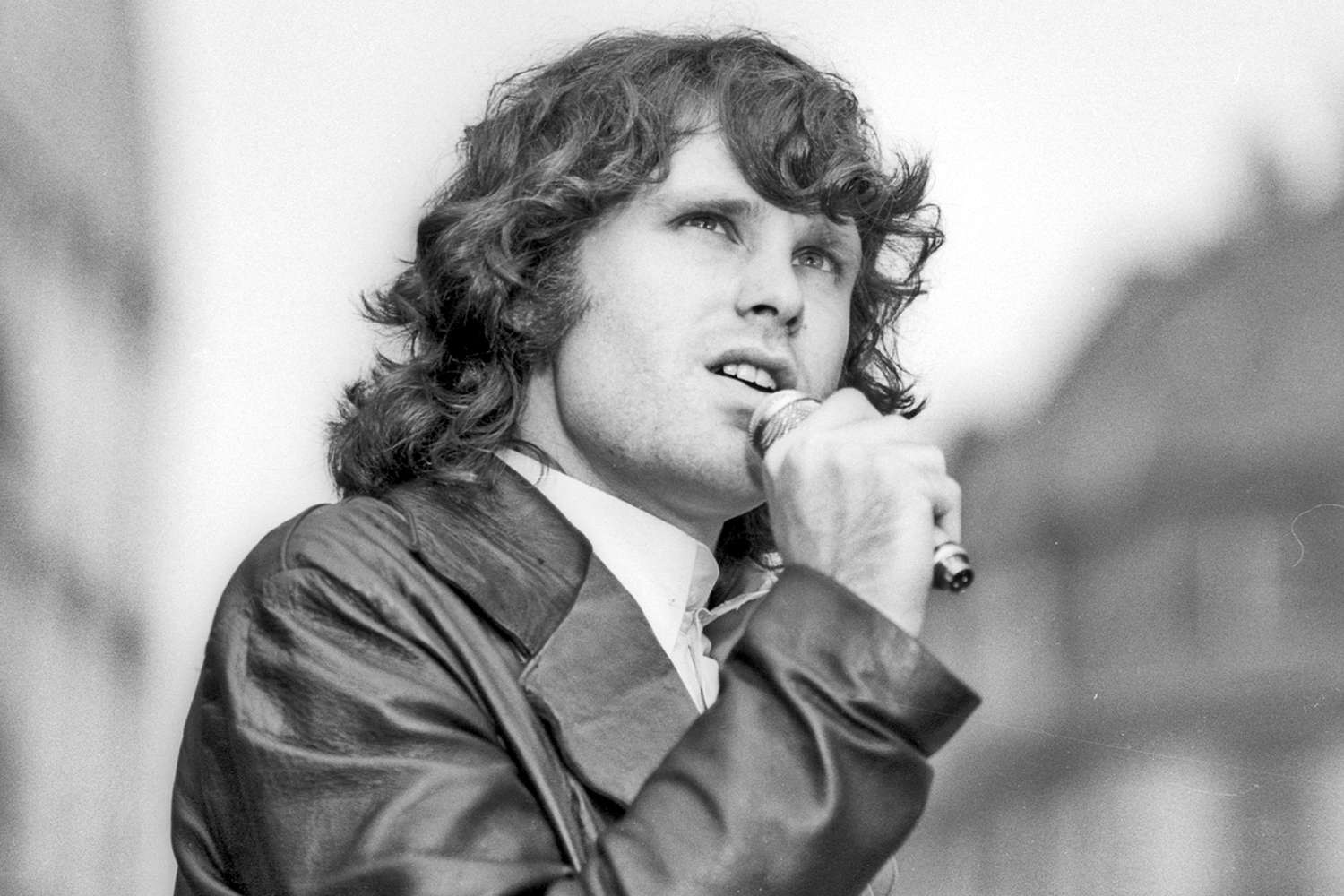
Ray Manzarek spent fifty years as the keeper and interpreter of the Doors’ legacy — the surviving member most willing to examine, in specific detail, what the band had actually attempted and what Morrison had actually been doing in the moments when the music exceeded anything that rehearsal or intention could account for. His interviews, particularly those given in the final decade of his life, contain the most honest account available of the gap between the Doors as a professional enterprise and the Doors as something that occasionally happened to the professional enterprise when the conditions were right.
The conditions involved Morrison being in a state that was not entirely manageable and not entirely explicable — a convergence of whatever he had consumed, whatever was happening in his interior life, and whatever the music itself opened in him when it started moving in directions that the other three musicians had learned to follow rather than redirect. Manzarek has described sessions where Morrison began singing words that were not the lyrics they had rehearsed, where improvisations extended past any planned duration, where the thing being recorded became something none of them had intended when they entered the studio.
1. The End (1967)
The studio version is eleven minutes and forty-three seconds and was recorded in a single session during which Morrison reportedly consumed enough substances that the other band members were uncertain, at various points, whether he was conscious. What he produced in that state — the Oedipus section, the specific imagery of the killer and the road and the ancient lake — is lyric writing of a quality that sober, deliberate composition rarely achieves. Manzarek has said he listened to the playback after the session and did not entirely recognize what they had made. He said it sounded like it came from somewhere he didn’t have an address for.
2. When the Music’s Over (1967)
Seventeen minutes in live performance, thirteen in the studio recording, built on a central question — when the music’s over, turn out the lights — that Morrison treated not as a lyric but as a genuine inquiry, pressing it across the song’s duration with the specific insistence of someone who needed an answer. Manzarek has said Morrison was asking real questions in this song — not performing the asking but actually asking, and that the distinction was audible in the original sessions in ways the final recording only partially preserves.
3. Riders on the Storm (1971)
The final song on the final Doors album recorded with Morrison — L.A. Woman — and the recording that Manzarek has described most specifically as arriving from somewhere none of them understood. Morrison’s vocal was recorded in a booth he had asked to have entirely darkened. He sang in complete darkness. The vocal that emerged — its specific quality of distance and calm, the feeling of someone speaking from the other side of something — was not what any of them had expected from the arrangement they had rehearsed. Morrison died three months after the album was completed.
4. Horse Latitudes (1967)
Morrison’s spoken word piece about sailors throwing horses overboard in a becalmed sea — imagery that functions simultaneously as historical fact, extended metaphor, and something harder to categorize. The musicians improvised atonal accompaniment while Morrison performed. Manzarek has said subsequent listens to the recording reveal details in Morrison’s vocal — specific moments of what sounds like genuine distress — that they did not notice during the session. He said he did not know what Morrison was actually experiencing while recording it and was not sure he would have wanted to know.
5. An American Prayer (1978)
Assembled posthumously from recordings Morrison made of his own poetry in December 1970, seven months before his death, set to new music by the surviving band members. Manzarek has said going through hours of Morrison’s private recordings — hearing his voice in material that was never intended for public release, that was recorded alone without performance context — was the most disturbing and most moving experience of his professional life. He said some of what was on those tapes made it clear that Morrison understood, in December 1970, that something was ending. He could not say whether Morrison knew specifically that he was going to die, only that the recordings sounded like a man making a record of himself before the record became impossible.
Manzarek died in May 2013. He took with him the most complete firsthand account of what the Doors actually were — not as a rock band with a troubled lead singer but as something stranger and less categorizable that occasionally produced music of a quality that none of its participants could fully account for. What remains is the recordings. Put on Riders on the Storm in a dark room. Morrison recorded it the same way.