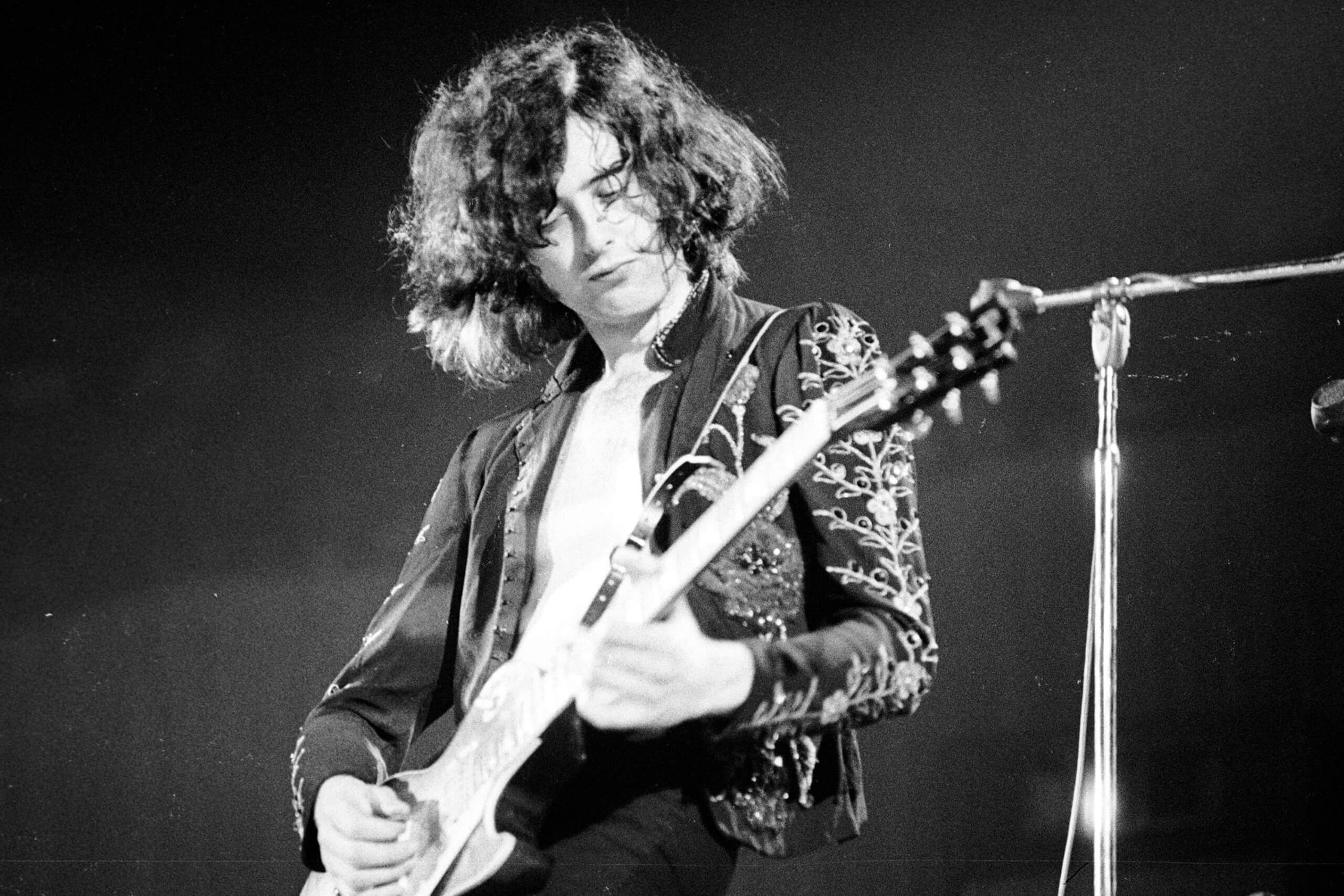
The creative dynamic between Jimmy Page and Robert Plant has been described, across fifty years of interviews and retrospective accounts, with the comfortable shorthand of pure partnership — two men who built something together that neither could have built alone, whose complementary gifts produced a body of work that defines the outer limit of what hard rock achieved in the 1970s. The shorthand is accurate as far as it goes. What it smooths over is the specific friction that existed between Page’s musical vision — sometimes dark, sometimes occult-influenced, always ambitious in ways that pushed against conventional song structure — and Plant’s instinct for melody and his own comfort zone, which were not always the same as Page’s.
1. Whole Lotta Love (1969)
Plant has spoken about his initial uncertainty regarding the song’s structure — the extended psychedelic breakdown section in the middle, featuring theremin and studio effects that were, in 1969, genuinely avant-garde for a hard rock context. He was more comfortable with the riff and the vocal melody, which sat within a blues tradition he understood intuitively. The experimental midsection was Page’s insistence, and Plant’s early reservations about it are documented in accounts of the recording sessions. The song became one of the defining tracks in rock history. Plant has since acknowledged the experimental section as essential.
2. No Quarter (1973)
A track dominated by John Paul Jones’s keyboards rather than Plant’s voice — Plant’s contribution is present but deliberately submerged in the mix, his vocals treated and distanced in ways that removed them from the foreground position he occupied on most Zeppelin tracks. Plant has described feeling uncertain about recordings where his voice was treated as texture rather than lead, and No Quarter pushed that dynamic further than almost anything else in the catalog. He has since described it as one of his favorite Zeppelin tracks, a revision of his initial reaction.
3. In My Time of Dying (1975)
Nearly eleven minutes, built on a traditional Delta blues framework extended to a length and heaviness that transforms the source material into something almost unrecognizable. Plant has spoken about the physical demands of extended performances — In My Time of Dying required sustained vocal intensity across a duration that tested his capabilities differently from shorter tracks — and about his initial uncertainty regarding whether the extension served the song or merely demonstrated the band’s capacity for excess. The recording, by most assessments, demonstrates both simultaneously.
4. Achilles Last Stand (1976)
The opening track of Presence — recorded in a period when Page has acknowledged his heroin addiction was affecting his ability to function reliably and when the band was under commercial pressure following the delay caused by Plant’s car accident. Page constructed Achilles Last Stand as a ten-minute guitar showcase of extraordinary complexity, and Plant’s lyric — written quickly, in the session, without the extended development period he preferred — has been described by Plant as feeling rushed in ways he later compensated for in live performance. He has said the song grew in his estimation across years of performing it.
5. Tea for One (1976)
The most intimate and most melancholic track on Presence, a slow blues that Plant has said was almost too personal to perform — written in the aftermath of his son Karac’s illness and the broader trauma of the accident that had hospitalized him and his wife. He has spoken about the experience of recording emotionally raw material in a professional context, of being asked to deliver a vocal performance while the events the lyric referenced were still recent. The result is, by common critical assessment, one of the most emotionally honest vocal performances in the Zeppelin catalog.
Plant and Page have performed together occasionally since the band’s dissolution following John Bonham’s death in 1980, but have not reunited for a full Led Zeppelin project beyond the 2007 tribute concert. The friction between their visions — the creative disagreements documented above — was also the engine that produced the music. Both things are true.