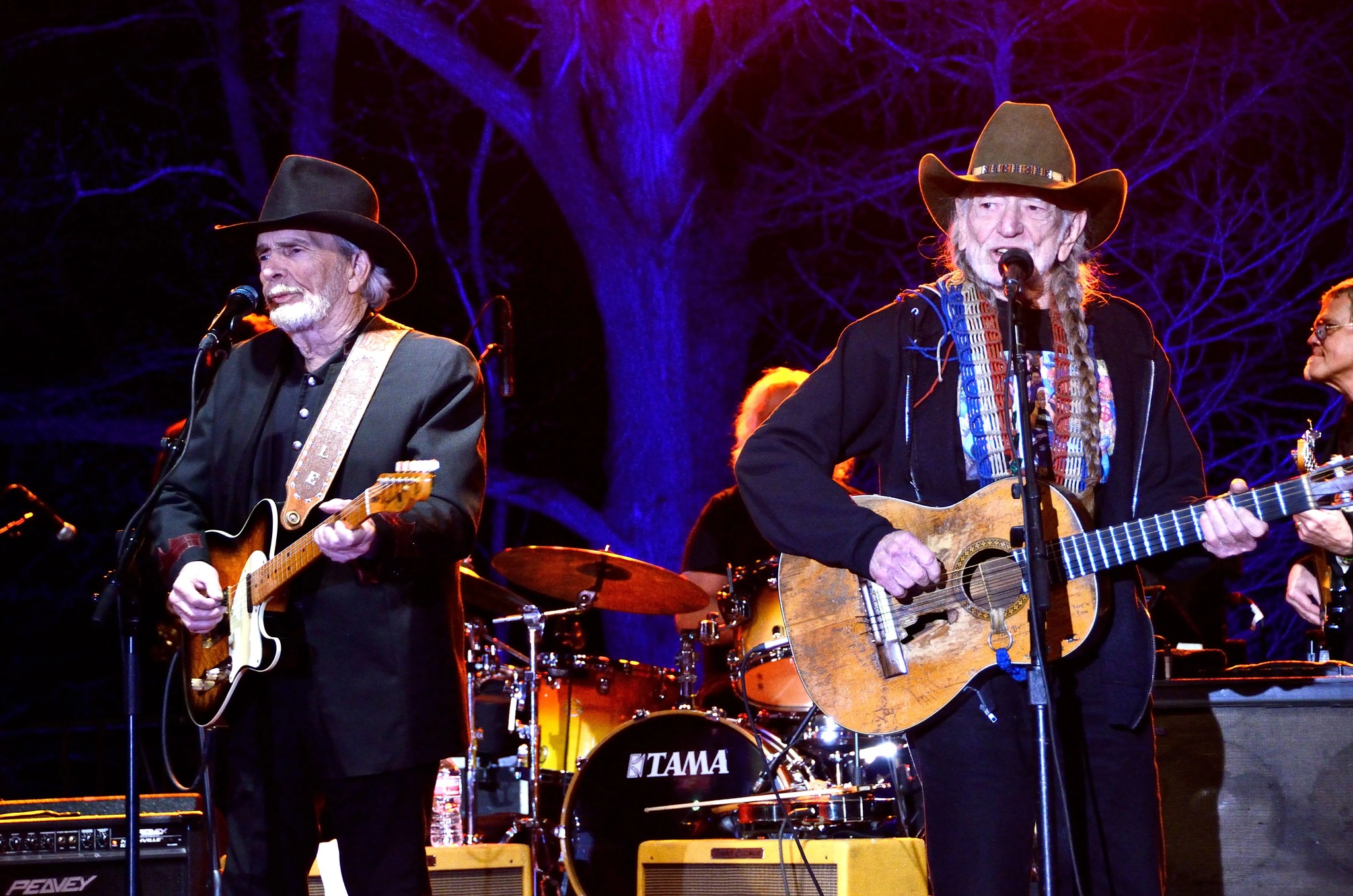
“Okie from Muskogee” remains one of country music’s most enduring and debated anthems, a song inseparable from the cultural crosscurrents of the late 1960s. Written by Merle Haggard and released in 1969, it arrived at a moment when America was deeply divided, offering a voice to those who felt disconnected from the rapidly shifting social and political climate of the era.
With its vivid celebration of small-town pride and traditional values, the song struck a nerve. Lines like “We don’t smoke marijuana in Muskogee; we don’t take our trips on LSD” weren’t just lyrics — they became a declaration of identity for listeners who saw themselves standing apart from the counterculture movement sweeping the nation. The chorus, delivered with unmistakable defiance, transformed the song into a rallying point for a generation grappling with change.
Haggard’s own life experience gave the song its unmistakable authenticity. Raised in Bakersfield, California, he understood the working-class perspective and sense of rootedness reflected in the lyrics. That honesty helped propel “Okie from Muskogee” to the top of the country charts, where it quickly grew into more than a hit — it became a cultural statement.
Decades later, the song’s impact proved undiminished. In 2009, Haggard revisited the anthem in a live performance with fellow country legend Willie Nelson for their collaborative album Django and Jimmie. Their shared rendition added depth and perspective, allowing the song to be heard not just as a snapshot of a turbulent era, but as a lasting piece of American musical history.
Though it sparked controversy when it first appeared, “Okie from Muskogee” endures as a powerful reflection of the varied beliefs and identities that make up the American story. Through its straightforward lyrics and unmistakable melody, the song continues to resonate — a reminder of how country music can capture the spirit of a nation navigating change, conflict, and tradition all at once.