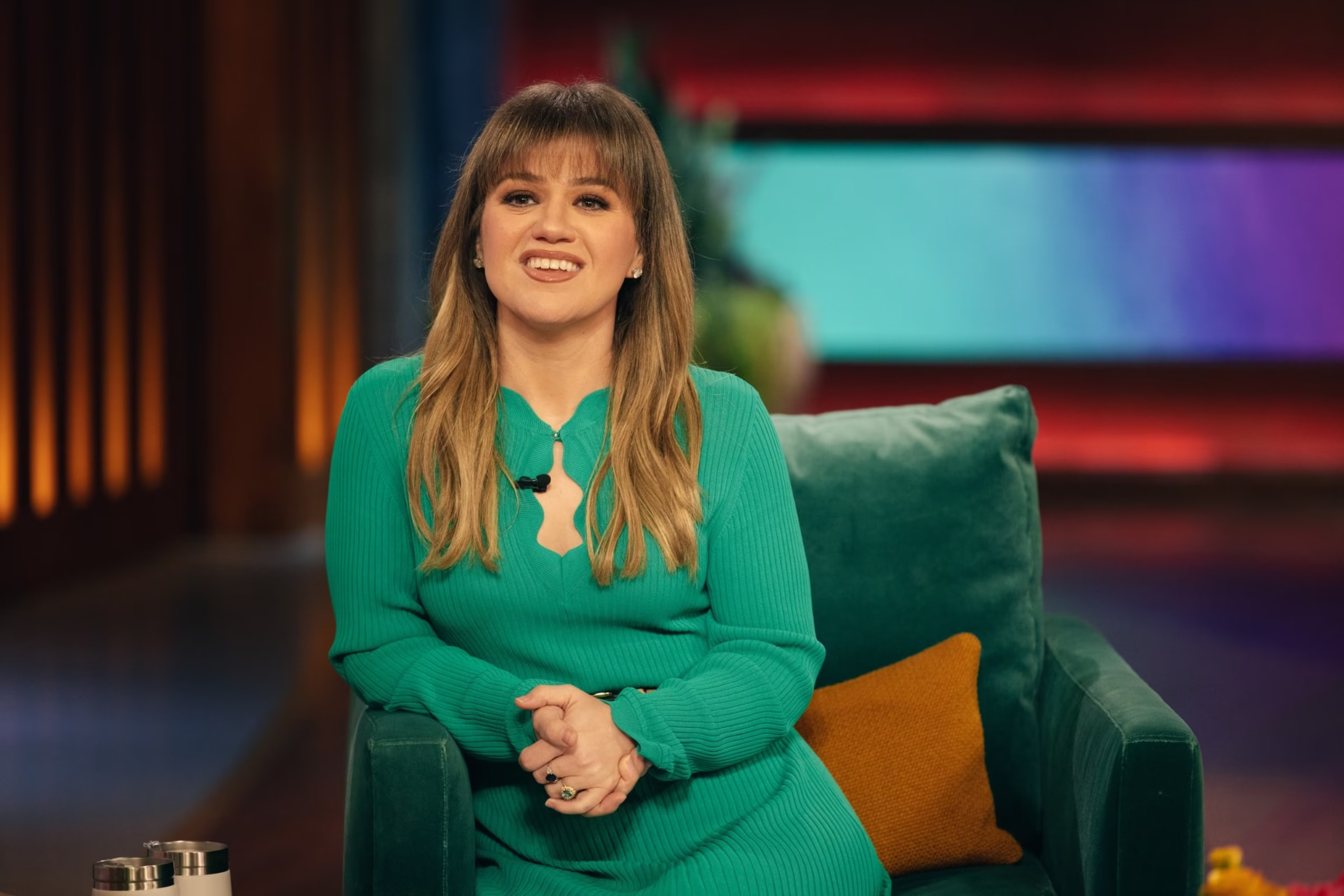
In a week dominated by fast-moving takes and unforgiving online commentary, a quieter and more grounded account has surfaced from within the family of the late music manager Brandon Blackstock—one that directly challenges claims that Kelly Clarkson’s grief has been exaggerated or performative.
Blackstock died on August 7, 2025, at the age of 48 after a long battle with malignant melanoma. As tributes poured in, skepticism followed. Some critics questioned why Clarkson appeared so visibly shaken, pointing to the very public breakdown of their marriage between 2020 and 2022, which ended in a contentious divorce and a settlement that included a reported $1.3 million lump-sum payment along with ongoing child support.
But according to someone who lived through those final days up close, that framing misses the reality.
Savannah Blackstock—Brandon’s daughter and stepsister to Clarkson’s children, River Rose and Remington—has offered an on-the-record account that paints a markedly different picture. She says that while her father was in hospice care in Butte, Montana, Clarkson was not distant or disengaged. She was present.
Savannah describes Clarkson as calm and supportive during an emotionally overwhelming period, noting that she helped handle funeral arrangements following Brandon’s death. She characterizes Clarkson as honest, respectful, and approachable—qualities she says were consistent, not sudden.
That testimony runs counter to the assumption that unresolved legal pain negates genuine compassion. It also reframes Clarkson’s public vulnerability as an extension of a longer, private reality rather than a sudden display for sympathy.
Clarkson herself has never hidden the emotional complexity of her family life. Her 2023 album Chemistry openly explored the contradictions of ending a marriage while still sharing parenthood. In mid-2025—months before Blackstock’s death—she also paused her Las Vegas residency, explaining that her children needed her while their father’s health was declining.
Those choices, Savannah suggests, reflected foresight and care, not performative grief.
The larger context is one familiar to many blended families: relationships don’t simply reset after divorce. They evolve. Co-parenting dynamics can soften or strengthen, particularly when illness strips everything down to what matters most.
That reality was echoed publicly by Reba McEntire, Blackstock’s stepmother, who acknowledged the family’s shared loss on The Voice, underscoring that familial bonds can persist even when marriages end.
Savannah is not rewriting history or dismissing years of conflict. She is offering something quieter and more specific: evidence that, at the end of her father’s life, Clarkson showed up with steadiness rather than spectacle.
As Savannah’s message makes clear, there is a difference between what the public interprets and what a family experiences firsthand.
It is possible to write honestly about a painful divorce—and later grieve honestly at a funeral.
Those truths are not in conflict.