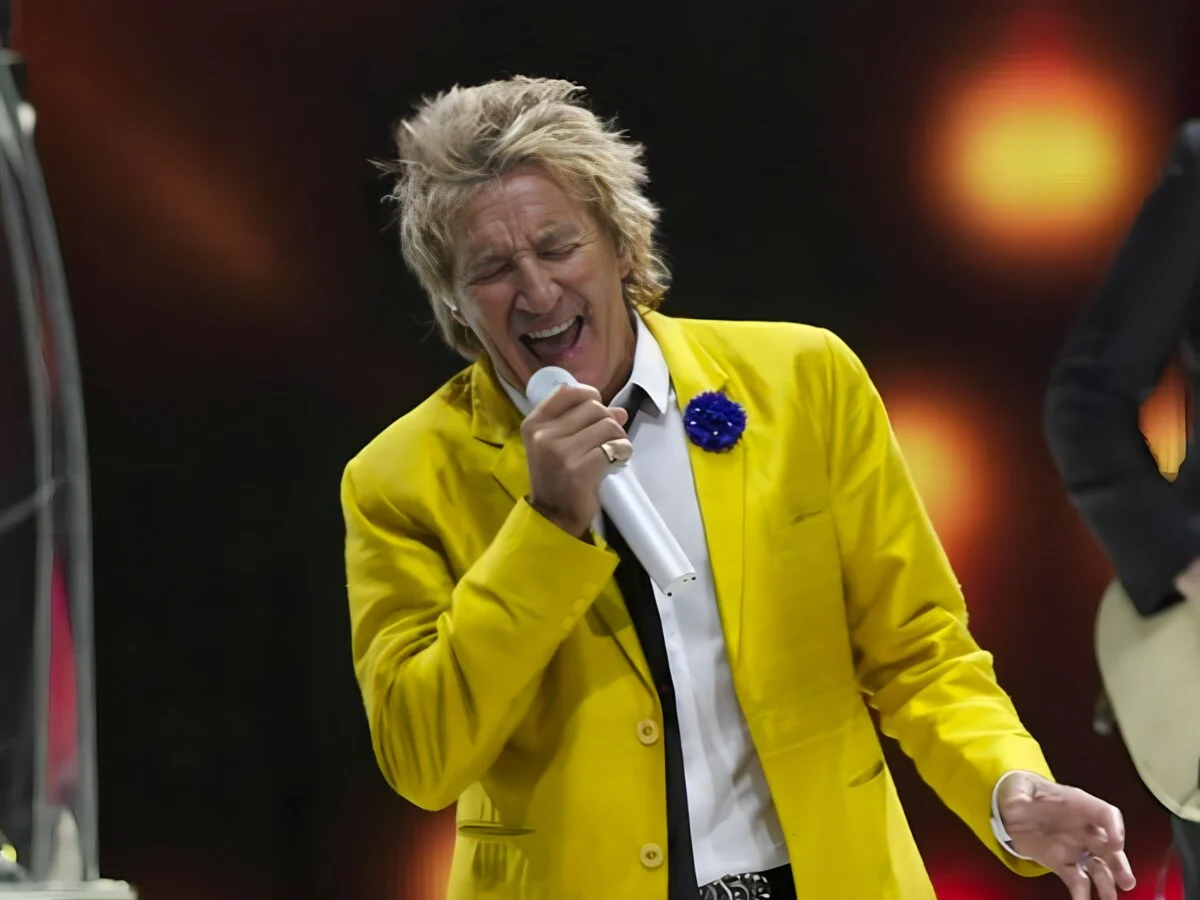
In the spring of 1971, Rod Stewart sat down with acoustic guitarist Martin Quittenton in a rented room and finished a song in less than half an hour. It was a quiet, melancholy ballad about a girl he had known and lost — the kind of song that almost didn’t sound like Rod Stewart at all. His record label hated it. They told him it was too soft, too slow, too different from the hard rock and blues stomp that had built his reputation. They didn’t want it on the album. Rod released it anyway.
“Maggie May” did not chart immediately. It was not even the official A-side of its single — it was the throwaway B-side. Radio DJs were supposed to play the other song. Instead, a DJ in Cleveland flipped the record and put “Maggie May” on the air. Within days, the phones lit up. Within weeks, it was number one in both the United Kingdom and the United States simultaneously — a feat very few artists ever achieve.
What the record label had heard as a weakness — the rambling, unpolished storytelling, the way the song seemed to wander before it resolved — was exactly what the public loved about it. It felt real. It felt like a memory you couldn’t shake. Mandolin player Ray Jackson, who played the famous opening instrumental break, was not even credited on the original release. He was paid a flat session fee of roughly 15 pounds.
Rod Stewart has spoken in interviews about writing “Maggie May” almost by accident, the way the song came out faster than he could explain it, and the strange embarrassment of trying to convince people it was worth keeping. “I nearly didn’t fight for it,” he said once. “And it ended up being the song that changed my entire life.”
The lesson the music industry keeps learning from stories like this is one it never quite remembers: the song that sounds wrong to the people in the office is often exactly right for everyone else.