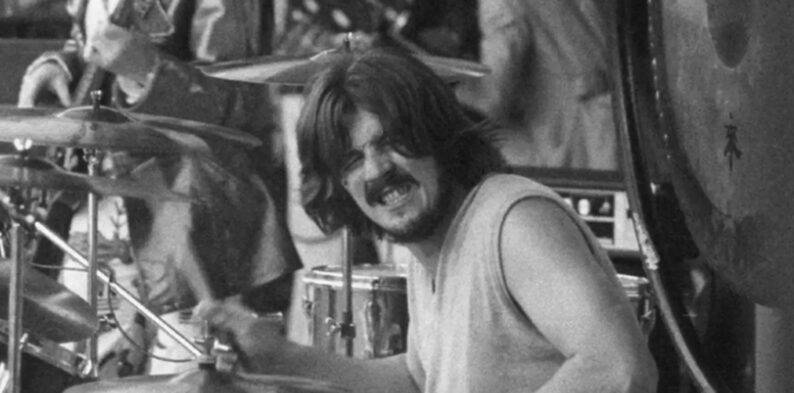
Few drummers in rock history command as much respect as John Bonham. As the powerhouse behind Led Zeppelin, Bonham’s thunderous sound, impeccable groove, and unmatched feel helped define hard rock in the 1970s. Decades after his death, he remains one of the most celebrated drummers ever to sit behind a kit.
Given Bonham’s legendary status, many fans assume his influences came from fellow British rock icons. Yet according to those who knew him best, Bonham looked elsewhere when discussing the greatest rock and roll drummers of all time.
The revelation came from drummer Bev Bevan, a longtime friend of Bonham. Reflecting on their shared musical tastes, Bevan recalled that the two musicians bonded over their love of classic American rock and roll rather than British drumming heroes. In fact, Bevan remembered that they often agreed on who deserved the title of rock and roll’s finest drummers: Earl Palmer and Hal Blaine.
For many casual rock fans, those names may not be as familiar as Bonham, Keith Moon, or Ginger Baker. Yet within the music industry, both men were giants.
Earl Palmer was one of the architects of modern rock drumming. A prolific session musician, he played on countless classic recordings during the 1950s and 1960s, working with artists such as Little Richard, Fats Domino, and Eddie Cochran. His driving beat on Cochran’s “Somethin’ Else” was particularly admired by Bonham and is widely believed to have inspired the famous drum introduction to Led Zeppelin’s “Rock and Roll.”
The other drummer Bonham revered was Hal Blaine. As a member of the legendary Los Angeles session collective known as the Wrecking Crew, Blaine performed on thousands of recordings and helped shape the sound of popular music throughout the 1960s and 1970s. His résumé included work with artists ranging from The Beach Boys to Frank Sinatra.
Bonham’s admiration for Palmer and Blaine reveals an important truth about his musical roots. While Led Zeppelin would become synonymous with heavy rock, Bonham’s playing was deeply rooted in rhythm and blues, early rock and roll, soul, and American popular music. The massive grooves heard on songs like “When the Levee Breaks,” “Good Times Bad Times,” and “Fool in the Rain” were built on foundations laid by the drummers who came before him.
Ironically, many drummers today cite Bonham as the ultimate influence. Yet Bonham himself never viewed greatness as something he invented. Instead, he recognized the pioneers who established the language of rock drumming long before Led Zeppelin conquered the world.
For one of rock’s most revered musicians, the greatest rock and roll drummers weren’t necessarily the biggest stars. They were the masters whose grooves shaped the music that inspired generations—including John Bonham himself.