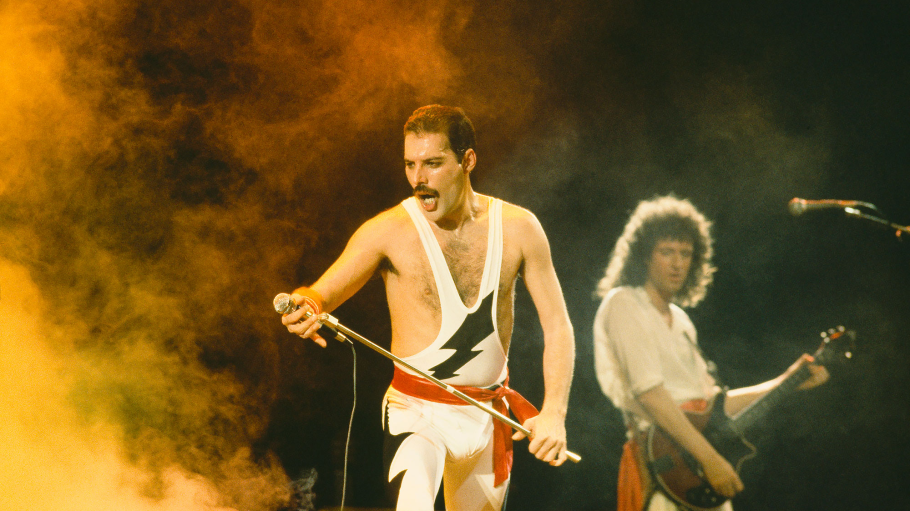
The story of “Bohemian Rhapsody” as it is usually told begins with Freddie Mercury and ends with the song’s commercial triumph — a narrative arc that smooths over the period in between, the period of doubt and resistance and the specific institutional hostility of a music industry that did not understand what it was hearing and responded to its own incomprehension by recommending that the problem be fixed.
The problem, in the industry’s assessment, was the length. Six minutes was not a radio song. Six minutes was not 1975’s understanding of what a hit single could be. The format that governed commercial radio and therefore commercial success operated on a three-to-four-minute template that had been refined across decades of understanding what listeners could receive while driving or washing dishes or going about the ordinary business of the day with music as accompaniment.
“Bohemian Rhapsody” was not accompaniment. It was an event. It demanded specific attention. It moved through multiple distinct musical sections — ballad, operatic, hard rock — in ways that no song had moved before it. It did not explain itself. It did not resolve its narrative in ways that lyrical analysis could satisfactorily account for. It was six minutes long and it was very strange and it was, in the assessment of everyone who heard it with open ears, extraordinary.
The label heard it with institutional ears. Their response was a recommendation that was not phrased as a rejection — labels rarely phrase commercial concerns as artistic rejection when the artist in question has delivered previous commercial success. It was phrased as advice. The song was too long. Could it be shortened? Could the operatic section be reduced? Could the ending be reconsidered?
Queen resisted. But the resistance within the band was not unanimous. There are accounts — from people present in the discussions of that period — that the doubts were not only external. That three of the four members of Queen had moments of uncertainty about whether the song was what Freddie Mercury believed it was. Whether six minutes of something this unusual was an act of artistic courage or an act of creative excess that the audience would not forgive.
The one person who did not waver was Freddie Mercury. He has been described in every account of this period as completely certain — not with the bravado of someone performing confidence but with the specific stillness of someone who has made something and knows what it is. He knew what the song was. He had been carrying it for years before the recording. The full version — the operatic section, the hard rock explosion, all of it — had existed in his mind before it existed on tape, and the tape was simply the confirmation of what he had already heard.
He refused every suggested edit. He refused with the completeness of someone who understands that the thing being suggested for removal is the thing that makes what remains worth keeping. The operatic section was not an indulgence. The length was not excess. These were the dimensions the song required to be what it was. Removing them would not have produced a more commercial version of “Bohemian Rhapsody.” It would have produced the absence of “Bohemian Rhapsody.”
The song was released as Mercury had recorded it. DJ Kenny Everett played it in defiance of the commercial logic. The listener response was immediate and overwhelming — people calling radio stations to ask what the song was, to ask for it to be played again. The label reversed its position with the speed that institutions reverse position when the commercial signal is clear enough.
“Bohemian Rhapsody” has been streamed over two billion times. It is consistently rated among the greatest songs ever recorded. It has been performed in sports stadiums by audiences of a hundred thousand people singing every word.
None of it would exist if Freddie Mercury had allowed the editing.
He knew what he had. He refused to let anyone make it smaller.
That is the story of the song. One man who knew what he had made and refused — completely, without wavering — to let the institution reduce it to something it could understand.
The institution did not understand it.
The world did.
It always does, eventually.