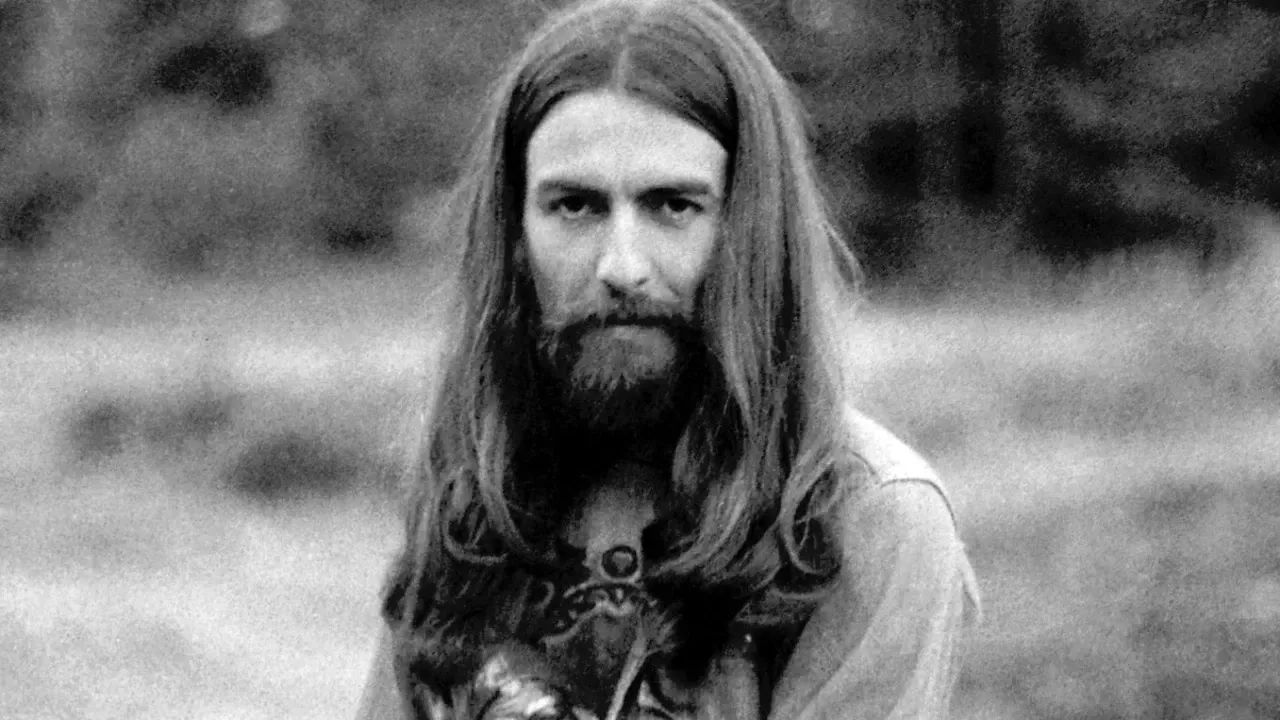
There is a specific kind of creative frustration that has no adequate outlet. The frustration of having things to say and being systematically denied the platform to say them — not because what you have is insufficient but because the people controlling the platform have a vested interest in prioritizing what they have over what you have. This is the frustration George Harrison lived inside for the entire second half of the Beatles’ career.
The mathematics of Beatles albums were brutal for Harrison. Two songs per album was the approximate allocation — two spaces in twelve to fourteen tracks for the contributions of the band’s third songwriter. The remaining ten to twelve tracks belonged to Lennon and McCartney because Lennon and McCartney were the established commercial force, because their partnership was the engine the machine ran on, because the music industry in the 1960s did not make space for the possibility that the third man was writing material of equal quality to the first two.
He was. He knew it. The songs accumulated.
When the Beatles ended in 1970 Harrison had years of unrecorded material — songs that had been written, developed, sometimes demoed, and then set aside because the allocation had been filled or because Lennon or McCartney had something they preferred to record or because the specific hierarchy of the band made it easier to not fight for his space than to fight every time.
He released “All Things Must Pass” in November 1970. A triple album. Twenty-three songs plus a jam album. The critical and commercial response was immediate and overwhelming. It went to number one on both sides of the Atlantic. The reviews acknowledged what the decade of two-songs-per-album had concealed — that this was a songwriter of the first rank who had been operating under conditions that had prevented the full inventory from being taken.
These five songs from that album and the solo work that followed are the ones that said what had been waiting to be said.
1. “All Things Must Pass.” Written during the Beatles period. Offered to the band. Declined. The song that says most directly what Harrison had learned from his study of Vedic philosophy — that everything passes, including pain, including this specific situation, including the arrangements that have kept you smaller than you are. He said it with the equanimity of someone who has done the spiritual work and arrived somewhere genuinely peaceful. The equanimity was hard-won. You can hear the years it cost in the gentleness of the delivery.
2. “Isn’t It a Pity.” Two versions on All Things Must Pass — one slow and majestic, one slightly more uptempo. The song is about exactly what the title says. About the human tendency to hurt the people closest to us and the specific sadness of watching it happen and being unable to stop it. People who knew the Beatles heard it as a meditation on the band’s ending. Harrison did not deny this. He said it was about many things. The band’s ending was among them.
3. “What Is Life.” Pure joy. Unqualified, unguarded, exuberant celebration of love that had no precedent in the careful emotional management of Beatles-era Harrison compositions. He was allowed to be joyful here because he had been allowed to be completely himself for the first time. The joy is the sound of creative freedom. The sound of ten years of constraint being removed in a single album.
4. “Beware of Darkness.” A warning — precise, compassionate, and exactly the kind of spiritual instruction that Harrison had been trying to bring into the Beatles’ work since his discovery of Indian music and Vedic philosophy and that had been received as the eccentric interest of the junior member. Here it is given full expression. A full lyric of spiritual warning delivered with a directness that the Beatles format had never permitted.
5. “My Sweet Lord.” The most successful song of his career. A devotional song — a direct and uncomplicated expression of spiritual longing — that went to number one worldwide and stayed there. The song that proved that what the Beatles had spent ten years treating as too niche and too personal for the general public was in fact exactly what the general public had been waiting for. He knew it. He had known it for years. Now the world knew it too.
The ten years of being told no produced five albums of yes.
That is the mathematics of creative suppression when the person being suppressed is talented enough.