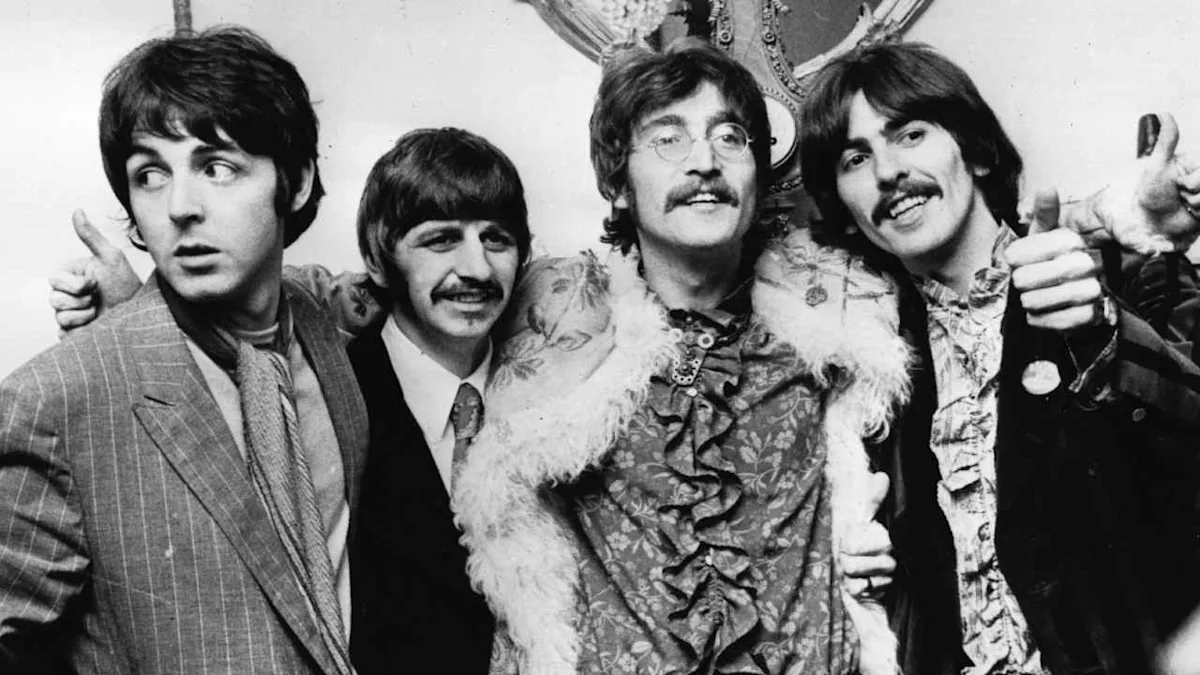
There are weapons made of words. Most people who have ever been in a serious argument know this — know the specific experience of a sentence landing in a place so precisely aimed that the damage it does is not like ordinary damage. It does not fade in a few days. It lives in the exact location where it arrived and it stays there, accessible at any moment, as fresh and as painful as the first time.
John Lennon made one of the most devastating weapons in the history of popular music. He aimed it at Paul McCartney. He recorded it in approximately one hour in 1971. He put it on an album that millions of people bought and played in their living rooms and sang along to without understanding that they were listening to one man dismantle another man with surgical precision in front of the entire world.
The song is “How Do You Sleep?” And it is one of the most brutal things one famous person has ever done to another famous person in a public forum.
To understand what it cost McCartney to hear it — to understand why he has said in various interviews across fifty years that it is a song he cannot fully engage with even now — you have to understand the specific vulnerability of the target. McCartney was not an easy man to wound. He was commercially successful, critically celebrated, personally confident in ways that sometimes read as arrogance. He had survived the Beatles breakup with his reputation largely intact and his career already ascending in new directions.
But Lennon knew where the soft places were. He had known McCartney since they were teenagers. He had watched him across twenty years of the most intense creative partnership in popular music history. He knew the insecurities that the public confidence concealed, the specific fears that lived underneath the charm, the places where McCartney was genuinely uncertain about his own worth as an artist.
And he put all of that knowledge into one song.
The lines are specific. They are not general criticism dressed up as art — they are targeted observations from someone who has paid close attention for two decades and is now using everything he learned in the service of causing maximum damage. Lennon accuses McCartney of mediocrity. Of living off the work they did together. Of having nothing original to offer now that the collaboration is over. Of being, at his core, a lesser talent who had benefited enormously from proximity to a greater one.
These are not things you say to someone you have stopped caring about. You say things like that to someone whose opinion of themselves you want to permanently alter. Lennon was furious and the fury was the fury of love turned inside out — of someone who had been so close to another person that the separation felt like an amputation and the pain of the amputation expressed itself as attack.
George Harrison played guitar on the track. He has said since that he regrets it. That he did not fully understand at the time what he was participating in and that when he understood later he wished he had declined.
McCartney heard the song. He did not respond publicly for years — maintained a dignity in the face of it that people who knew him said cost him considerably. When he did respond, he responded through music rather than through interviews, in the oblique and careful way that McCartney processes public injury.
But the song was out. It was in the world. Millions of people had heard it. And no matter what he said or made or achieved afterward, there would always be a version of Paul McCartney in the public consciousness that had been drawn by John Lennon in his worst hour — drawn with the specific authority of someone who had known the subject more completely than almost anyone alive.
Lennon died in 1980. The song outlived him. It is still being played, still being heard, still doing the thing it was designed to do to the one person who was meant to hear it.
McCartney is in his eighties now. He still cannot listen to it all the way through.
Some wounds do not close. They just become part of the architecture.