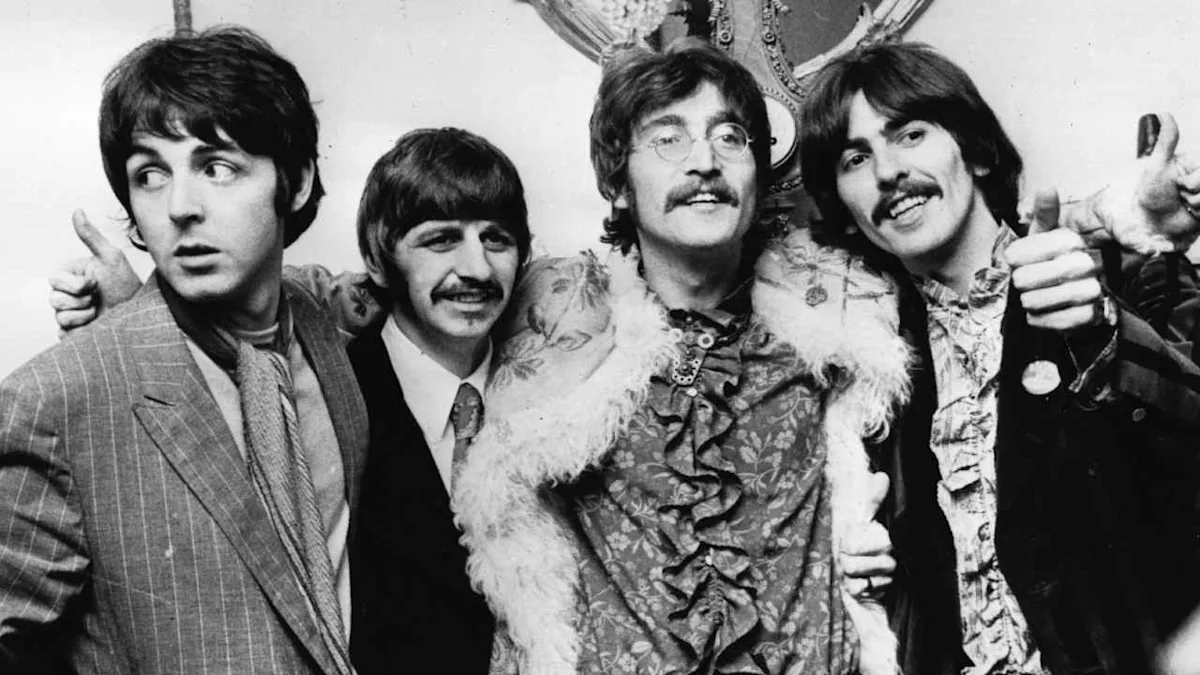
Abbey Road was recorded in the summer of 1969 by four men who were, in any meaningful personal sense, no longer a band. The legal machinery of the breakup was already in motion. The financial disputes were already poisoning every room they shared. John Lennon had privately told the others he was leaving — had said the words out loud in a meeting that the others treated with a combination of shock and denial — and the decision to make one more record together was not born from any genuine reconciliation but from a complicated mixture of professionalism and unfinished business and the specific gravity of a thing that none of them quite knew how to stop being even when they wanted to stop.
They went into Abbey Road Studios anyway. They did what they had always done. And what came out of those sessions — from four people in active personal collapse, communicating through lawyers as much as through conversation, carrying grievances and betrayals and the accumulated weight of a decade of the most intense professional and personal entanglement imaginable — is considered by many critics, musicians, and listeners to be the greatest album ever recorded.
John Lennon was present in body and largely absent in spirit for significant portions of the sessions. He had been in a car accident in Scotland in July and arrived at the studio still recovering, still in pain, and in a state of creative and personal detachment that the people around him found difficult to read and difficult to work with. His contributions to Abbey Road are brilliant — “Come Together,” “Because,” “I Want You (She’s So Heavy)” — but they are the contributions of a man who is partly already gone, who is making the work from a place slightly outside the room.
Paul McCartney compensated by controlling more. This is what he always did when things became uncertain — he organized, he directed, he filled the vacuum of leadership with a specific energy that the others found both essential and suffocating. It was McCartney who pushed for the medley concept on Side Two — that extraordinary suite of connected fragments that turns the second half of the album into something structurally unprecedented in popular music. It was his vision and his drive that held the sessions together when the personal centrifugal forces should by rights have sent everyone home.
George Harrison arrived at Abbey Road with the best songs of his career and the lowest expectations of being taken seriously. He had been fighting for creative space within the Beatles for years and the fighting had produced in him a quiet, steely determination that is audible in his contributions. “Something” and “Here Comes the Sun” — both on Abbey Road, both recorded in this atmosphere of personal dissolution — are among the finest songs in the entire Beatles catalog. He wrote them knowing the band was ending. He wrote them as if the ending did not diminish the obligation to make something real.
Ringo Starr, who has always been the most honest Beatle about what the final period actually felt like, has said simply that it was sad. That there was a sadness in the studio that everyone was working around rather than through. That they were making beautiful music inside a grief they had not yet fully allowed themselves to feel.
The album ends with a hidden track — a brief, chaotic, joyful burst of noise that feels almost like a joke or an afterthought — and then silence. Thirty seconds of silence on the original vinyl. And then nothing.
They never recorded together again.
What they left behind in that summer of personal wreckage is a record that has never stopped sounding like the most alive thing anyone ever put on tape. Which may be the strangest and most important truth about it: that the music they made while everything was ending sounds more like a beginning than almost anything else in the history of the form.
Some things are made more beautiful by the fact of their ending. Abbey Road is proof.