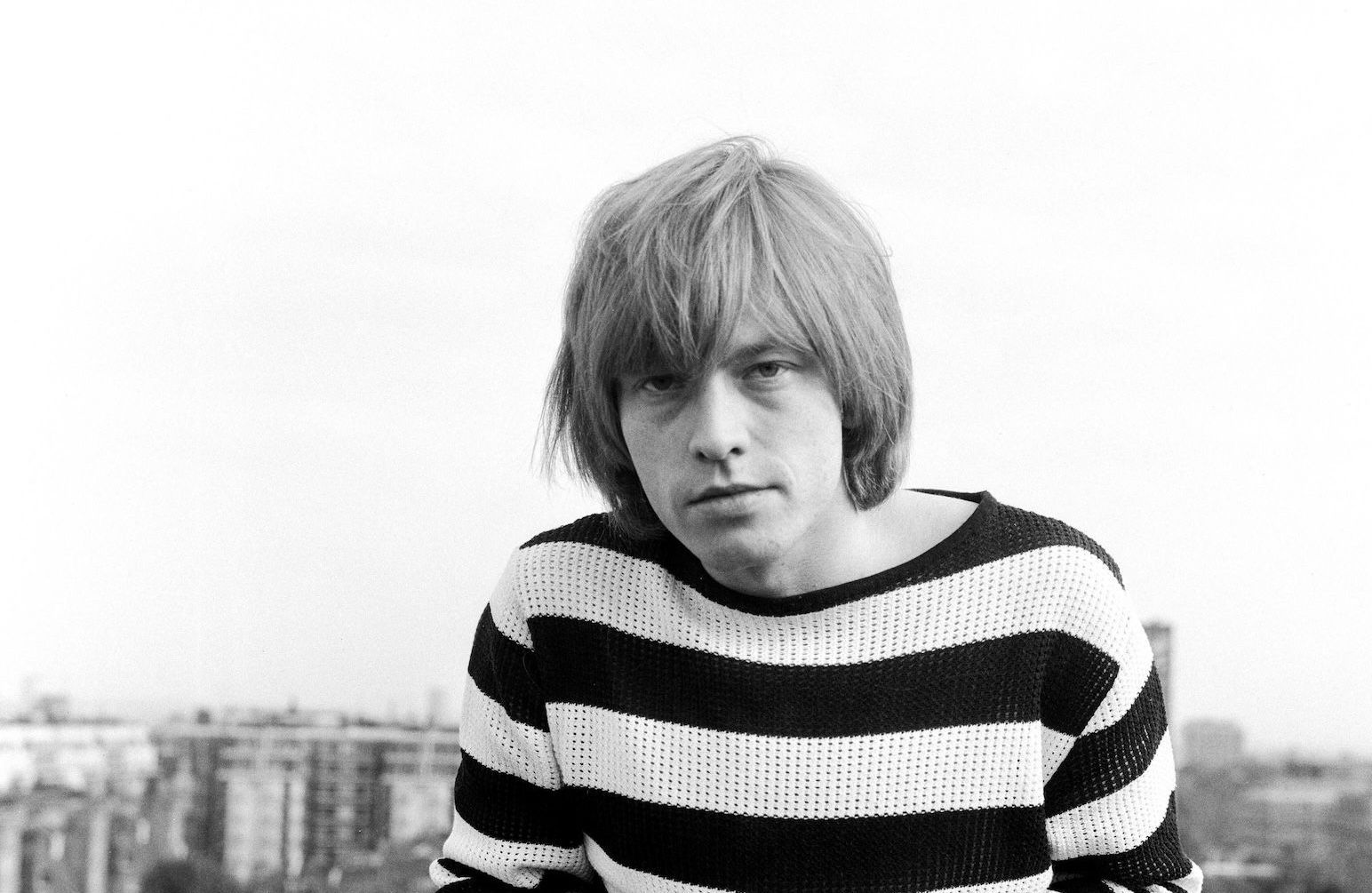
The official story is clean enough. Brian Jones had become unreliable. The drug use had progressed beyond the point where he could function in a recording studio or on a stage with any consistency. His criminal convictions made touring in America legally complicated. The band had outgrown him creatively — Jagger and Richards had become the dominant songwriting force and Jones, who had been the musical director and visionary of the early band, had found himself increasingly peripheral to the creative process. The decision to remove him, the official story says, was painful but practical. A business decision made by people who had a band to run.
This story is not false. But it is incomplete in ways that the people who tell it know perfectly well.
Brian Jones founded the Rolling Stones. This is not a contested fact. He placed the advertisement, he recruited the musicians, he named the band after a Muddy Waters song, he booked the early shows, he articulated the vision of what this group of young British musicians was going to do with the American blues tradition they had all fallen in love with. Before Mick Jagger was a frontman and Keith Richards was a guitarist of legend, Brian Jones was the Rolling Stones in a way that neither of them was yet.
What happened between that beginning and the phone call in June 1969 — when Jagger, Richards, and Charlie Watts came to his house and told him the band was moving forward without him — is a story about power. About the specific way that power shifts inside a creative group when the person with the original vision is not also the person with the commercial instincts or the productive songwriting partnership.
Jagger and Richards began writing together and the songs were hits. Jones did not write — or rather, Jones wrote in ways that the band did not record, did not prioritize, did not treat as central to what they were becoming. His contributions moved from the core to the periphery and the move was gradual enough that it was perhaps not fully visible to him until it was complete. By the time he understood what had happened to his position, the structure had already been built around the new center of gravity and he was outside it.
The drug use was real. The unreliability was real. But the people who knew Jones in this period have said consistently that the drug use and the unreliability were at least partly symptoms of a man who had watched something he created become someone else’s property and had found no healthy way to metabolize that loss. He was not kicked out because he was broken. He was broken partly because of how he was being treated by people who had once needed him and no longer did.
Three weeks after the conversation at his house, Brian Jones was found dead in his swimming pool. He was twenty-seven years old. The coroner recorded it as death by misadventure.
The Rolling Stones played a concert in Hyde Park two days later. Jagger read Shelley. Thousands of white butterflies were released. It was a beautiful and carefully managed public mourning for a man the band had just removed from his own creation.
Mick Taylor had already been hired as his replacement before Jones was dead.
History has been kinder to Jones in recent decades than the official story was at the time. Musicians who have studied the early recordings understand what he brought — the slide guitar, the exotic instrumentation, the specific musical intelligence that gave the early Stones a texture and sophistication that the Jagger-Richards juggernaut, for all its glory, never fully replaced.
He built the thing. He lost it. And then he was gone, and the thing kept going without him, growing larger and more celebrated every decade.
That is the real story. All of it. Not just the comfortable parts.